Dogs do not catch the human common cold, but they do get upper respiratory infections of their own. Those infections look almost identical to yours: sneezing, a runny nose, watery eyes, a mild cough, and less energy than usual.
Veterinarians group these infections under one umbrella, Canine Infectious Respiratory Disease Complex, or CIRDC. There is no single dog cold virus. "Dog cold" is the owner's word for a family of viruses and bacteria that often infect together, and the mix varies dog to dog.
The two-way question has a clean answer: your cold can't infect your dog, and their cold can't infect you. Human cold viruses stay with humans, and canine respiratory bugs stay with dogs, with a few rare exceptions covered below.
Most healthy adult dogs recover from a mild case in about a week with rest and supportive care at home. The rest of this guide covers what each symptom points to, how to tell a cold from its look-alikes, and the specific signs that mean it's time to call your veterinarian.
⏱ 10-minute read | Updated September 2026 | Reviewed by Pawprint Oxygen Veterinary Team | Browse more articles →
Table of Contents
Dog Cold Symptoms and What Each One Points To
A symptom list on its own doesn't get you far, because nearly every respiratory condition in dogs shares the same short list. What helps is knowing what each pattern usually means and what shifts the odds.
Symptom |
Most likely causes |
What shifts the odds |
|---|---|---|
Sneezing with clear nasal discharge |
Mild viral URI, allergies, irritants |
Lethargy and appetite loss point to infection; seasonal or environmental timing points to allergy |
Thick yellow or green discharge |
Viral URI with secondary bacterial involvement |
Persistence past a week matters more than the color itself |
Discharge from one nostril only |
Foreign body, tooth root abscess, nasal mass |
Sudden onset and face-pawing suggest a foreign body; older dog raises concern for a mass |
Dry, hacking, or honking cough |
Kennel cough, collapsed trachea |
Recent boarding or daycare points to kennel cough; excitement-triggered honking in a small breed points to trachea |
Moist, productive cough |
Bronchitis, pneumonia |
Fever, labored breathing, or worsening energy raise the pneumonia concern |
Watery eyes |
Viral URI, allergies, irritants |
Paired with sneezing and lethargy, infection is more likely |
Congestion or snoring-type breathing |
URI swelling, brachycephalic anatomy |
New in a flat-faced breed deserves a lower threshold for a vet call |
Fever |
Infection |
A cold with true fever is behaving like something more than a cold |
Appetite loss and lethargy |
Infection of almost any kind |
The stronger these are, the less this looks like simple allergy or irritation |
Two of those rows deserve a closer look, because they change what you do next.
Discharge from a single nostril in an adult dog is a different problem than a cold. Infections run through the whole nasal passage, so they drip from both sides. One-sided discharge points toward a foreign body, a tooth root abscess, or a nasal mass, and Merck's veterinary reference backs the foreign-body and dental mechanisms. That finding warrants an exam rather than a wait-and-see week.
Read discharge color honestly. Clear mucus doesn't confirm a virus, and yellow or green doesn't confirm bacteria, so don't treat color as a diagnosis. What changes the plan is thick discharge that persists past a week, especially alongside declining energy.
A cold also has limits. Labored breathing, pale or blue gums, collapse, a cough that worsens when your dog lies down, or weight loss are outside what a mild URI produces. Any of those moves you out of cold territory and into the escalation section below.
Sneezing and a Runny Nose Without a Cold
Plenty of sniffly dogs aren't sick at all. Allergies, household irritants like smoke, cleaning sprays, aerosols and dust, nasal mites, dental disease, and reverse sneezing all produce cold-like signs without any infection behind them.
Here's the separator you can act on: infection usually arrives with lethargy and appetite change. Allergy and irritant sneezing usually doesn't, and it tracks with the season or the environment. A dog who sneezes through spring walks but eats and plays normally is telling you a different story than a dog who sneezes and skips dinner.
Reverse sneezing confuses many owners. It's an episodic, snorting inhalation that sounds alarming and passes in under a minute, and it isn't illness. If it's new or frequent, mention it at your next vet visit.

How to Tell a Cold From Kennel Cough, Flu, or Something Worse
These conditions overlap so heavily that symptoms alone can't separate them, and co-infection with multiple pathogens is common. Exposure history is often more diagnostic than the symptom list. Boarding, daycare, grooming, the dog park, a shelter stay, or a new dog in the house tells your veterinarian more than the character of the sneeze.
Condition |
Dominant sign |
Cough character |
Fever |
Onset |
Typical duration |
Contagious |
|---|---|---|---|---|---|---|
Mild viral URI ("dog cold") |
Sneezing, runny nose, watery eyes |
Mild, occasional |
Rare or low |
Gradual |
About a week to ten days |
Yes, dog to dog |
Kennel cough |
The cough itself |
Dry, hacking, honking, often ending in a gag |
Sometimes low |
Days after exposure |
One to three weeks |
Highly |
Canine influenza |
Fever plus cough |
Moist or dry, persistent |
Common, can run high |
Fast |
Two to three weeks |
Highly |
Pneumonia |
Labored breathing, lethargy |
Moist, productive |
Common |
Variable, often follows a URI |
Weeks, needs treatment |
Depends on cause |
Non-infectious look-alikes |
Varies: honking cough, night cough, one-sided discharge |
Trachea: goose-honk. Heart: worse lying down or at night |
No |
Gradual or episodic |
Chronic |
No |
Each look-alike has its own guide if the table points you there. Our complete kennel cough FAQ covers that condition in depth. If the honking cough row fits, especially in a small breed, read our guide to the goose-honk cough and collapsed trachea.
Canine distemper belongs on the serious end of this spectrum. It starts with respiratory signs but progresses to systemic and neurological disease, and it's the reason the DHPP vaccine exists. An unvaccinated puppy with cold signs needs a vet visit, not home care.


Can Dogs Catch Colds From Humans (and Can You Catch Theirs)?
Rhinoviruses and the other viruses behind human colds are species-restricted. A dog sharing your couch through your worst cold week faces no risk from it, and you face none from their sniffles.
A few narrow exceptions are documented and worth naming honestly. Pandemic H1N1 influenza has passed from humans to pets, though the confirmed cases were mostly cats, with a single dog. SARS-CoV-2 has infected dogs in rare cases, always through close contact with an infected person. Antibiotic-resistant staph bacteria (MRSA) can also pass between people and dogs in the same household, in both directions.
The reverse direction is equally reassuring. Kennel cough and canine influenza don't transmit to healthy adult humans. Bordetella bronchiseptica is the rare exception, and the documented human cases are almost entirely immunocompromised people.
The practical hygiene takeaway is simple: wash your hands after handling a sick dog and don't share food with them. That protects the immunocompromised members of your household, human and canine both.
How Long a Dog Cold Lasts
Most mild cases resolve within about a week to ten days. Kennel cough typically runs one to three weeks, longer if a secondary infection sets in untreated.
The cough often outlasts the illness. Airway inflammation persists after the infection itself has resolved, so a dog who feels fine can keep coughing for several weeks. A lingering cough in an otherwise bright, eating, playing dog is usually a healing airway rather than an active infection.
Three weeks is the ceiling. A cough persisting past three weeks, or one that worsens after initial improvement, needs a diagnostic workup to rule out unresolved infection, secondary inflammation, or a structural problem. At that point it's no longer "a cold."
The trajectory is your most useful daily measure. Steady improvement day over day is reassuring. A plateau, or a second decline after your dog seemed to be recovering, suggests a secondary bacterial infection and warrants a call to your veterinarian.

Home Care That Helps a Dog With a Cold
For a mild case in a healthy adult dog, supportive care at home carries most of the recovery. Rest and reduced activity come first: skip the dog park and keep walks short and calm.
Humid air eases an irritated airway. Run a cool-mist humidifier near where your dog sleeps, or bring them into a steamy bathroom for 10 to 15 minutes while you shower. Wipe crusted discharge from the nose and eyes with a warm damp cloth so breathing and smell stay as clear as possible.
A congested dog can't smell food well, and a dog who can't smell often won't eat. Warm the food or add a little warm water to soften it and raise the aroma. Keep fresh water available and encourage drinking.
Switch to a harness while the airway is irritated. A neck collar presses directly on an inflamed trachea and aggravates coughing. Keep your sick dog isolated from other dogs in the house, with separate bowls and freshly washed bedding, since these infections spread through direct contact, airborne droplets, and shared items.
Two things to skip, and why:
Human cold medicines are dangerous for dogs. Pseudoephedrine, acetaminophen, and the xylitol used to sweeten many liquid formulations are all toxic. Never reach into your own medicine cabinet.
Antibiotics do nothing against a virus. Your veterinarian prescribes them only when a secondary bacterial infection develops. Honey and immune supplements are comfort measures at best.
The Benadryl question has a direct answer. It may help allergic sneezing, and it does nothing against an infection. Whether it's appropriate for your dog, and at what dose, is your veterinarian's call, so ask before giving it. If home remedies for the cough itself are what you're after, our guide to treating kennel cough at home covers that ground in detail.
When a Cold Turns Into Something More Serious
Vague advice fails owners here, so these thresholds are specific. Call your veterinarian the same day, or head to an emergency clinic, if you see any of the following:
A resting or sleeping respiratory rate persistently above 30 breaths per minute. Our guide to measuring your pet's respiratory rate shows you how to count it correctly.
Labored or open-mouth breathing, an extended neck, or an elbows-out posture. These are positions a dog adopts to move more air.
Pale, grey, or blue gums.
Refusing food for more than 24 hours, or a fever.
Any of the above in a puppy or a senior dog.
What tips a URI into pneumonia is usually a secondary bacterial infection taking hold in an airway the virus already inflamed. Worsening lethargy, appetite loss, fever, and labored breathing are the signals it may be happening. Our guide to the four stages of pneumonia in dogs explains what that progression looks like.
The highest-risk dogs are puppies with incomplete vaccination, seniors, brachycephalic breeds like Pugs, French Bulldogs and Shih Tzus, and dogs with existing heart or airway disease. These dogs have less respiratory reserve, so the same infection lands harder and decompensation comes faster.
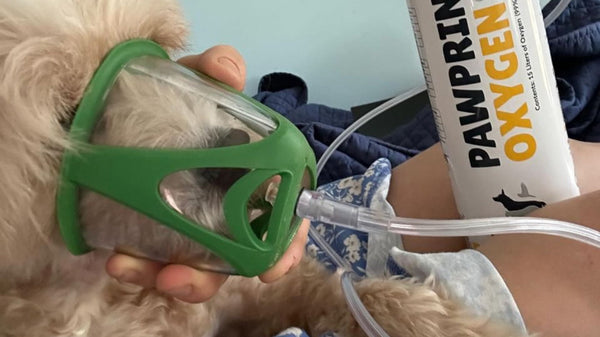
When an infection progresses to pneumonia, or when a dog with an underlying condition can't maintain normal oxygen exchange, veterinarians sometimes add supplemental oxygen to the treatment plan. That happens in hospital, and increasingly at home under veterinary direction. Oxygen doesn't treat the infection. It reduces the strain on a struggling respiratory system while the veterinarian's treatment addresses the cause.
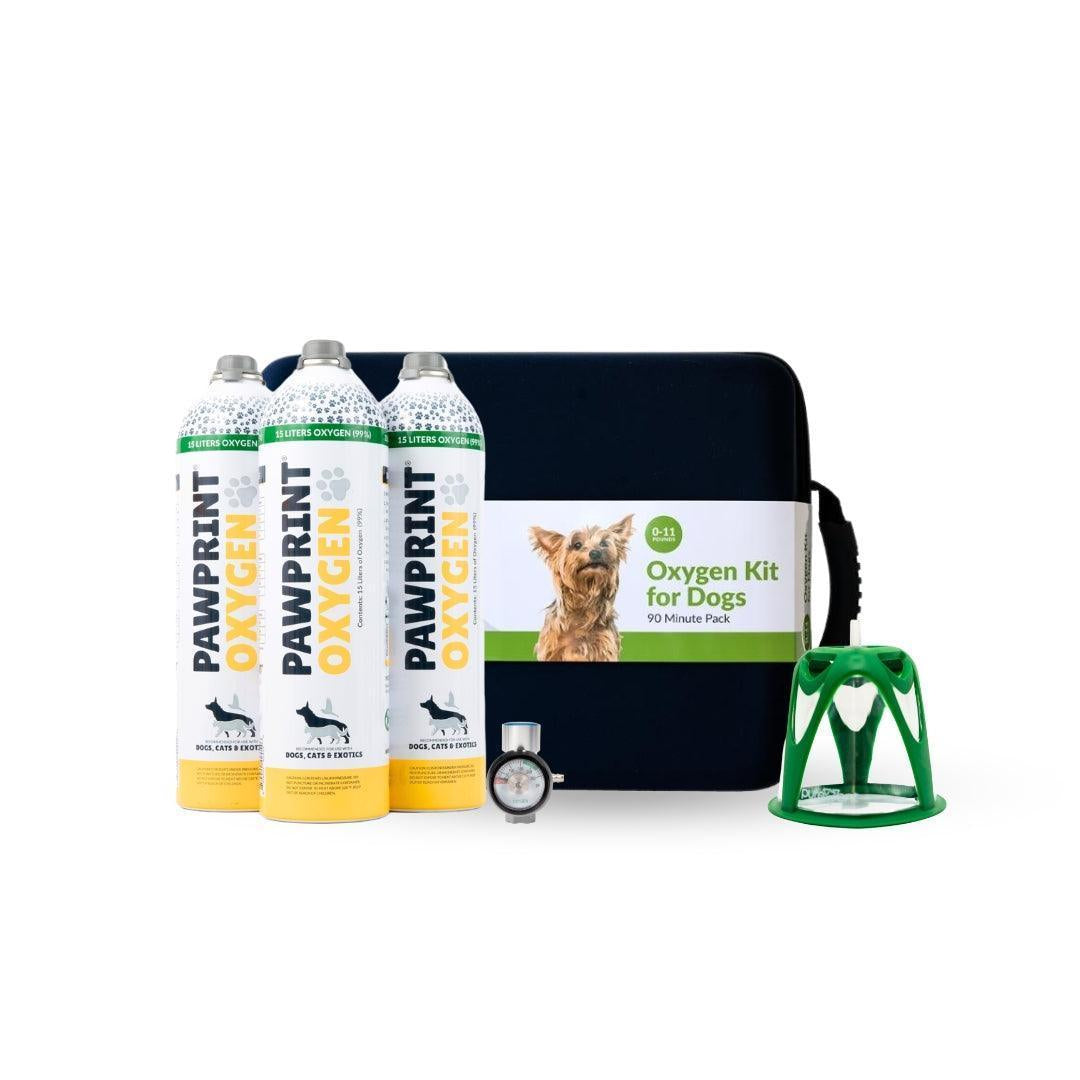
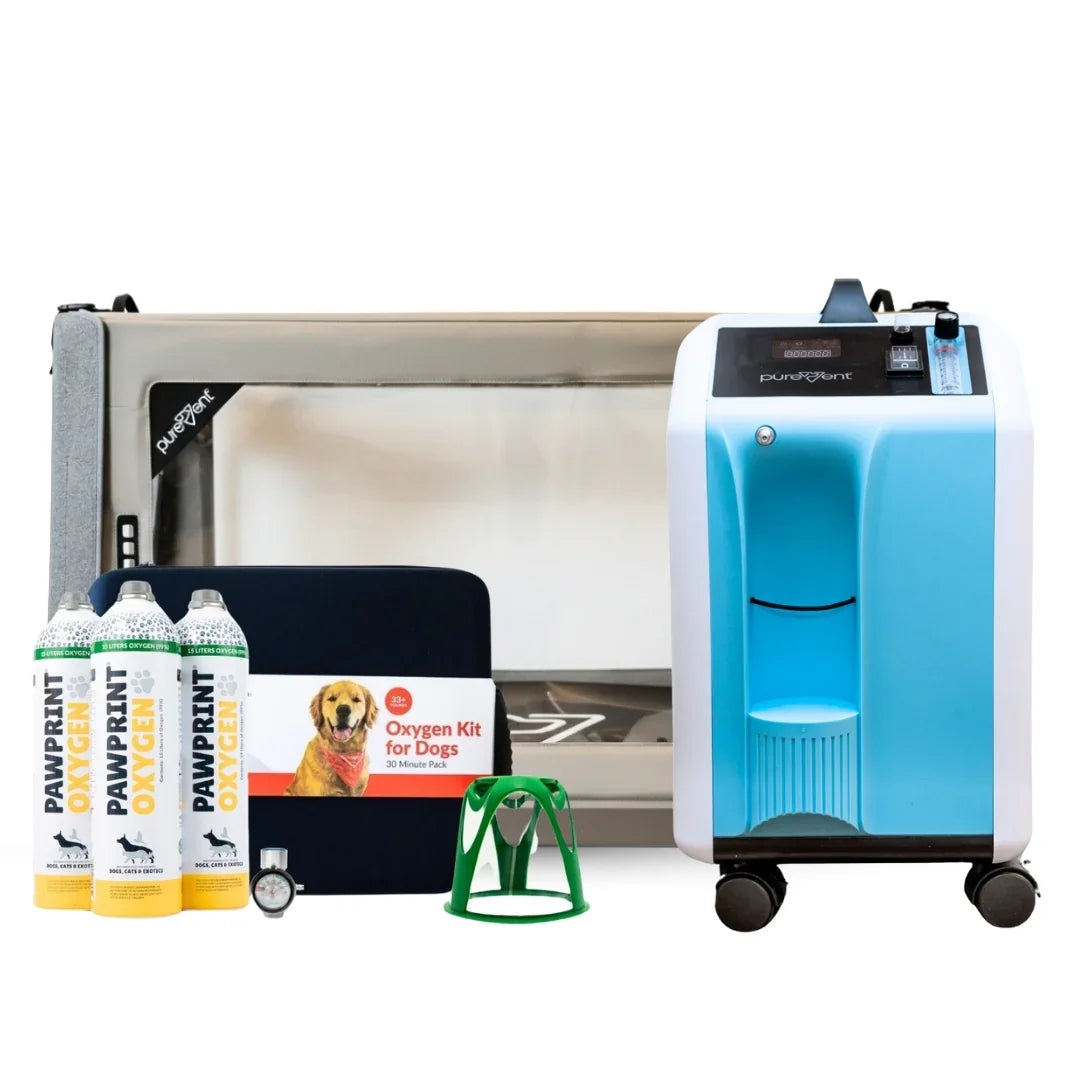
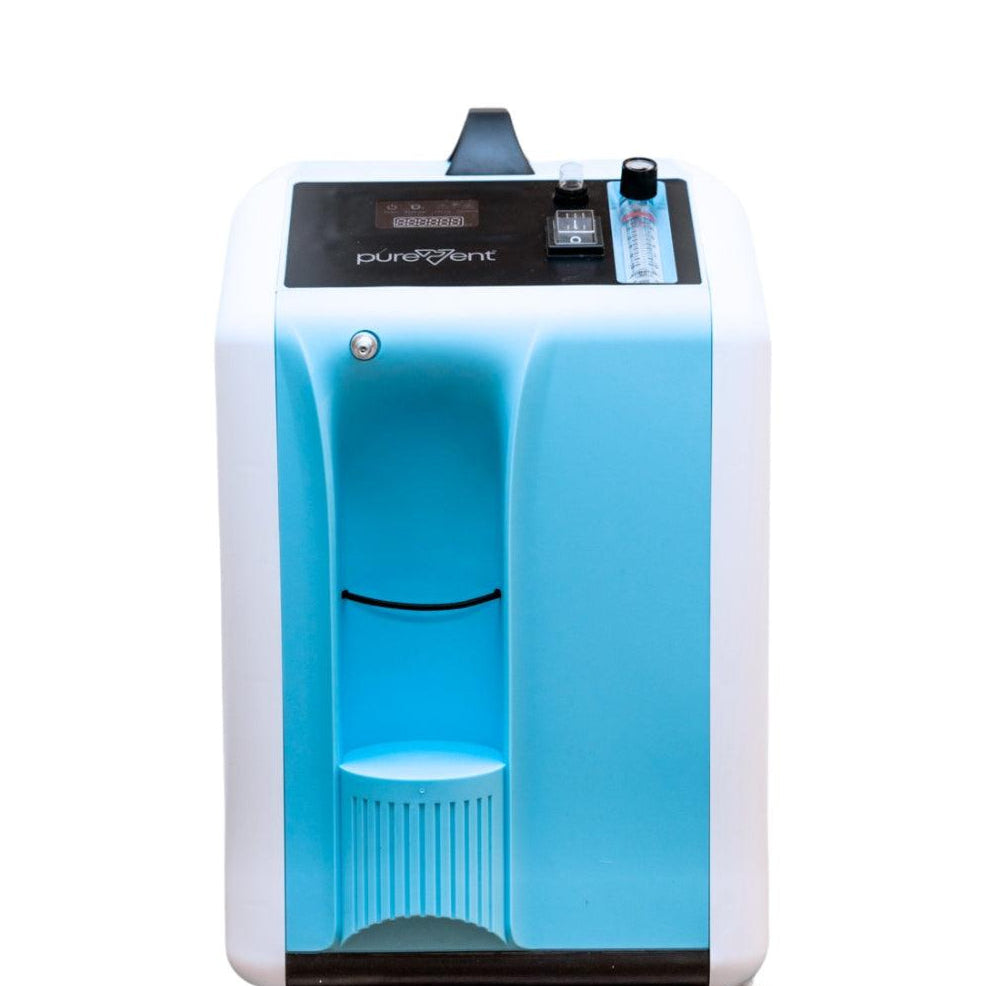
For at-home support, our oxygen bundles pair rescue and extended-therapy equipment for both scenarios. The Dog Rescue Oxygen Kit is the portable option for stabilizing a dog during an episode or on the way to care, and the PureVent Pet Oxygen Chamber supports at-home recovery from pneumonia or a chronic condition, always under your veterinarian's guidance. If your vet recommends longer-term therapy with an oxygen concentrator, note that concentrators require a prescription; kits, masks, chambers, and accessories ship without one.
Lowering the Odds of the Next One
Vaccines come with a reality check. The Bordetella, parainfluenza, and canine influenza vaccines reduce the severity of illness and the amount of virus a dog sheds; they don't bring the risk to zero. That's why a fully vaccinated dog can still come home from boarding with a cough. They're still worth keeping current, because a milder case is the point.
Exposure hygiene does the rest. Ask about ventilation and vaccine requirements at boarding, daycare, and grooming facilities, and skip the dog park during a local outbreak. When one dog in the house is symptomatic, keep them separated from the others for one to two weeks, and disinfect bowls, toys, and bedding. Bordetella can shed for two to three months after recovery, so keep a recently recovered dog away from vulnerable dogs even after the cough fades.
Puppies and newly adopted shelter dogs are the highest-risk group in their first weeks home. Their immune history is incomplete or unknown, and shelters concentrate exposure. Give a new arrival a two-week buffer before introducing them to boarding, daycare, or unfamiliar dogs.
Your Plan for the Next Sniffly Week
A sneezing, snuffly dog with normal energy and a normal appetite can usually be managed at home: rest, humid air, warm food, a harness instead of a collar, and separation from other dogs. Watch the trajectory rather than any single symptom. Improvement each day means you're on track.
Escalate when you see the measurable signs above. A resting breathing rate above 30, labored breathing, pale or blue gums, a day without eating, or a plateau followed by decline all mean it's time for your veterinarian, same day. Puppies, seniors, flat-faced breeds, and cardiac patients get that call sooner.
Most dog colds end quietly in a week or two. Knowing the thresholds means you can support your dog through the mild version with confidence, and act fast on the rare one that turns serious.

Keep Reading
Dog Wheezing: Causes, What It Sounds Like, and When It's an Emergency
Dog Flu Symptoms: How to Tell Canine Influenza From Kennel Cough and When It’s an Emergency
Dog Breathing Fast While Sleeping: Normal or a Warning Sign?
Dog Fainting or Collapsing: Causes, What to Do, and When It’s an Emergency
Why Is My Dog Coughing? A Complete Guide to Causes, Sounds, and When to Worry
Senior Pets and Breathing Problems: A Guide to Aging Lungs, Hearts, and Airways
Taurine for Dogs: What It Does, Who Runs Low, and When to Supplement