A coughing, feverish dog raises the same question every time: is this dog flu, kennel cough, or something worse? Canine influenza looks like every other respiratory infection on day one, and the answer matters most when breathing is at stake.
Most cases stay mild and resolve with rest and supportive care. A small share progresses to pneumonia, where recovery runs longer and breathing needs real support. That is why this guide is built on thresholds you can measure at home, and why owners of at-risk dogs often ask their veterinarian about extended oxygen therapy before respiratory season starts.
⏱ 10-minute read | Updated September 2026 | Reviewed by Pawprint Oxygen Veterinary Team | Browse more articles →
Table of Contents
Dog Flu Symptoms at a Glance
Canine influenza is a highly contagious respiratory infection caused by influenza A virus. The typical symptom set:
- Persistent cough, moist or dry, often lasting 10 to 21 days
- Nasal discharge, sometimes thick, green, or yellow
- Eye discharge and sneezing
- Fever
- Lethargy and low energy
- Loss of appetite
Most dogs stay in this mild, self-limiting tier. Your dog moves into the complication tier when you see a high fever, fast or labored breathing at rest, or gums that look pale or bluish. Any one of those signs means calling your veterinarian now rather than waiting out the cough.
Two strains cause dog flu, H3N8 and H3N2, and H3N2 is the strain circulating in the US today. How your dog is breathing matters more to your next step than which strain caused it.

What Canine Influenza Does to the Airway
The virus replicates in the lining of the upper airway, inflaming the same tissue your dog uses to move air with every breath. That irritation explains the signature of this illness: a cough that keeps going for days or weeks after the fever breaks and your dog starts acting brighter.
Timing works against you here. Signs typically appear 2 to 4 days after exposure, and dogs shed the most virus during that incubation window, before anything looks wrong. Where your dog has been in the past week is often the most useful clue you can give your vet.
Because dogs have no natural immunity to these strains, nearly all exposed dogs become infected. Roughly 80 percent develop clinical signs while about 20 percent stay asymptomatic, and those silent carriers still spread the virus. The real danger is secondary bacterial infection. A small subset of dogs develop pneumonia, and that complication drives the emergencies covered later in this guide.


Dog Flu vs Kennel Cough: How to Tell the Difference
Both illnesses live under the umbrella of canine infectious respiratory disease complex (CIRDC), and they overlap enough that symptoms alone are not diagnostic. Only a lab test can confirm which one your dog has. The pattern of signs can still shift the probability meaningfully:
Sign |
Dog flu (canine influenza) |
Kennel cough |
Cause |
Influenza A virus (H3N2, H3N8) |
Bordetella bronchiseptica and parainfluenza complex |
Onset |
Gradual, with whole-body illness |
Abrupt cough in an otherwise bright dog |
Cough character |
Soft, moist, often productive |
Dry, honking "goose honk" |
Fever |
Common, can run high |
Uncommon or mild |
Nasal and eye discharge |
Prominent |
Minimal |
Appetite and energy |
Often reduced |
Usually normal |
Duration |
Cough 10 to 21 days, up to 4 weeks |
Typically 1 to 2 weeks |
Confirmation |
PCR swab, paired blood tests |
Usually diagnosed on presentation |
A hacking cough by itself points to neither. Fever plus discharge plus lethargy shifts the odds toward influenza.
The Overlap That Fools Most Owners
Both infections spread through respiratory droplets in the same high-density dog settings: boarding facilities, daycare, groomers, dog parks, shelters, and rescue transport. Co-infection happens regularly, which is part of why symptom-based guessing fails.
The overlap extends to treatment mistakes. Antibiotics have no effect on the influenza virus itself; veterinarians reserve them for secondary bacterial infection. Reaching for leftover antibiotics at home treats neither illness and can mask the signs your vet needs to see.
Ruling Out the Other Look-Alikes
A few conditions imitate an infectious cough. Pneumonia is a complication of flu rather than an alternative to it. Distemper adds neurological signs in unvaccinated dogs. A cough that worsens when your dog lies down, or comes with tiring on walks, suggests a cardiac cause or an airway-structure problem like collapsing trachea instead of infection.
Our guide to why your dog is coughing walks through each of these differentials by cough sound and context. If the picture looks more like kennel cough, our guide to treating kennel cough at home covers that recovery in full.
How Dog Flu Is Diagnosed
Diagnosis moves through a few steps, and most of them happen in one visit:
1. History
Your veterinarian starts with the timeline: when signs began, what the cough sounds like, and where your dog has been in the last seven days.
2. Physical exam and lung auscultation
A hands-on exam follows, with your vet listening for the crackles that suggest pneumonia.
3. PCR testing
Lab confirmation runs on timing. PCR testing on a nasal or throat swab works best within about four days of symptom onset, because sensitivity drops as viral shedding tapers. A negative PCR late in the illness does not rule flu out.
4. Paired serology
One blood sample early and another two to three weeks later can confirm the infection retrospectively.
5. Chest radiographs
These come in when pneumonia is suspected.
Many veterinarians treat a mild case supportively without confirming the strain, which is a reasonable call. Testing matters most for outbreak tracing, for multi-dog households, and for any dog that starts declining.

When Dog Flu Becomes an Emergency
Generic advice says to see your vet "if symptoms worsen." That helps nobody at 11pm. These are the specific thresholds that mean emergency care now, tonight:
Rectal temperature above 104°F, the fever range the Merck Veterinary Manual associates with severe illness and pneumonia
Resting respiratory rate above roughly 35 to 40 breaths per minute
Effortful breathing with visible abdominal push
Open-mouth breathing while at rest
Neck extended, elbows out posture
Gums that look pale, grey, or blue
Coughing up foamy or blood-tinged fluid
Refusing water for 12 or more hours
Collapse or extreme weakness
The mechanism behind these signs is hypoxemia, low blood oxygen. In flu-driven pneumonia, inflamed and fluid-filled airways transfer less oxygen with each breath. Your dog compensates by breathing faster long before anything looks dramatic, which is why the counted number catches trouble earlier than your eye will.
How to Count a Resting Respiratory Rate
Wait for true rest: Count only when your dog is asleep or fully settled. Panting or recent activity skews the number.
Count for 30 seconds: One rise and fall of the chest is a single breath. Time 30 seconds, then double the number.
Compare against the thresholds: A normal sleeping rate runs about 15 to 30 breaths per minute, and readings consistently above 30 are abnormal. A rate holding at 35 to 40 or higher, at rest, is an emergency signal.
Our full guide to measuring your pet's respiratory rate covers technique and tracking.
How to Check Gum Color and Capillary Refill
- Look at the gum color: Lift your dog's lip and look at the gums above the teeth. Healthy gums are bubblegum pink.
- Test capillary refill: Press a finger against the gum until it blanches white, release, and count how long the pink takes to return. Under two seconds is normal.
- Know the emergency signals: Pale, grey, or blue gums, or a refill time over two seconds, signals poor oxygen delivery and means emergency care.
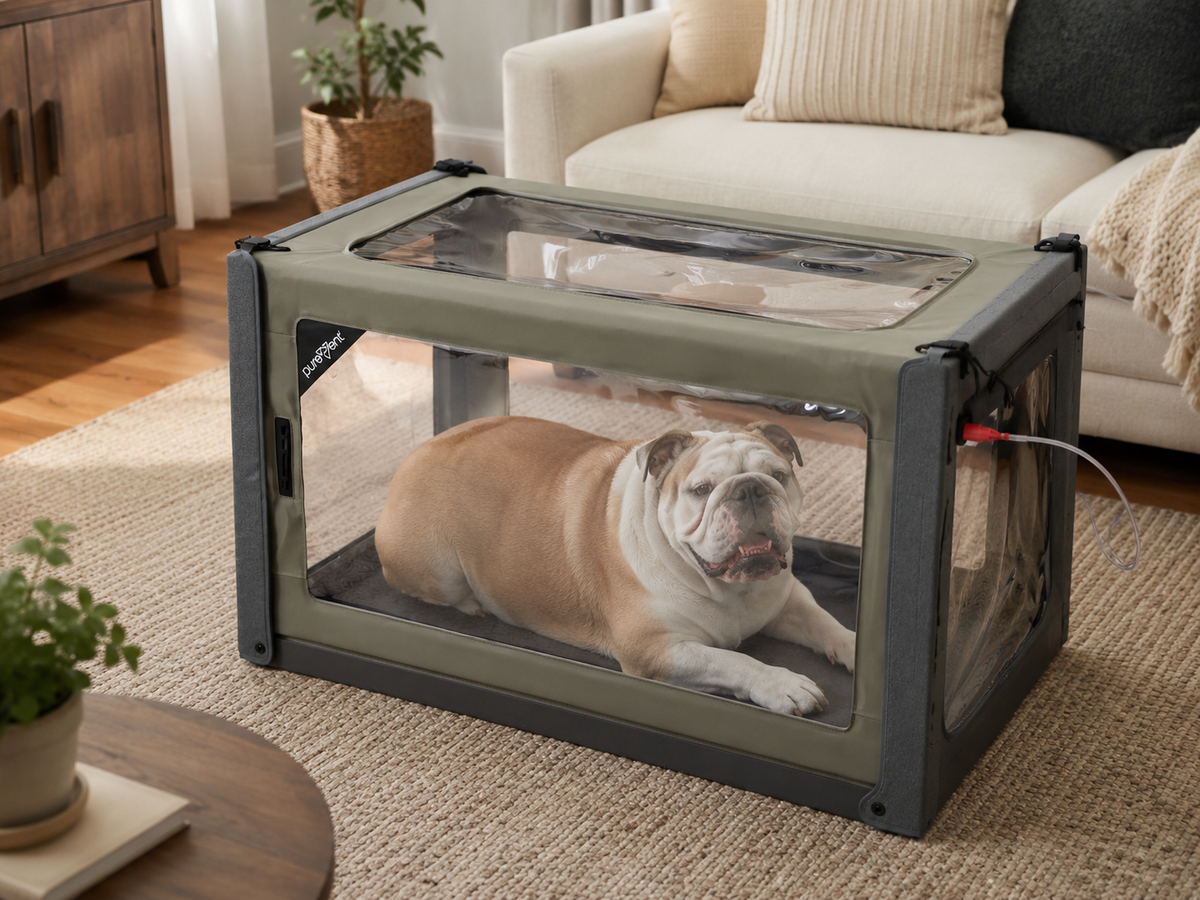
In hospitalized pneumonia cases, veterinarians deliver supplemental oxygen to reduce the work of breathing while treatment targets the infection itself. Some dogs are discharged with a continuing oxygen need, and vet-directed oxygen support can continue at home.
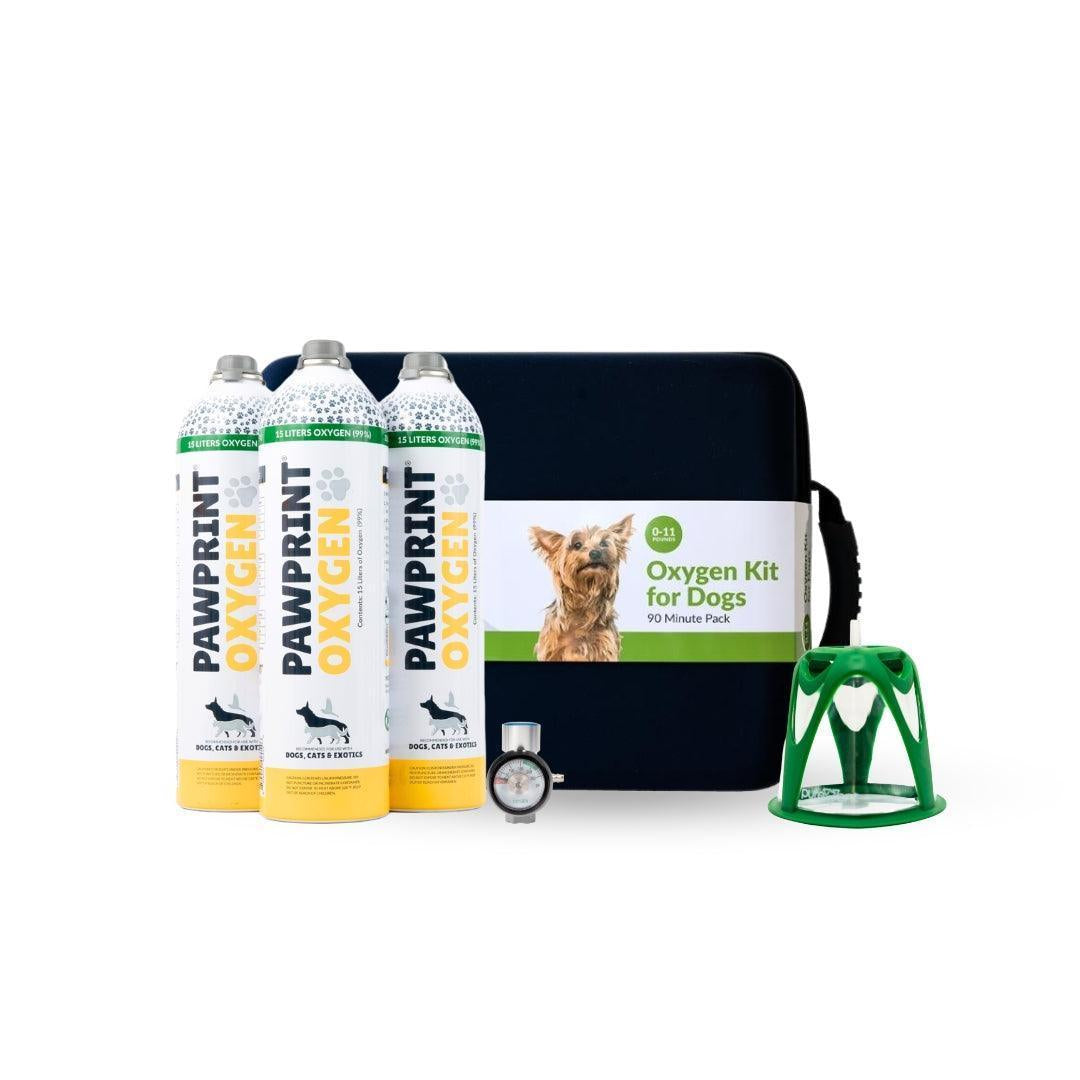
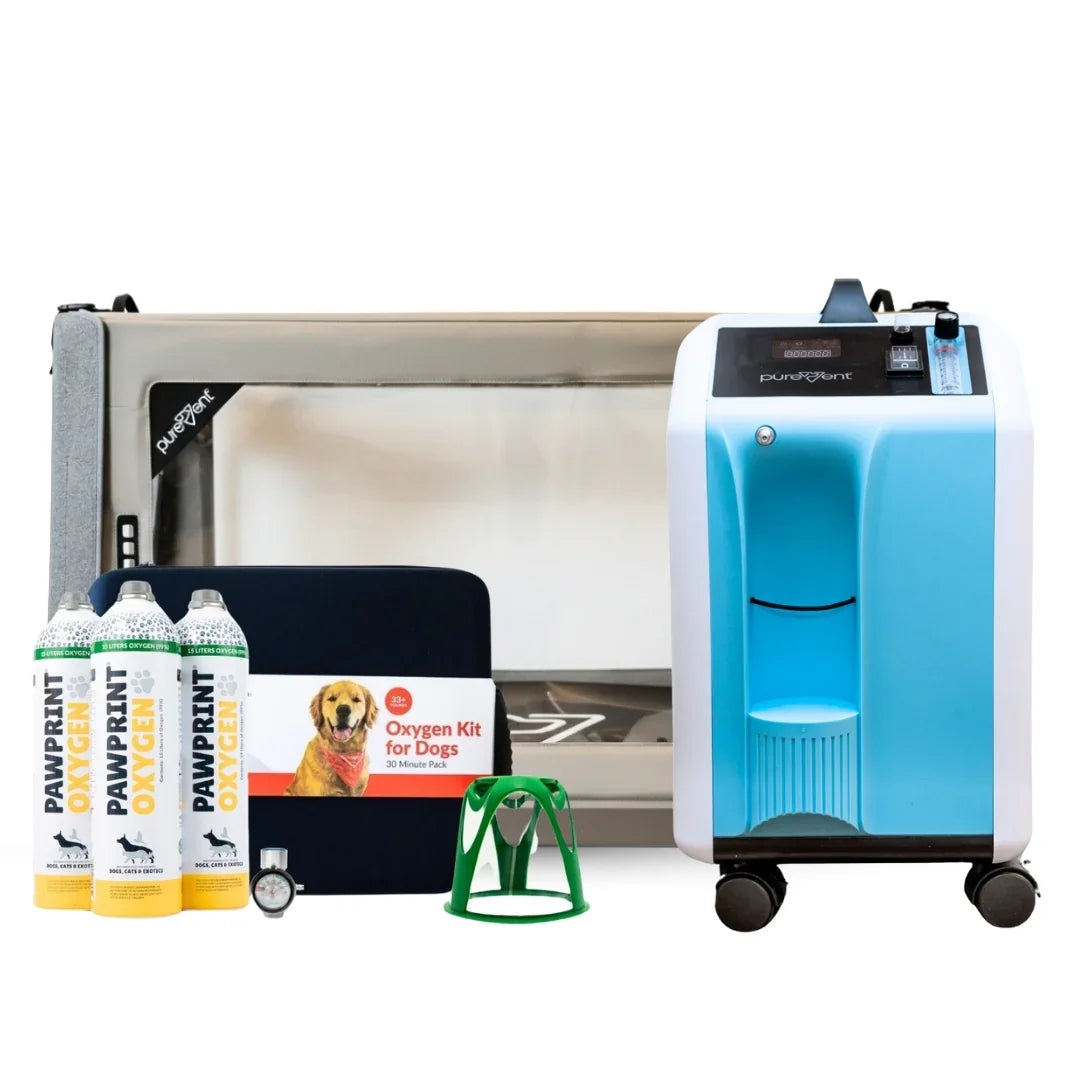
Our Dog Rescue Oxygen Bundles exist for that situation, delivering oxygen through a fitted PureVent Pet Oxygen Mask for dogs already under a veterinarian's care with a diagnosed oxygen need.
Treatment and Recovery at Home
There is no specific antiviral treatment for canine influenza. Recovery comes down to a handful of things done well:
1. Supportive care at home
For uncomplicated cases, supportive care is the whole treatment: rest and activity restriction, fresh water always available, humidified air, and soft or warmed food to work around a dulled appetite. Swap the collar for a harness to spare an irritated trachea.
2. Vet-directed interventions
Your veterinarian adds interventions case by case. Antibiotics enter only when a secondary bacterial infection develops. Anti-inflammatories or cough suppressants come down to individual judgment.
3. Oxygen support for severe cases
Dogs sick enough for hospitalization receive IV fluids and oxygen therapy, and for a dog sent home with a continuing oxygen need, an option like our Extended & Rescue Oxygen Therapy Bundle for Large Pets from the oxygen bundles collection continues that vet-directed support at home.
4. The two recovery clocks
Fever and lethargy usually resolve within a few days. The cough commonly lingers 10 to 21 days and can persist up to about 30 days. A fading cough in a bright, eating dog is normal recovery.
5. What to skip
Human cough medicine can contain ingredients toxic to dogs. Honey may soothe a throat but cannot substitute for veterinary care in a febrile dog. And skip exercise meant to "clear the lungs," because an inflamed airway needs rest.
6. The one pattern to watch
A dog that improved and then relapsed is the classic signature of secondary bacterial pneumonia and warrants a same-day recheck.
Isolation, Contagion, and Household Risk
Isolate by the calendar rather than the cough. Dogs can shed virus for weeks after signs fade, H3N2 for as long as 24 days, so the AVMA recommends isolating for about four weeks from symptom onset in suspected or confirmed cases.
Practical containment in a multi-dog home: separate rooms, no shared bowls, toys, or bedding, and disinfected surfaces. Wash your hands and change clothes between dogs, since the virus survives roughly 24 hours on clothing and 12 hours on hands. Cancel boarding, grooming, daycare, and dog park visits, and call ahead before vet appointments so you can wait in the car.
Two household questions come up constantly. There are no confirmed human cases of canine influenza anywhere. Cats are a different story: H3N2 can infect cats, usually mildly, so keep a sick dog away from feline housemates too.
The Canine Influenza Vaccine
The vaccine is bivalent, covering both H3N8 and H3N2, and AAHA classifies it as a noncore, lifestyle vaccine given as two initial doses 2 to 4 weeks apart with annual boosters. It reduces severity, duration, and shedding rather than guaranteeing prevention.
The dogs it fits: those who board, attend daycare, visit groomers, show, travel, or move through shelters and rescue transport. It also makes sense for brachycephalic breeds like Pugs, Bulldogs, and Frenchies, and for dogs with existing heart or airway disease, where any respiratory infection carries more risk. Whether your dog needs it is a conversation for your veterinarian, weighed against your dog’s actual lifestyle.
One clarification saves confusion: the Bordetella (kennel cough) vaccine and the canine influenza vaccine are different shots. Having one does not cover the other.
What to Tell Your Vet
The right information speeds diagnosis more than a detailed description of worry does. Bring this to the appointment or the phone call:
The day symptoms started
Cough character and frequency (record a video if you can)
Highest temperature you recorded
Resting respiratory rate, counted while your dog slept
Appetite and water intake over the past 48 hours
Exposure events in the last 7 days (boarding, daycare, parks, grooming)
Vaccine history
Existing conditions and current medications
Four of those items are measurable at home before you ever leave the house: temperature, respiratory rate, gum color, and intake. The skills from the emergency section above turn you from a worried narrator into a useful diagnostic partner.

The Numbers That Decide Your Next Step
Dog flu and kennel cough will keep imitating each other, and a lab swab, not your ear, settles which one your dog has. What you can settle at home is severity.
A bright dog with a lingering cough is recovering. A dog breathing over 35 times a minute in its sleep, running a high fever, or showing pale gums needs a veterinarian tonight.
Count the breaths, check the gums, take the temperature, and write the numbers down. Those three measurements tell you whether you are managing a recovery or responding to an emergency, and either way, you will know what to do next.
Keep Reading
- Dog Breathing Fast While Sleeping: Normal or a Warning Sign?
- 7 Tips to Prevent Kennel Cough and Other Dog Respiratory Illnesses
- The Complete Kennel Cough FAQ for Dog Owners
- Dog Wheezing: Causes, What It Sounds Like, and When It's an Emergency