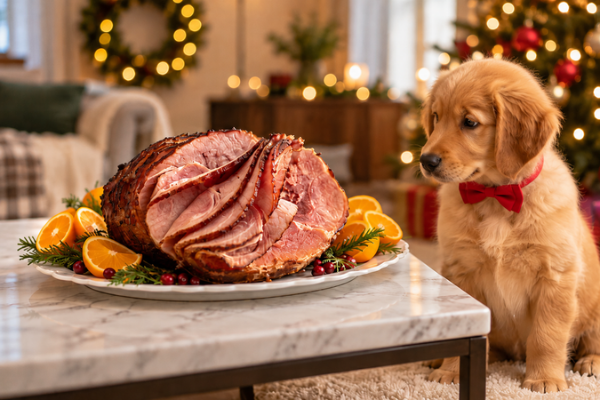
A slice of ham slipped under the table, or a corner pulled off the counter while everyone was carving, usually means a mild stomach upset at worst for a healthy dog. For a dog with heart disease, that same slice deserves a closer look.
Most of the risk in ham comes from its salt and fat, and glazes and bones add problems of their own. If your dog already has a diagnosed heart condition, the sodium on a holiday plate works directly against the plan your veterinarian has set.
⏱ 10-minute read | Updated October 2026 | Reviewed by Pawprint Oxygen Veterinary Team | Browse more articles →
Table of Contents
Is Ham Bad for Dogs?
Ham isn't toxic to dogs, but it's a poor food for them. Holiday and deli hams are heavily salted and high in fat, and the sugary glazes and cooked bones that come with them bring separate risks.
How much any of that matters depends on the dog who ate it:
A healthy adult dog who had a small bite of plain ham: usually fine, with a mild upset stomach at most.
A dog with diagnosed heart disease: the sodium can make the body hold on to extra fluid, so call your vet and watch your dog's breathing closely.
Any dog who ate a ham bone, a large amount, or a glaze made with onion, garlic or xylitol: call your veterinarian now.
Is ham good for dogs in any way? It does contain protein. Plain cooked chicken, skinless turkey breast and lean beef give your dog that same protein without the salt, curing agents or fat trim.

What Makes Ham Risky: Sodium, Fat, Glazes and Bones
1) Sodium and Curing Salts
Ham is cured pork. Curing means the meat has been treated with salt and, in most store-bought ham, sodium nitrite or nitrate as a preservative.
Your dog's size matters here. A slice that barely counts as a snack for you delivers the same sodium into a 15-pound dog, whose body is a fraction of your size.
Salt content varies a lot by type. Ranked from saltiest down:
Country ham, prosciutto and other dry-cured hams
Sliced deli ham and spiral-cut, honey-baked or brown-sugar glazed holiday hams
Fresh, unseasoned pork roast that was never cured, which carries far less sodium
Deli ham is worth watching because it's a common pill wrapper.
Spiral-cut ham usually comes coated in a sugary glaze on top of that salt. Hams labeled "uncured" are still cured with celery powder, a natural nitrite source, and they're still salty.
2) Fat and Pancreatitis
The fat cap, skin, edge trim and pan drippings hold the most fat per bite. A sudden rich meal outside your dog's normal diet is a well-known trigger for pancreatitis, a painful inflammation of the pancreas, and holiday tables supply plenty of them.
Signs usually appear within a few days of the meal. Watch for vomiting, a painful belly, refusing food, lethargy, or a hunched "prayer" posture with the chest low and the rear end raised.
Miniature schnauzers, overweight dogs and dogs who have had pancreatitis before face higher risk. If you notice these signs, call your veterinarian. The Merck Veterinary Manual has a detailed overview of pancreatitis in dogs and cats if you want to read more.
3) Glazes and Seasonings
Brown sugar, honey and maple glazes add sugar and calories your dog doesn't need. What goes into the rub, glaze or pan sauce is often more serious. Garlic and onion, including garlic powder and onion powder, damage a dog's red blood cells, and the effects can take several days to show.
Check the label on any sugar-free glaze, sauce or holiday baked good that came near the ham. Some contain xylitol, a sweetener that is dangerous to dogs even in small amounts. Studded and spiced hams add cloves and nutmeg, which can cause GI upset in the amounts a counter-surfing dog could grab.
4) Ham Bones
Cooked bones turn brittle and splinter. A ham bone or ham hock can cause choking, cut the mouth or throat, lodge in the stomach or intestines, or in serious cases perforate the gut. The bone also carries the same salt and fat as the meat around it.
Blockage signs can take a day or more to develop, so a dog who seems fine an hour later still needs watching. Look for vomiting, gagging, straining to pass stool, loss of appetite, a tender belly or lethargy.
If your dog swallowed a ham bone, call your veterinarian right away. Don't try to make your dog vomit at home, because a splintered bone can do more damage on the way back up.


How Much Ham Is Too Much?
There's no safe number of slices that works for every dog. The answer depends on your dog's size, the type of ham, and whether your dog has any history of heart disease, kidney disease or pancreatitis.
Veterinarians generally recommend keeping treats and table food to a small share of your dog's daily calories. The smaller your dog, the more of that share a single slice of ham uses up, and the heavier the salt load it delivers for your dog's size.
Salt poisoning, also called salt toxicosis or sodium poisoning, takes far more than a slice. With ham, the risk comes from a much bigger haul, like most of a ham, a pan of drippings or a bowl of brine, and it's higher for small dogs.
Signs of salt poisoning include excessive thirst, vomiting, diarrhea, wobbliness, muscle tremors and seizures. If your dog shows any of these after a large salty haul, call your vet or poison control immediately.
Why Ham Is a Bigger Problem for Dogs With Heart Disease
If your dog has mitral valve disease, dilated cardiomyopathy (DCM), a heart murmur your veterinarian is monitoring, or diagnosed congestive heart failure, ham needs a different answer.
Sodium makes the body hold on to water. More water in the bloodstream means more volume for the heart to move with every beat, and a heart that's already struggling can fall behind. When that happens, fluid can build up in or around the lungs, which is what makes breathing fast and labored in a dog with heart failure.
Medication doesn't cancel out a salty meal. Diuretics such as furosemide help your dog's body get rid of extra fluid and sodium, and a plate of ham pushes in the opposite direction.
How strict your dog's sodium limit is depends on the stage of disease. For mitral valve disease, veterinarians commonly use the ACVIM staging system. Dogs in stage B have heart changes but no signs of heart failure yet, while dogs in stages C and D have had heart failure.
Many dogs in early stage B don't need a sodium limit yet, while dogs further along in stage B may be advised to cut back mildly. Dogs in stage C or D are usually on tighter limits set by their veterinarian. Our guide to congestive heart failure in dogs walks through causes and day-to-day management.
Holidays are hard on a heart dog's sodium plan because the salt arrives in small amounts from many hands. Your brother-in-law drops a sliver of ham, a niece shares her roll, someone pours gravy over the kibble, and the visit lasts four days.
Each bite looks harmless to the person giving it, and together they add up to far more sodium than your veterinarian planned for.
Some of the saltiest foods a heart dog gets during the holidays arrive in the bowl or at pill time:
Deli meat, cheese or hot dogs used to hide pills
Broth or gravy poured over kibble
Leftover stuffing scraped into the bowl
Store-bought jerky and other processed treats
If most of your dog's extra salt comes at pill time, ask your veterinarian which pill-hiding options fit the plan. A small piece of plain, unsalted home-cooked chicken or a low-sodium pill treat your vet approves can do the same job as ham or cheese.
For the complete list of foods to keep away from a heart dog, see what not to feed your dog with congestive heart failure. When you're ready to look at diets, our roundup of the best dog foods for congestive heart failure covers options to discuss with your veterinarian.
Signs a Heart Dog May Be Reacting to a Salty Meal
A reaction to a salty meal usually builds over the next day or two. Count your dog's breaths while they sleep that night and again the next night.
A sleeping breathing rate above the number your veterinarian gave you, or a clear rise from your dog's usual baseline, is a reason to call. If your vet hasn't given you a number yet, ask for one. Our guide to dog breathing fast while sleeping explains how to count and what a normal resting rate looks like.
Other changes to watch for:
A new cough, or a cough that's worse than usual
Restlessness at night, trouble lying down, or sitting up with elbows out to breathe
A swollen belly from fluid buildup
Tiring faster than normal on walks
Pale, gray or bluish gums, or labored breathing at rest, are an emergency. Take your dog to your veterinarian or the nearest emergency clinic now.
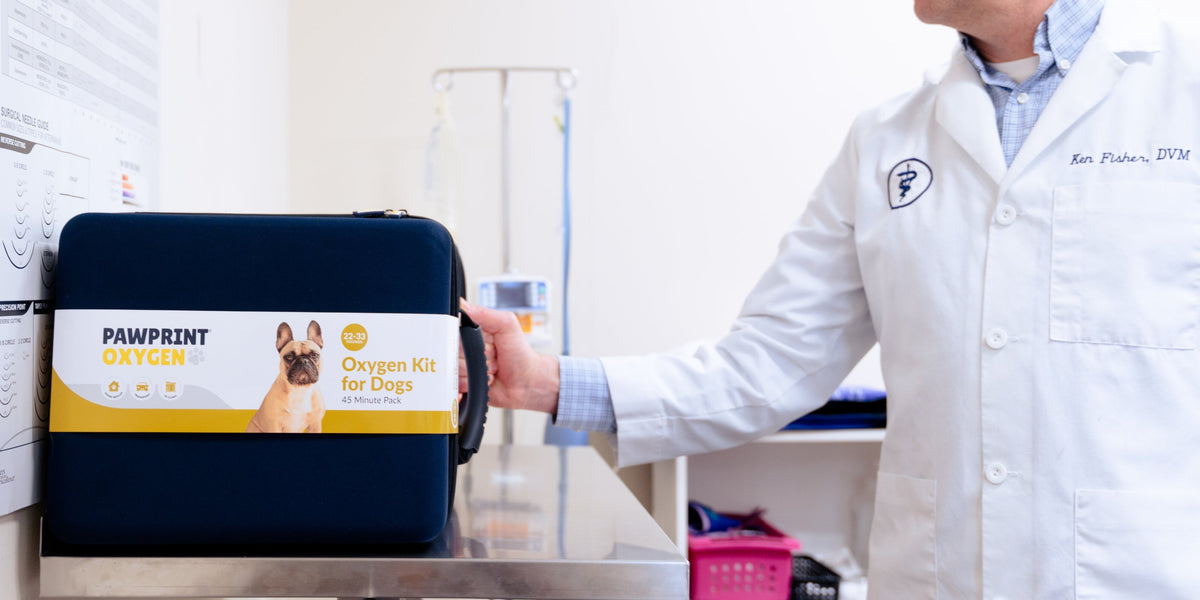
When a dog with heart failure reaches the clinic with fluid on the lungs, vets often give supplemental oxygen to ease the work of breathing while medication clears the fluid. For dogs with diagnosed CHF, some veterinarians include home oxygen in the emergency plan for breathing support on the drive in, though the emergency visit still needs to happen.
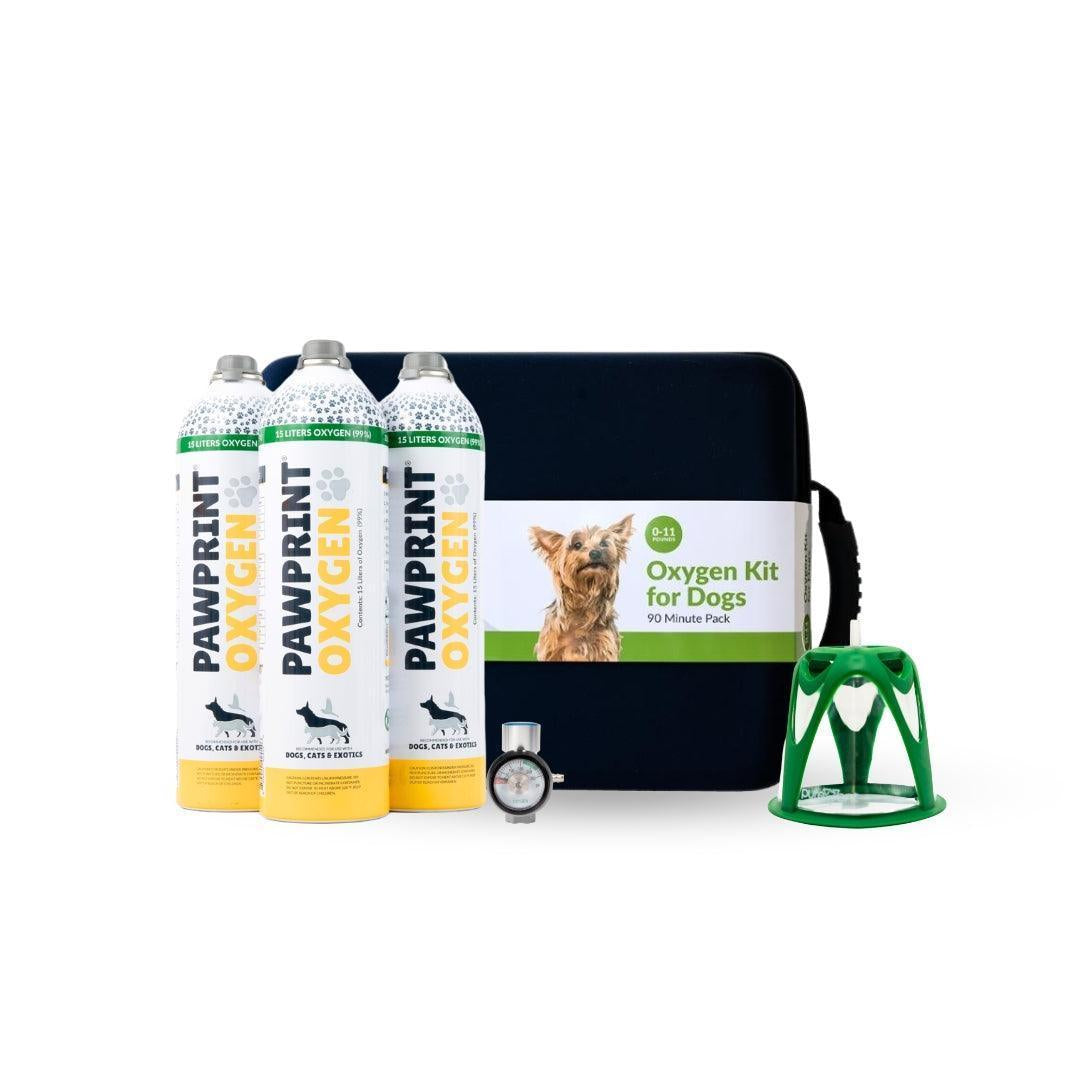
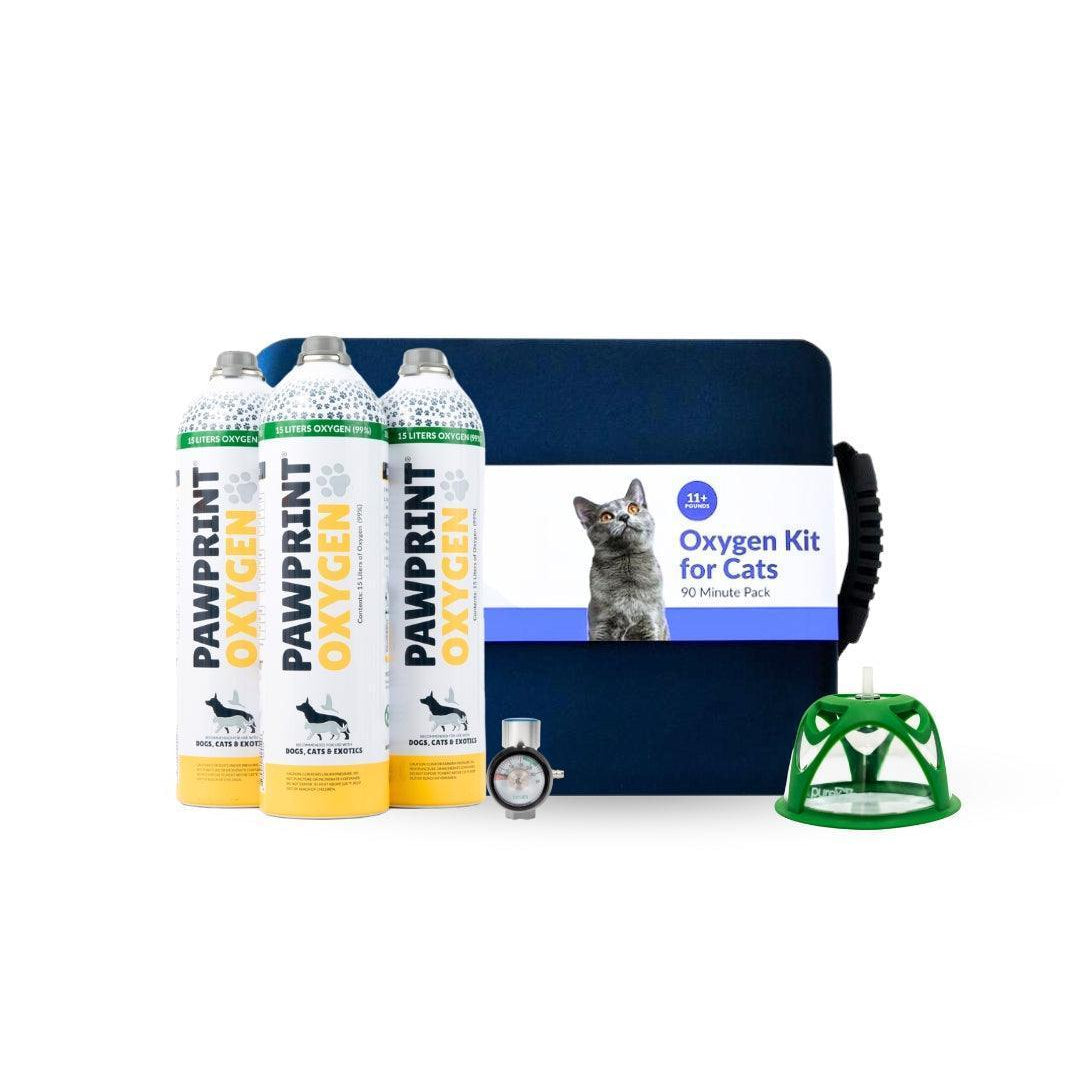
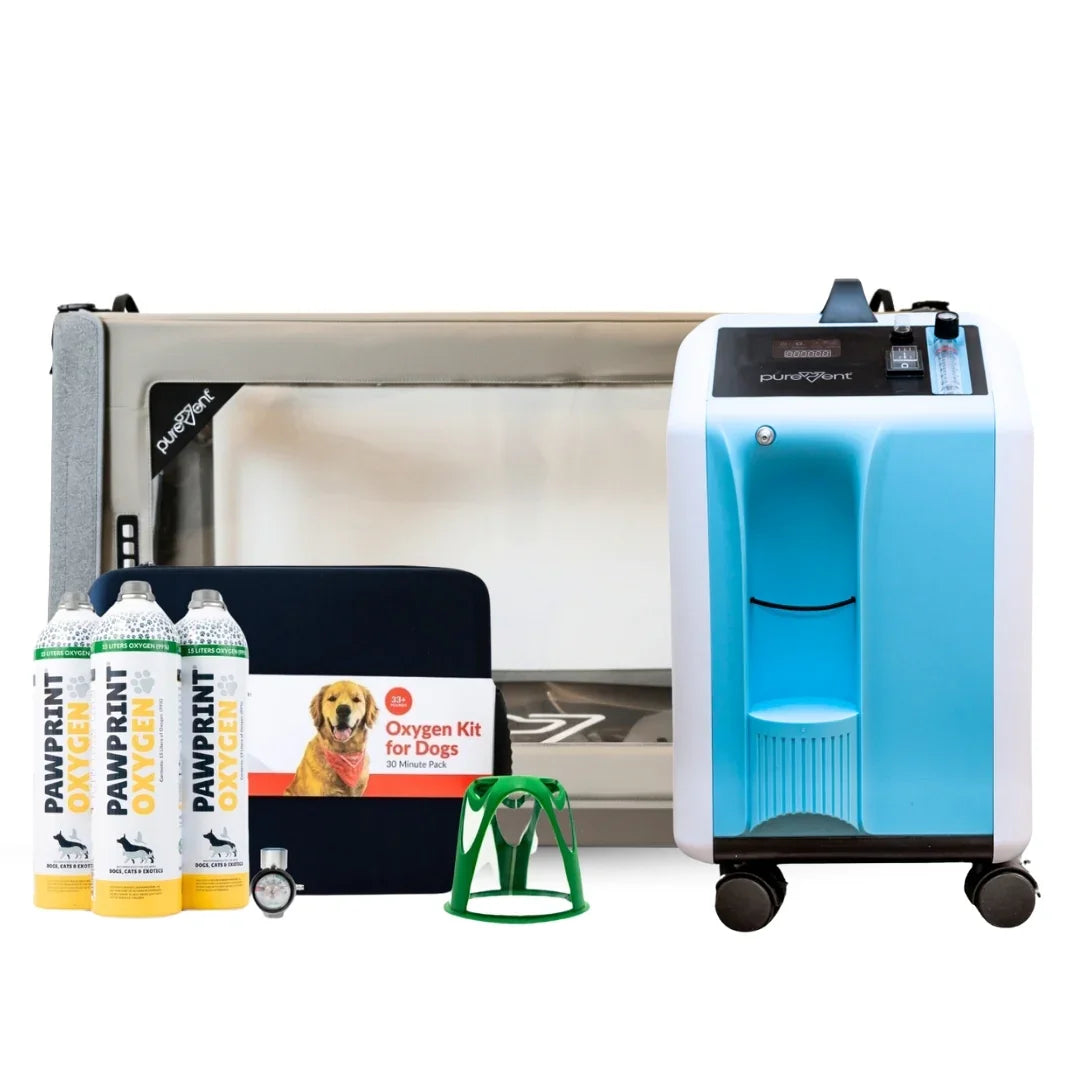
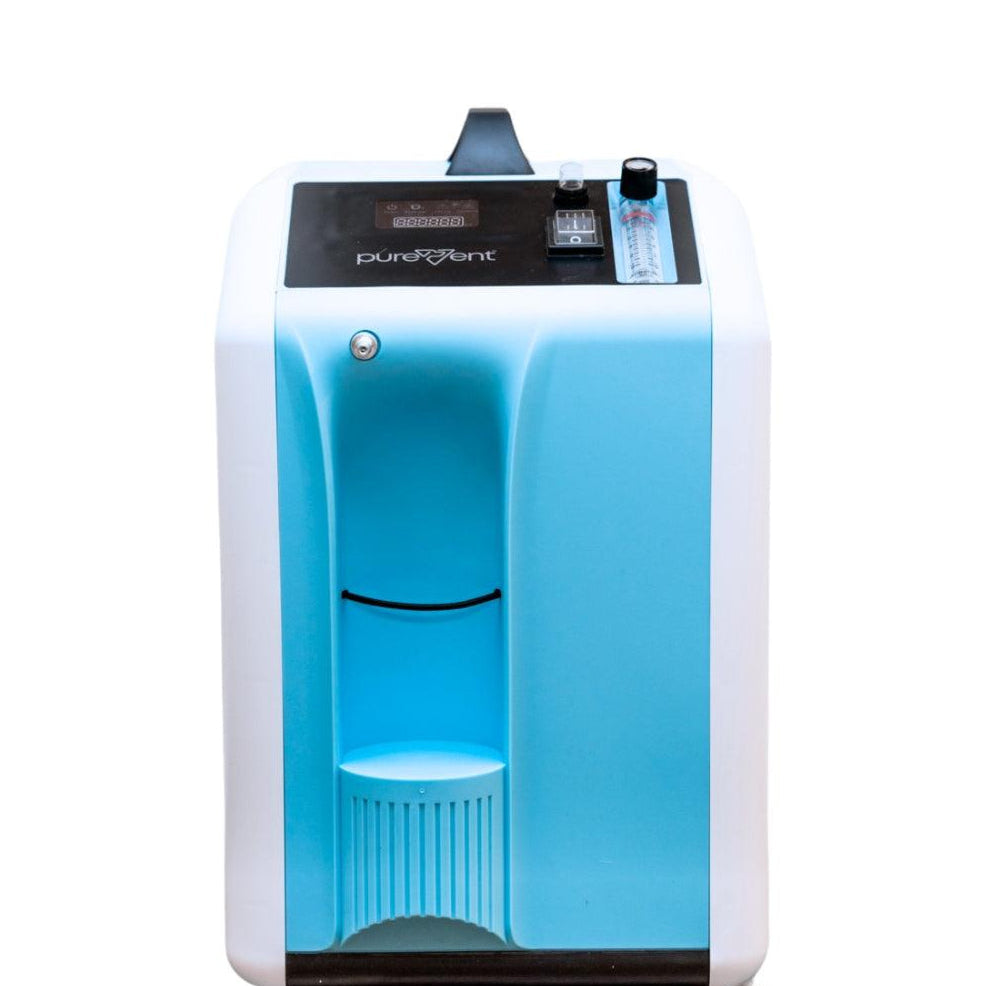
Our Dog Rescue Oxygen Kit is designed for that kind of trip and ships without a prescription. For longer-term breathing support at home, our oxygen bundles pair a chamber and concentrator, with or without a rescue kit.
Only the concentrator requires a prescription, as our prescription and ordering FAQ explains.

My Dog Ate Ham: What to Do Now
Start by working out how much your dog ate, what kind of ham it was (plain, glazed, deli or a bone), your dog's size, and any history of heart disease, kidney disease or pancreatitis.
If your healthy dog ate a small amount of plain ham, you can usually manage it at home. Keep fresh water available, skip extra treats for the day, and watch over the next day or two for vomiting, diarrhea or a change in appetite.
Call your veterinarian or the ASPCA Animal Poison Control Center at (888) 426-4435 (a consultation fee applies) if your dog:
Ate a ham bone or ham hock
Ate a large amount, or got into the drippings or brine
Ate a glaze or sauce that may contain onion, garlic or xylitol
Has heart disease
Don't make your dog vomit at home unless your veterinarian tells you to. Bones can cause injury coming back up, and the old trick of giving salt to trigger vomiting adds sodium to a dog who has already had too much.
If your dog has heart disease, count sleeping breaths tonight and tomorrow night, and keep giving every medication exactly as prescribed. Don't add or change doses on your own, even if you're worried about extra fluid.
When you call, have the ham type, a rough amount, the time your dog ate it and a list of current medications ready.
Other Holiday Foods: What's Fine and What's Risky

The rest of the holiday plate carries many of the same problems as ham: salt, fat, onion and garlic.
Food |
For a healthy dog |
Why |
For a heart dog |
|---|---|---|---|
Turkey (plain white meat, no skin or bones) |
OK in small amounts |
Lean protein |
OK if your vet agrees |
Turkey skin, drippings, brined or injected turkey |
Avoid |
High salt and fat |
Avoid (sodium) |
Gravy |
Avoid |
Salt, fat and often onion |
Avoid (sodium) |
Stuffing |
Avoid |
Onion, garlic, broth and butter |
Avoid (sodium) |
Mashed potatoes |
Plain potato OK; avoid butter, cream, salt or garlic versions |
Fat, salt and allium |
Plain only |
Sweet potatoes |
Plain baked OK; avoid candied or marshmallow casserole |
Added sugar and fat |
Plain only |
Green beans |
Plain steamed OK; avoid casserole |
Canned soup and fried onions add salt, fat and onion |
Plain only |
Cranberry sauce |
Plain cranberries OK in small amounts; limit sauce |
Sugar, and some recipes include grapes or raisins |
Limit |
Pumpkin (plain, no pie filling) |
OK in small amounts |
Fiber, no added salt |
OK |
Bacon and sausage |
Avoid |
Same salt and fat as ham, often with garlic or onion |
Avoid (sodium) |
Can dogs eat gravy? It's best skipped, since most gravy is built on salty drippings and often onion. Turkey skin carries the same salt and fat, so share plain white meat with the skin pulled off.
The meats dogs should avoid most are cured and processed meats like ham, bacon, sausage and hot dogs, along with fatty trimmings, skin and cooked bones.
Some holiday foods are toxic, and a small amount can cause harm: raw bread dough, grapes and raisins, chocolate, macadamia nuts, alcohol and anything sweetened with xylitol. If your dog gets into any of these, call your veterinarian or poison control right away.

Heart-Friendly Ways to Include Your Dog in Holiday Meals
Your dog can still have a holiday plate of their own:
Set aside plain, unsalted, skinless turkey or chicken before anything gets seasoned.
Add plain vegetables from the table above, steamed with no butter or salt.
Serve their regular food or prescription diet in a puzzle feeder or lick mat while everyone else eats.
If you're hosting, put one person in charge of everything the dog eats, and tell guests when they arrive that table food is off limits. Giving your dog a separate room during the meal and cleanup helps, and so does a secured trash can, since bones, foil and drippings all end up there.
For a heart dog, call your veterinarian before the holiday and ask which treats guests can hand out. That way you have approved options ready when someone wants to share.
When a Bite of Ham Matters and When It Doesn't
For a healthy dog, a small piece of plain ham usually calls for fresh water and a day of watching. Bones, large amounts, and glazes with onion, garlic or xylitol call for your veterinarian right away.
For a dog with heart disease, most of the work happens before the meal: pill-hiding foods your vet has approved, guests who know the rule, and a sleeping breath count you already know how to take. With those in place, you can handle a slipped slice calmly and know exactly when it's time to call.