End-stage heart failure has a specific definition: symptoms that no longer respond to medication. Fluid keeps returning, breathing stays labored, and dose increases buy less and less relief. No single symptom marks the end. The pattern does.
A congestive heart failure (CHF) diagnosis is a different thing entirely. Most dogs live months to years on medical therapy with a good quality of life. This article is about the later stage, when the disease stops responding.
In the final phase, signs usually arrive in a recognizable order: breathing effort at rest, then refusal of food, then weakness or collapse, then withdrawal. Some of these signal a decline measured in days to weeks. Others are emergencies within hours: blue, grey, or pale gums, open-mouth breathing at rest, or collapse. Knowing which is which is the point of everything below.
⏱ 10-minute read | Updated September 2026 | Reviewed by Pawprint Oxygen Veterinary Team | Browse more articles →
Table of Contents
Breathing Changes: The Earliest and Most Reliable Signal
In heart failure, the heart can no longer pump blood effectively. Blood backs up behind the failing side, pressure rises, and fluid leaks into the lungs (pulmonary edema) or around them (pleural effusion). Oxygen can’t cross into the bloodstream, and breathing effort climbs to compensate.
That’s why breathing is where the decline shows first, and why it gives you the single most useful home metric: your dog’s resting or sleeping respiratory rate.
How to Count a Sleeping Respiratory Rate
Wait until your dog is genuinely asleep, not just resting with eyes open. Count chest rises only, one rise and fall per breath, for 30 seconds, then double the number. Normal for most dogs, including dogs with well-controlled heart failure, falls between 15 and 30 breaths per minute.
Healthy dogs average sleeping rates under 25 breaths per minute and rarely go above 30 at home. But the trend matters more than any absolute number. A dog whose sleeping rate has drifted from the high teens to the mid-thirties over two weeks is deteriorating, even if they look comfortable during the day.
A sustained climb above 30 suggests fluid is re-accumulating in the lungs, which makes this count one of the most sensitive home measures of whether CHF is still controlled. Write the number down daily. A log catches a slow climb that memory smooths over.
Body Position and Breathing Behavior
Dogs in respiratory distress change how they hold themselves. Watch for a stance with the neck extended and elbows out wide, refusal to lie flat on their side, sleeping propped upright or sitting, and moving from spot to spot at night, unable to get comfortable. That posture, called orthopnea, eases the work of breathing.
Open-mouth breathing or heavy panting in a cool, calm, resting dog is different from heat or excitement panting. There’s no trigger and no settling. The chest and stomach move dramatically with each breath.
The Cardiac Cough
A cardiac cough is soft and wet, and it worsens at night and when your dog lies down, because recumbency shifts fluid within the lungs. It sounds different from the dry, honking cough of a collapsing airway, and it comes paired with increased breathing effort.
Pink-tinged or frothy fluid from the nose or mouth means a pulmonary edema crisis. This is an emergency right now, not a sign to monitor.

Gum and Tongue Color as a Real-Time Oxygen Check
Lift your dog’s lip and press a finger against the gum. Healthy gums are pink and refill within about two seconds after you release them. Pale or white gums suggest poor circulation or anemia. Grey or “muddy” gums suggest failing oxygen delivery. Brick-red can accompany overheating or sepsis.
A bluish tint to the gums and tongue is cyanosis. It means oxygen delivery to tissues has failed, and at that point supplemental oxygen and emergency veterinary care are the only interventions that change anything in the moment.
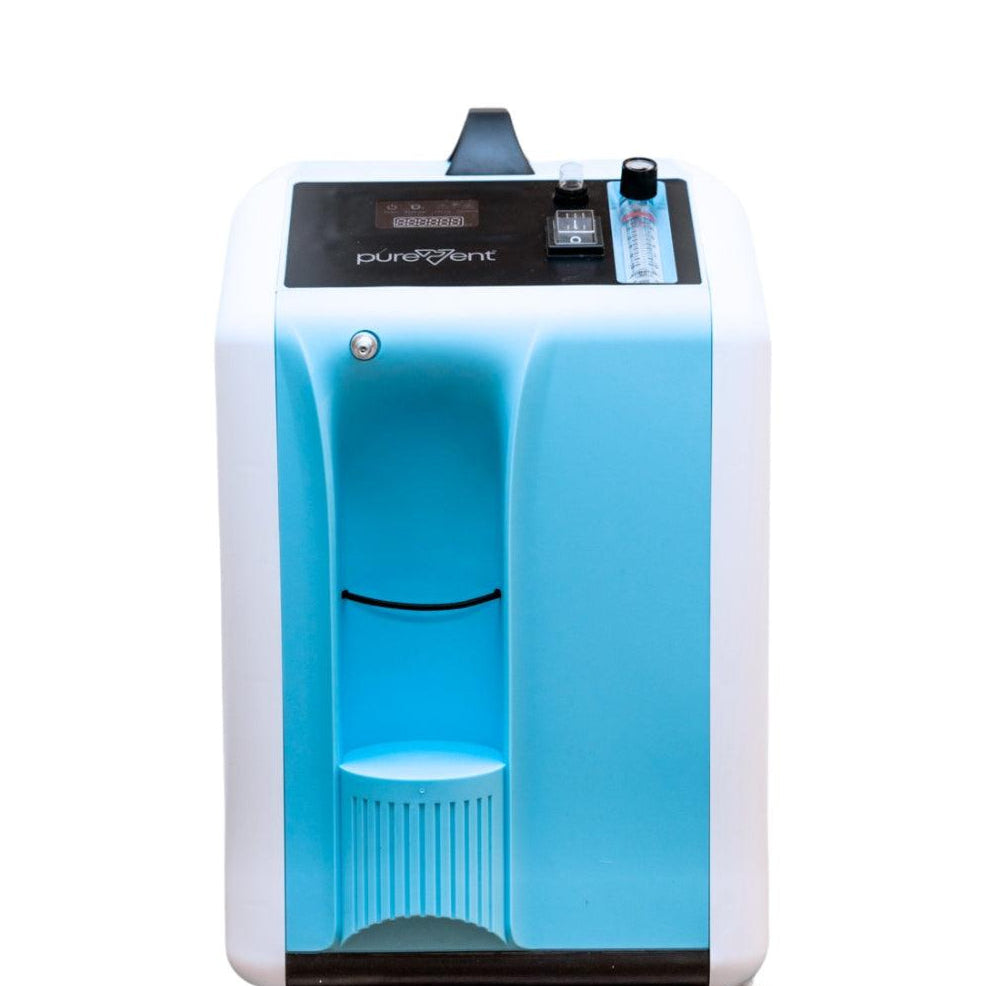
Many owners managing late-stage CHF at home keep supplemental oxygen on hand, typically a medical-grade oxygen concentrator (the PureVent 5L or 10L, sized to your dog and chamber), because respiratory crises tend to happen at night, at home, hours from a clinic. Concentrators require a prescription from your veterinarian; masks, chambers, and rescue kits do not.
Oxygen relieves the work of breathing during a crisis. It does not clear fluid, reverse heart failure, or replace diuretics or a call to your vet.


Physical Signs of a Dog Dying of Heart Failure: The Final Weeks
Right-sided heart failure pushes fluid into the abdomen (ascites) and the limbs (peripheral edema). A fluid belly feels tight and rounded rather than soft like fat, and it can appear quickly. The cruel effect is that a dog can look “well fed” while wasting underneath.
That wasting has a name: cardiac cachexia. Muscle disappears along the spine, skull, and hindquarters even when appetite was normal earlier in the disease. Muscle loss affects roughly half of dogs with CHF, is associated with significantly shorter survival, and can begin before body weight drops at all, which is why weight alone can mislead you.
Other physical signs of advanced disease include cool paws and ears, weak pulses, an elevated heart rate at rest, and a visible pulse in the jugular vein along the neck.
Fainting, Collapse, and Exercise Intolerance
Syncope, a faint caused by reduced blood flow to the brain, often follows excitement, a coughing fit, or a short walk. A cardiac faint is brief, usually under a minute, with rapid recovery and no post-event disorientation, while a seizure typically lasts longer and is followed by a prolonged, confused recovery. Our guide to syncope in dogs walks through that differential in more depth.
Exercise intolerance shows up as tiring after a few steps, stopping on walks, or lying down mid-walk. In the last days, loss of appetite extends to refusing water and, critically, refusing medication, which accelerates decompensation.
Distinguishing a Treatable Flare From True End-Stage Decline
This is the question that matters most, and the one owners get the least help with. Two scenarios can look identical during the crisis itself.
The first is acute decompensation: a CHF flare-up that responds to a diuretic dose increase, a fluid tap (thoracocentesis), or an ER visit, and buys weeks to months of good time. The second is refractory failure. Refractory heart failure, classified as ACVIM Stage D, is defined by clinical signs that persist despite maximal standard therapy. Symptoms return within days no matter what’s adjusted.
A treatable flare usually has an identifiable trigger: a missed dose, a salty treat, heat, or an arrhythmia. Symptoms trace back to fluid overload, and prior episodes resolved fully.
Refractory disease looks different: shrinking intervals between crises, rising drug doses delivering shorter relief, kidney values that block further diuretic increases, breathing distress present at baseline, and an appetite that never fully recovers between episodes.
What to watch |
Treatable flare |
Refractory decline |
Trigger |
Identifiable (missed dose, salt, heat, arrhythmia) |
None; crises arrive unprovoked |
Response to medication |
Full response to dose adjustment or ER care |
Partial, brief, or none at maximal doses |
Recovery interval |
Weeks to months between episodes |
Days; intervals keep shrinking |
Resting respiratory rate between episodes |
Returns to the dog’s baseline |
Stays elevated at baseline |
Appetite |
Recovers fully after the episode |
Never fully returns |
Mobility |
Back to prior normal |
Progressively weaker between crises |
These calls belong to your veterinary team. Diuretic adjustments, taps, kidney monitoring, and disease staging are all vet-directed decisions. For managing the symptom at home between visits, see how to help a dog with CHF breathe better.
Why does naming both scenarios matter? Owners make two opposite mistakes. Some euthanize during a first crisis that was survivable. Others extend a refractory dog through repeated crises that medication can no longer relieve.

What the Last 24 to 48 Hours Typically Look Like
Owners who have been through this describe a common sequence. Profound lethargy and disinterest in food, water, and people. Either seeking isolation or unusual, persistent closeness. Restlessness at night, unable to settle in any position.
Incontinence. A drop in body temperature, with cool ears and paws. Breathing that becomes rapid and shallow, then irregular.
There are two realistic modes of death, and honesty requires naming both. One is gradual respiratory failure over hours. The other is sudden death from an arrhythmia or a large effusion, which can happen with no warning in a dog who seemed stable that morning.
Owners often ask whether a dog with congestive heart failure will die peacefully. Sometimes, yes. But unmanaged pulmonary edema is a distressing way to die, and that fact is precisely why the timing of the decision matters. It is a reason to plan, and it deserves to be said plainly.
Is a Dog in Pain During Heart Failure?
Heart failure itself is not typically painful in the way an injury is. The suffering is air hunger: the panicked sensation of not getting enough oxygen, plus the anxiety that rides with it. Owners consistently underestimate this because dogs mask distress.
Ascites adds abdominal pressure, and coughing fits add their own discomfort. Watch for the behavioral markers of breathing distress: pacing at night, refusing to lie down, wide eyes, and panic when restrained or picked up.
Veterinary hospice teams use opioids and anti-anxiety medications specifically to relieve pain and anxiety during the dying process. “No pain medication needed” misreads what these dogs experience.
Deciding When to Euthanize
The useful framework here is scoring, tracked daily, rather than judgment in a single moment. The quality-of-life scale developed by Dr. Alice Villalobos scores Hurt, Hunger, Hydration, Hygiene, Happiness, Mobility, and More good days than bad, giving you an objective daily number instead of a feeling.
A simpler companion test: pick three things your dog loves. When they can no longer do most of them on most days, the balance has shifted. Whichever framework you use, keep a written daily log.
Set the Thresholds Before the Crisis
The most valuable conversation you can have with your veterinary team is agreeing on objective triggers in advance. A sleeping respiratory rate that stays above the agreed threshold. A repeat crisis within a defined window. Diuretic doses at ceiling with kidney values rising. Refusal of food for a set number of days.
Deciding the threshold ahead of time means the decision isn’t made at 2 a.m., mid-crisis, when the only available choice is an emergency one.
The Real Options
In-clinic euthanasia is the standard path. At-home euthanasia services, such as Lap of Love, let the goodbye happen where your dog is calm. Veterinary hospice offers a defined comfort-care plan with an agreed stop point. Continued medical management is also legitimate, provided the stop point is decided in advance, not deferred.
Home oxygen is one of the tools that lets a hospice plan run for a defined period. Practically, it can keep a dog comfortable overnight until a planned appointment instead of an unplanned emergency drive. Extended therapy bundles are what that home setup typically looks like. What changes is the timeline, never the outcome.


Comfort Measures That Actually Help at the End
Skip the generic advice. These are the measures that address the actual problem, which is the work of breathing.
Let your dog choose their position, and support the chest with bedding so they can rest propped up rather than flat
Keep the room cool with a fan or open window; moving air eases the sensation of air hunger
Handle minimally and calmly; stress makes breathing harder
Keep water within reach so they never have to work for it
Eliminate stairs, excitement, and visitors
While your dog will still eat and swallow, keep medications exactly on schedule and hold the low-sodium line. Our guide on what not to feed a dog with congestive heart failure covers sodium control, so we won’t repeat it here.
Supplemental Oxygen During Acute Episodes
A home setup pairs an oxygen source with a delivery method suited to a distressed dog. A PureVent Pet Oxygen Chamber is the low-stress option for a dyspneic dog who won’t tolerate handling, since they simply rest inside it, and no prescription is needed. A PureVent Pet Oxygen Mask, held to the muzzle or used flow-by near the face, works for tolerant dogs.
The limits stay the same as everywhere else in this article. Oxygen manages the symptom under your veterinarian’s direction. It does not manage the disease.
What to avoid: over-restraining a dog struggling to breathe, forced feeding, long car rides that trigger crises, and changing diuretic doses without your vet’s instruction.

When to Call the Veterinarian or Go to the ER Now
Keep this list where you can find it at 2 a.m.
Blue, grey, or white gums
Labored open-mouth breathing at rest, with no heat or excitement trigger
Sleeping respiratory rate sustained above your agreed threshold
Frothy or pink-tinged discharge from the nose or mouth
Collapse, or a faint that doesn’t resolve within seconds
Sudden abdominal swelling
Refusal of medication
One rule of thumb for the grey zone: if distress is worsening rather than plateauing two hours after a prescribed at-home intervention, that’s a clinic visit, not another wait. Know your nearest 24-hour emergency clinic before you need it.

The Decision Is Better Made Early Than at 2 a.m.
Everything in this article compresses to one practical instruction: measure, log, and decide thresholds with your veterinary team before the crisis forces the decision for you. A daily sleeping respiratory rate, a written quality-of-life score, and an agreed line in advance turn the hardest days from a panicked reaction into a plan you have already made.
Veterinarians have a saying about euthanasia timing: better a day too early than a day too late. Waiting for certainty usually means waiting too long. You know this dog better than anyone. With the right measures in hand, you can trust what the numbers and your own daily log are telling you.