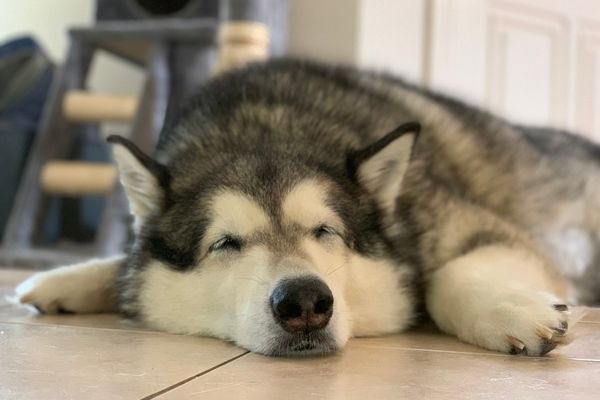
It’s 11 p.m., your dog is asleep, and their chest is moving faster than it should. Before you worry too much: most fast breathing during sleep is normal, and dreaming explains a lot of it. The exceptions are what this guide is for.
Below you’ll find the normal breathing rate for a sleeping dog, a step-by-step way to count breaths per minute at home, and the warning signs that turn a number into a vet visit.
⏱ 10-minute read | Updated September 2026 | Reviewed by Pawprint Oxygen Veterinary Team | Browse more articles →
Table of Contents
What Fast Breathing While Sleeping Actually Means
Fast breathing while sleeping means an elevated respiratory rate during sleep itself. The clinical term is tachypnea. It is distinct from panting, which is open-mouthed cooling, and from the twitchy rhythm of a dreaming dog or the recovery breathing that follows a walk.
Start with the reference numbers. A normal resting or sleeping respiratory rate for dogs runs about 15 to 30 breaths per minute, and a rate that stays above 30 while a dog is truly at rest is considered abnormal. Sustained readings in the 30 to 40 range mean recounting over the next few nights and calling your vet if the number holds.
Brief, irregular fast breathing during active (REM) sleep is usually normal. A sustained elevated rate across a full minute of quiet, still sleep is not, and it deserves follow-up.
Healthy dogs usually sleep well below the top of that range. A home study of 114 healthy adult dogs measured an average sleeping rate of about 13 breaths per minute, with no dog averaging above 23.
A clarification before you count: “sleeping” in this article means deep, still sleep, with your dog stretched out and quiet. A dog dozing with one ear tracking the room will read higher, and the numbers here assume real sleep.

How to Count Your Dog’s Sleeping Respiratory Rate
The protocol is simple, and doing it right prevents most false alarms:
Wait until your dog is fully asleep and still, in a cool room, with no walk, play, or excitement in the previous 20 to 30 minutes.
Watch the chest. One rise plus one fall equals one breath.
Count for a full 60 seconds. Skip the 15-seconds-times-four shortcut, because irregular breathers make it unreliable.
Record the breaths per minute, the time of day, the room temperature, any recent activity, and whether your dog was twitching or dreaming.
One reading is a snapshot. Three to five readings over a week give you your dog’s own baseline, and that baseline matters more than the population average.
Our guide to measuring your pet’s respiratory rate covers the technique in more depth.
Sleeping rate (adult dog) |
What it means |
15 to 30 breaths per minute |
Normal range |
30 to 40 breaths per minute, sustained |
Borderline. Recount over the next nights and call your vet if it holds |
Over 40 at rest, or any rate with labored effort |
Call your vet now |
Puppies and small breeds sit at the higher end of each band.
Watch for the counting mistakes that create false alarms: counting during a dream cycle, counting a panting dog, warm bedding pushing the rate up, or counting shallow belly movement as two breaths instead of one.


Sleeping vs. Resting-Awake Rate
Veterinary cardiologists ask for the sleeping rate specifically because it is the cleaner signal. A sleeping dog has no ambient stimulation and no thermoregulatory panting, so the count reflects breathing mechanics alone. In the home study above, sleeping rates also ran lower than resting-awake rates in the same dogs.
A normal awake rate does not rule out an abnormal sleeping rate, and the reverse is true as well. If your veterinarian asked you to monitor breathing, log the sleeping number.
Normal Reasons a Sleeping Dog Breathes Fast
REM sleep leads the list. Dreaming dogs breathe fast and irregularly, often with paw twitches, soft vocalizing, and flickering eyelids. The rhythm settles within a minute or two as they cycle back into deeper sleep.
Heat is the other big one. Dogs cool themselves by panting rather than sweating, so a warm room, thick bedding, a heavy double coat, or a summer night all push the rate up.
Recent exertion carries into early sleep. A dog who played hard or climbed stairs 20 minutes before crashing may still be in recovery breathing. Life stage matters too: puppies run faster baselines, and senior dogs sleep more lightly with more frequent arousals.
A dog curled tightly or sleeping chest-down restricts diaphragm movement and compensates with quicker, shallower breaths.
All of these share the same signature. They pass, the rhythm normalizes, and nothing else accompanies them. Fast breathing that persists through position changes and quiet sleep belongs in the next section.

Medical Causes Worth Ruling Out
The conditions below change breathing in different ways, so pattern-match by body system. In every case, diagnosis and treatment belong to your veterinarian; your job is the observation.
Heart Disease and Congestive Heart Failure
An elevated sleeping respiratory rate is often the earliest reliable home signal of left-sided congestive heart failure, frequently appearing before coughing or exercise intolerance. Fluid backing up into the lungs (pulmonary edema) drives faster breathing, and vets direct owners to count sleeping breaths per minute to identify early heart failure and monitor treatment response.
Accompanying signs include a soft nighttime cough, restlessness or refusing to lie flat, a swollen abdomen, and reduced stamina. The predisposed groups: small breeds with mitral valve disease (Cavaliers, dachshunds, small terriers), large breeds with dilated cardiomyopathy, and dogs already on cardiac medication.
If your dog has a diagnosed heart condition, your veterinarian has likely already asked you to keep this log. It is the single most useful home monitoring habit in cardiac care.
Respiratory Tract and Lung Conditions
Pneumonia, chronic bronchitis, tracheal collapse, laryngeal paralysis, lung tumors, and pleural effusion (fluid around the lungs) can all raise the sleeping rate. The sound often points toward the cause.
Pneumonia typically brings a wet, productive cough. Tracheal collapse produces a dry, goose-honking cough, most often in small and toy breeds. Laryngeal paralysis creates raspy noise on inhalation. Pleural effusion is frequently quiet, with breathing that is rapid and shallow rather than noisy.
Flat-faced breeds deserve their own line. A 2024 study in the Journal of Veterinary Internal Medicine found brachycephaly was a significant risk factor for obstructive sleep-disordered breathing events that mirror human sleep apnea. Noisy, labored sleep breathing in bulldogs, pugs, Frenchies, and boxers is abnormal even when it’s longstanding. Our guide to flat-faced dogs and respiratory distress covers what to watch for in these breeds.
Pain, Anxiety, and Metabolic Causes
Pain raises the resting rate. Orthopedic disease, abdominal pain, and post-surgical discomfort all show up in the count before a dog shows much else.
Anemia reduces oxygen-carrying capacity, so the body compensates with faster breaths; pale gums and easy tiring usually come with it. Fever and systemic infection raise metabolic demand. Endocrine conditions such as Cushing’s disease and certain toxin exposures can elevate breathing as well.
Anxiety and stress can disrupt sleep and raise the rate too. Treat that as a diagnosis of exclusion, reached after your vet has ruled out the medical causes above.
Puppies: Different Baseline, Same Red Flags
Puppies normally breathe faster asleep than adult dogs, with a normal resting band closer to 15 to 40 breaths per minute. Dreaming is also more frequent in young dogs, so twitchy, quick sleep breathing is common and usually harmless.
The red flags stay the same at any age: blue or pale gums, nasal discharge, coughing, lethargy, failure to nurse or eat, or fast breathing that continues after the puppy wakes. A puppy whose breathing stays rapid and labored after waking needs a veterinarian immediately.
Warning Signs That Change the Answer
The rate is one input. Breathing effort and gum color can override the number in either direction: a dreaming dog can hit a high count and be fine, while a dog with a “normal” count and heavy effort needs help now.
Effort signals: abdominal or belly breathing, flared nostrils, elbows held away from the body, and an extended, stretched-out neck.
Color signals: healthy gums are pink. Lift the lip and check in bright or natural light, since a dim lamp can mislead you. Blue or gray gums (cyanosis), pale or white gums, and brick-red gums all mean emergency care.
Behavior signals: refusing to lie down, repeatedly repositioning, standing to breathe, or waking through the night unable to settle.
Companion symptoms that raise the stakes: coughing (especially at night), gagging, collapse or fainting, exercise intolerance, appetite loss, and abdominal swelling.
Put together, the triage looks like this:
Monitor and log: elevated rate with dream signs, a warm room, or recent activity, plus normal effort and pink gums. Recount over the next few nights.
Call your vet within 24 hours: a sleeping rate sustained above 30 to 40 across multiple counts, a rising trend against your dog’s baseline, night coughing, or bedtime restlessness.
Go to emergency now: labored breathing (dyspnea), open-mouth breathing at rest, blue, gray, or pale gums, collapse, or a dog who cannot settle enough to breathe. Seek immediate veterinary care. Our Dog Rescue Oxygen Bundles can help stabilize breathing on the drive to the ER, with the veterinary visit still the destination.
If you’re unsure whether you’re seeing panting or something more serious, our guide to dog panting vs. labored breathing walks through the differences.
The rate is one input. Breathing effort and gum color can override the number in either direction: a dreaming dog can hit a high count and be fine, while a dog with a “normal” count and heavy effort needs help now.
Effort signals: abdominal or belly breathing, flared nostrils, elbows held away from the body, and an extended, stretched-out neck.
Color signals: healthy gums are pink. Lift the lip and check in bright or natural light, since a dim lamp can mislead you. Blue or gray gums (cyanosis), pale or white gums, and brick-red gums all mean emergency care.
Behavior signals: refusing to lie down, repeatedly repositioning, standing to breathe, or waking through the night unable to settle.
Companion symptoms that raise the stakes: coughing (especially at night), gagging, collapse or fainting, exercise intolerance, appetite loss, and abdominal swelling.
Put together, the triage looks like this:
Monitor and log: elevated rate with dream signs, a warm room, or recent activity, plus normal effort and pink gums. Recount over the next few nights.
Call your vet within 24 hours: a sleeping rate sustained above 30 to 40 across multiple counts, a rising trend against your dog’s baseline, night coughing, or bedtime restlessness.
Go to emergency now: labored breathing (dyspnea), open-mouth breathing at rest, blue, gray, or pale gums, collapse, or a dog who cannot settle enough to breathe. Seek immediate veterinary care. Our Dog Rescue Oxygen Bundles can help stabilize breathing on the drive to the ER, with the veterinary visit still the destination.
If you’re unsure whether you’re seeing panting or something more serious, our guide to dog panting vs. labored breathing walks through the differences.


What a Vet Will Check and What Diagnostics Follow
Expect history questions first: when the fast breathing started, whether it’s worse at night, any coughing, current medications, and your rate log. The physical exam covers auscultation with a stethoscope, a gum color and capillary refill check, and often pulse oximetry to measure blood oxygen.
From there, the diagnostics narrow the cause. Chest X-rays show fluid in or around the lungs and heart size. An echocardiogram evaluates heart structure and function. Bloodwork and the NT-proBNP cardiac biomarker screen for systemic and cardiac causes, while a tracheal wash or airway imaging investigates airway disease. Blood pressure rounds out the workup.
Bring three things to the appointment: your log, a phone video of the breathing while your dog is asleep, and a medication and supplement list. The log frequently changes the diagnostic path, because it turns “he seems off” into a measured trend your vet can act on.
Supportive Care and Home Monitoring After Diagnosis
If your dog has been diagnosed with a cardiac or respiratory condition, home management starts with the environment. Keep the sleeping area cool, use bedding that supports the chest without trapping heat, manage weight, switch to a harness for any airway-compromised dog, and keep the air clear of smoke and heavy fragrance.
Keep counting, too. Dogs with even subclinical heart disease hold steady sleeping averages under about 25 breaths per minute, which is why a sustained rise above your dog’s own baseline is meaningful. Vets use that trend to track treatment response and catch decompensation early.
For some dogs with heart or lung disease, veterinarians also recommend supplemental oxygen at home alongside treatment. At-home oxygen therapy supports your dog through flare-ups and recovery by reducing respiratory strain; the underlying disease itself is managed by your veterinarian.
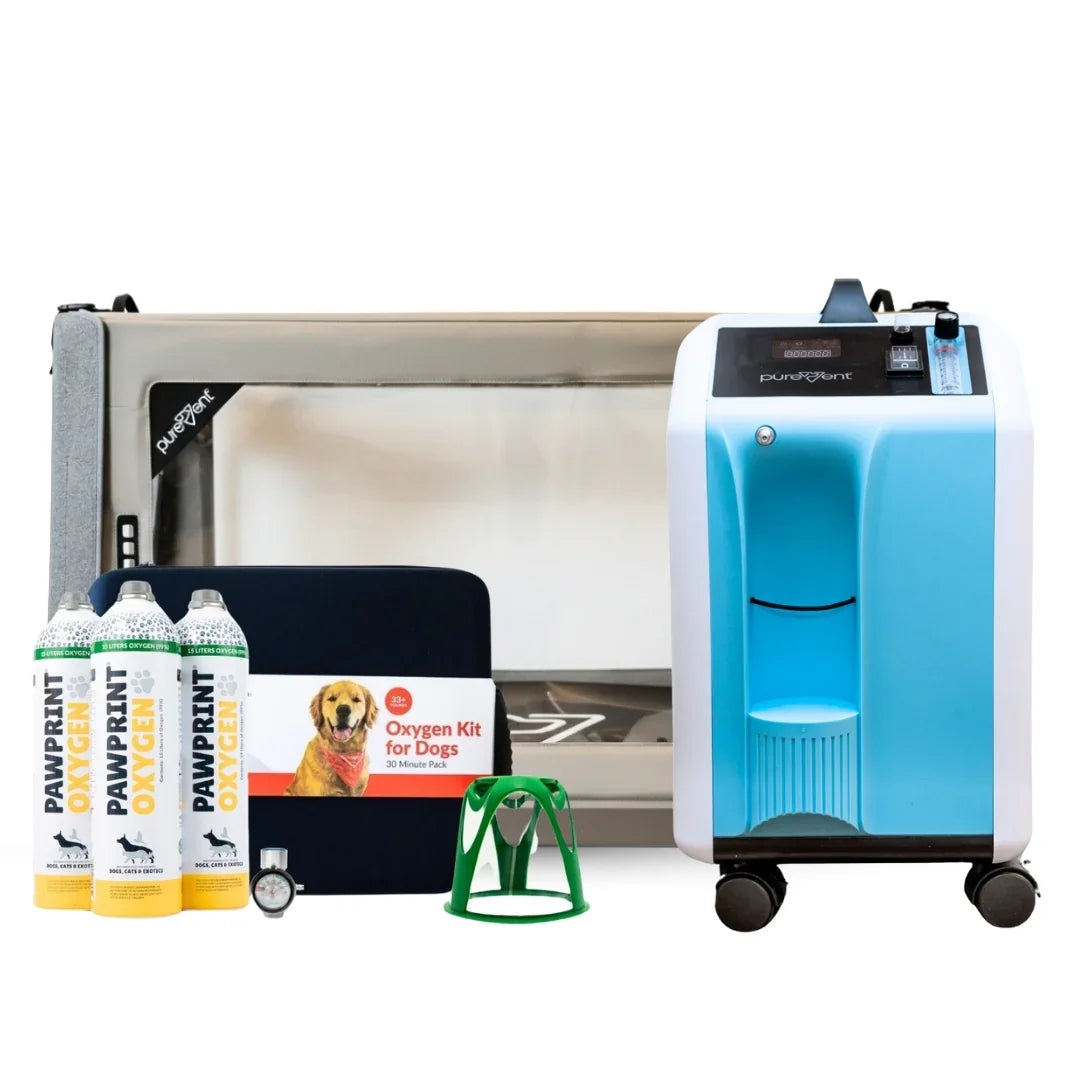
At home, that care usually runs through equipment built for pets, sized for animals with flow rates preset by weight. A PureVent Pet Oxygen Chamber delivers oxygen without restraint and ships without a prescription.
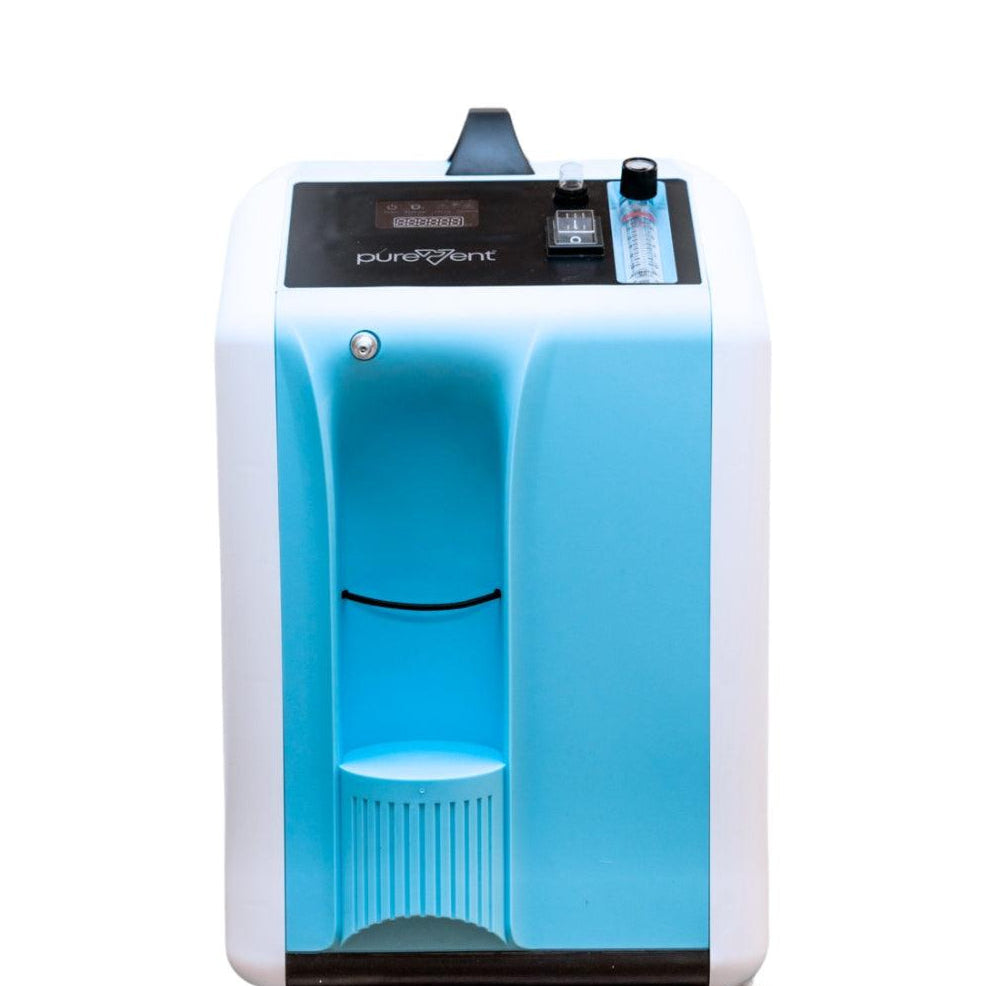
For continuous therapy, a medical-grade concentrator draws oxygen from room air; the PureVent 5L pairs with the standard chamber, while large-chamber setups require the PureVent 10L. Concentrators do require a prescription.
Our oxygen bundles for extended therapy and medical-grade pet oxygen concentrators show how vets typically set this up for dogs managing CHF or chronic respiratory disease at home.
Supportive care is an adjunct to a veterinary diagnosis, and a rising sleeping rate on treatment is a reason to call your vet, never a reason to escalate home care on your own.

Count Tonight, Then Build the Baseline
If your dog is breathing fast in their sleep right now, check for dream signs, feel the room temperature, and count a full 60 seconds once they’re still. Most of the time you’ll land in the normal range and the rhythm will settle on its own.
Then keep the habit. A week of readings gives you your dog’s own baseline, and that number does more for your vet than any single scary count. For at-risk dogs, especially cardiac patients and seniors, the sleeping respiratory rate log is the earliest warning system you can run from your living room.
Keep Reading
- Dog Wheezing: Causes, What It Sounds Like, and When It's an Emergency
- Dog Flu Symptoms: How to Tell Canine Influenza From Kennel Cough and When It’s an Emergency
- Dog Panting vs. Labored Breathing: How to Tell the Difference
- Recognizing Respiratory Distress in Your Pet
- Will My Dog’s Breathing Get Worse from Chronic Bronchitis?
- Pneumonia in Dogs: Symptoms, Emergency Signs, and How At-Home Oxygen Can Help