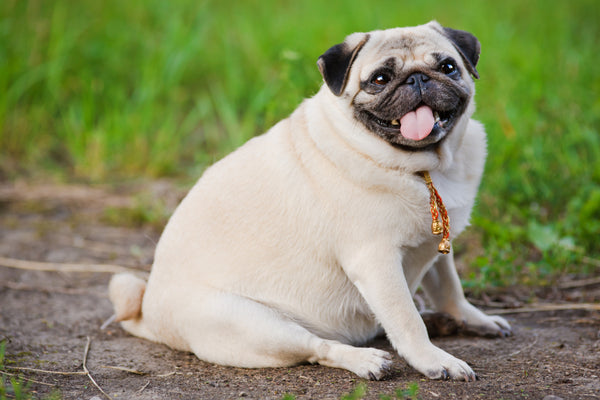
Maybe your veterinarian listened to your dog’s chest, heard a murmur or that honking cough, and mentioned on the way out that a few pounds should come off. Plenty of owners leave that appointment unsure where to start.
Most dogs gain weight gradually, a few extra bites a day over a year or two, so it’s easy to miss. For a dog with a cough, a murmur, or noisy breathing, every pound lost means less work for the windpipe and heart.
When you help your dog lose weight, food does most of the work, while activity helps your dog hold on to muscle. Measured meals, a firm treat budget, and gentle, well-timed walks get most dogs there, with your vet setting the target and the pace.
⏱ 10-minute read | Updated November 2026 | Reviewed by Pawprint Oxygen Veterinary Team | Browse more articles →
Table of Contents
Why Extra Weight Strains the Heart and Airway
Staying lean pays off over a lifetime. In a long-running study of Labrador littermates, dogs fed 25% less from puppyhood stayed leaner and lived a median of about 13 years, compared with 11.2 years for their heavier siblings.
That study followed lean feeding from eight weeks of age, so it speaks to keeping a dog trim for life. For an adult dog with breathing or heart trouble, the more immediate gain is less work for the lungs and heart every day.
1) The Airway
Fat collects around the neck, chest, and belly, and that padding leaves the lungs less room to expand. Your dog has to work harder for each breath. Harder breathing means more panting, and heavy panting puts extra pressure changes on a windpipe that is already weak.
For overweight dogs with tracheal collapse, the Merck Veterinary Manual and the American College of Veterinary Surgeons both list weight loss as a standard part of management, alongside medication and a harness in place of a collar. Our guide to caring for tracheal collapse at home covers the rest of that routine.
Flat-faced breeds such as French Bulldogs, Pugs, and English Bulldogs start out with the narrow nostrils and long soft palate of brachycephalic obstructive airway syndrome, and extra weight makes heat and exercise harder for them to handle.
Older large dogs with laryngeal paralysis, often Labradors, also overheat and tire sooner when they carry extra pounds.
2) The Heart
More body mass means more tissue the heart has to supply with blood, which raises its daily workload. In one group of 24 pet dogs with obesity, 14 had blood pressure readings above the normal range, though most readings were only mildly high.
In that same study, 12 dogs finished a weight-loss program and dropped a median of 23% of their body weight over about seven months. The walls of their hearts became less thickened, while blood tests that measure heart strain stayed the same.
Those dogs had obesity without heart disease, so the results don’t show that weight loss repairs an existing heart condition. What a slimmer body can offer a heavy dog with mitral valve disease is less demand on the heart during walks, hot afternoons, and excitement at the front door.

Is Your Dog Actually Overweight?
Owners and vets often see the same dog differently. In a 2024 owner survey by the Association for Pet Obesity Prevention, 35% of US dog owners described their dog as overweight or obese, and only 27% recalled their vet giving their dog a body condition score.
When veterinarians assess dogs directly in the association’s clinic-based surveys, about 59% fall in the overweight or obese range. The two surveys used different methods, but together they point to a gap between what owners notice at home and what vets find on the exam table.
Check Your Dog’s Body Condition Score
Vets use a 9-point body condition score (BCS). A score of 4 or 5 is ideal, 6 or 7 is overweight, and 8 or 9 is obese. You can get a rough read at home:
Ribs: Run a flat palm along your dog’s side. You should feel the ribs easily under a thin layer of fat.
Waist: Look down from above. A healthy dog narrows behind the ribs.
Tuck: Look from the side. The belly should rise toward the hind legs.
Under the AAHA weight management guidelines, each point above 5 works out to roughly 10% over ideal weight, so a dog at a 7 may be carrying about 20% extra. Treat that as an estimate. Your vet confirms the actual target.
The scale alone can mislead, because breed weight charts don’t account for frame size or muscle.
Older dogs and dogs with heart disease can carry extra fat while losing muscle over the spine, hips, and skull. Your vet can give a separate muscle condition score, which shapes how fast the weight should come off.
While you’re checking, count your dog’s breaths during sleep or deep rest. A healthy dog takes 15 to 30 breaths a minute while resting or asleep, and a rate that stays above 30 is a reason to call your vet.
Our guide to measuring your pet’s respiratory rate walks through the method. Write the number down so you and your vet can compare it as the weight comes off.


Start With a Vet Check
Some conditions add weight or make it stubborn to lose, especially hypothyroidism and Cushing’s disease. Bloodwork can rule them out before you cut a single calorie.
Medications matter too. Steroids, which are often prescribed for airway inflammation and tracheal collapse, can increase appetite and weight. If your dog takes them, ask your vet whether the dose or the plan should change, and keep giving the medication exactly as prescribed in the meantime.
Some swelling only looks like fat. In a dog with heart disease, a round, tight belly can be fluid buildup (ascites) from right-sided heart failure. That needs a prompt vet visit, and cutting food won’t help it.
Leave the appointment with three numbers: a target weight, a daily calorie goal, and a date for the first recheck.
If Your Dog Already Has Heart Failure
The usual weight-loss advice changes once heart failure is diagnosed. In a study of 108 dogs with heart failure, the dogs that gained weight over the course of their illness survived the longest.
Muscle loss, called cardiac cachexia, is a real concern for these dogs. In a group of 269 dogs with congestive heart failure, about half showed it, and those dogs had shorter survival.
If your dog has congestive heart failure, change calories only under your veterinarian’s or cardiologist’s plan, with enough protein to protect muscle. Call them about any weight or muscle loss you didn’t plan for. Our complete guide to congestive heart failure in dogs covers diet and day-to-day care in more depth.
Build the Feeding Plan
1) Feed for the Target Weight
The feeding chart on the bag assumes an active dog at its current weight, which overfeeds a heavy dog that spends most of the day on the couch. Your vet sets daily calories from your dog’s ideal weight, and that number becomes the plan.
Energy needs drop after spaying or neutering, with age, and with a quieter routine. Small dogs need so few calories that one extra biscuit can be a real share of the day.
2) Measure Every Meal
A digital kitchen scale that reads in grams is the most accurate tool you can buy for this. Measuring cup scoops vary a lot between fills, and a heaping cup adds up over weeks.
Free-feeding ends here. Two or three measured meals a day work well, and smaller, more frequent meals help a dog that begs. Feed dogs in a multi-dog household separately so nobody finishes a second bowl.
The whole family needs to follow the same plan. Pick one person to feed, or keep a food log on the fridge so everyone can see what your dog has already eaten that day.
3) Choosing a Weight-Loss Food
Cutting a large amount of your dog’s regular food also cuts protein, vitamins, and minerals. For bigger reductions, a food made for weight loss keeps nutrition intact on fewer calories. Look for:
Higher protein to protect lean muscle
Higher fiber so your dog feels full
Lower fat and fewer calories per cup
Over-the-counter “weight control” or “light” foods suit some dogs, but many are maintenance diets with modest calorie cuts. Your vet may suggest a prescription therapeutic weight-loss diet for an obese dog or when progress stalls.
Switch foods over 7 to 10 days, mixing a little more of the new food in every few days. For dogs with heart disease, sodium content matters as well, so check new foods and treats against the list of what not to feed a dog with congestive heart failure.
4) Add Volume Without Adding Calories
Plain green beans, baby carrots, cucumber, and plain canned pumpkin (never pie filling) give your dog crunch and bulk for very few calories. Swap them in for part of the kibble so the bowl holds the same volume with fewer calories.
Slow feeders, puzzle toys, and scattering kibble across a clean floor make a meal last longer and feel more satisfying. Keep fresh water available all day.
5) Treats, Scraps, and Hidden Calories
Common veterinary guidance keeps treats under 10% of daily calories, or counted inside the daily total. The calories that slip past most families are the ones nobody thinks of as food:
Table scraps and holiday leftovers, especially salty, fatty meats like ham
Dental chews, pill pockets, and cheese used for medication
Spoonfuls of peanut butter
The other dog’s bowl, and visiting relatives with soft hearts
Better swaps include kibble set aside from the day’s allowance, vegetable pieces, and small bits of plain cooked chicken. Half a treat usually pleases a dog as much as a whole one. Skip grapes and raisins entirely, since they are toxic to dogs.
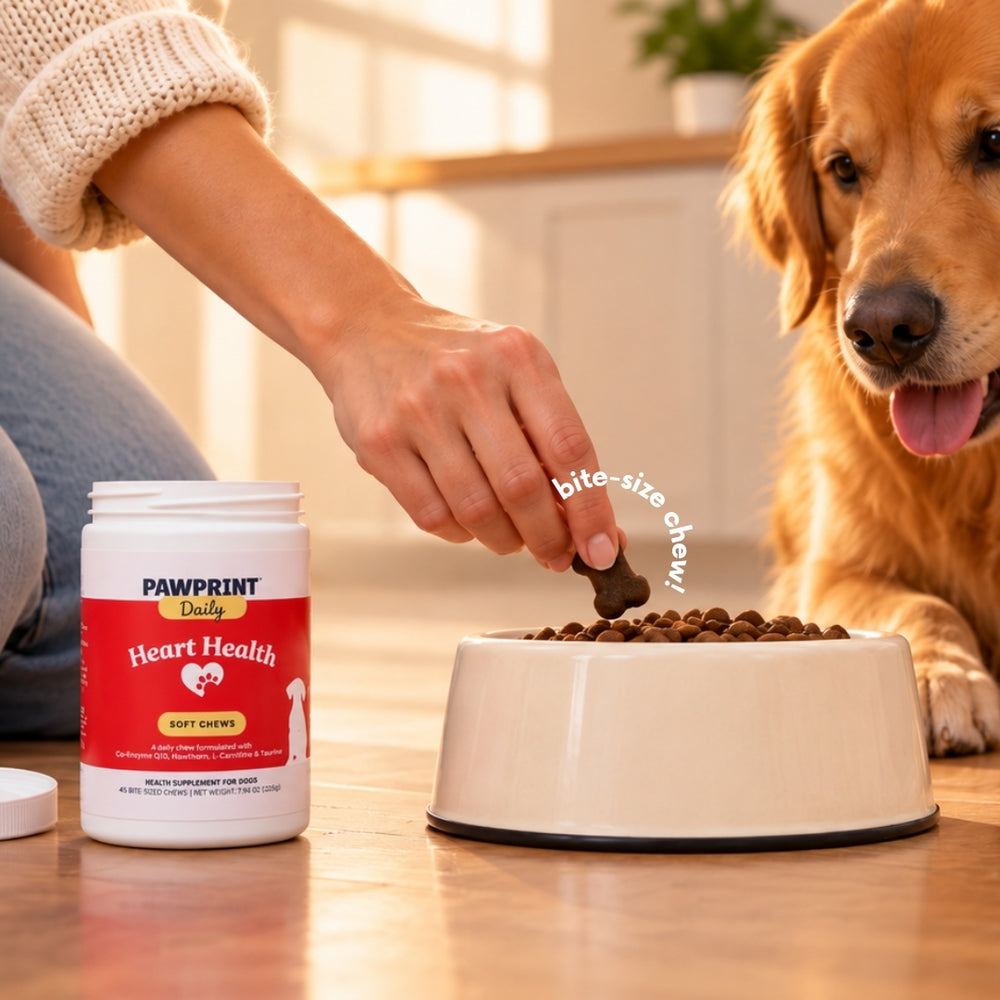
If your veterinarian recommends daily heart support as part of the plan, our Heart Health Soft Chews are a nutritional supplement made to support healthy cardiovascular function. They go alongside weight management and any prescribed medication. Check with your vet before starting, and count each chew in the day’s treat allowance.
When your dog begs, offer a short walk, a game, or a few minutes of attention instead of food.

Add Activity Without Overloading the Lungs or Heart
1) For Most Overweight Dogs
Exercise burns fewer calories than most owners expect, so the food plan drives the weight loss. Activity still protects muscle and eases stiff joints.
Build up slowly, adding about 10% more walking time each week. Leash walks on flat ground and unhurried sniff walks are easy on the body. For a dog with arthritis, your vet may suggest swimming or an underwater treadmill. Short play sessions and training games count too.
2) For Dogs With Airway or Heart Disease
Use a harness instead of a collar so nothing presses on the windpipe. Walk during the cooler parts of the day and skip hot, humid stretches, since heavy panting can make airway collapse worse. Several short walks are safer than one long one. Turn back before your dog starts panting hard.
Stop, let your dog rest somewhere cool, and call your vet if you see any of these:
A honking cough during or after the walk
Gums turning pale, blue, or grey
Breathing that hasn’t settled after a few minutes of rest
Stumbling, weakness, or collapse
Blue or grey gums mean your dog needs emergency veterinary care right away. If your dog has a murmur, congestive heart failure, or pulmonary hypertension, clear the activity level with your vet before you add distance.
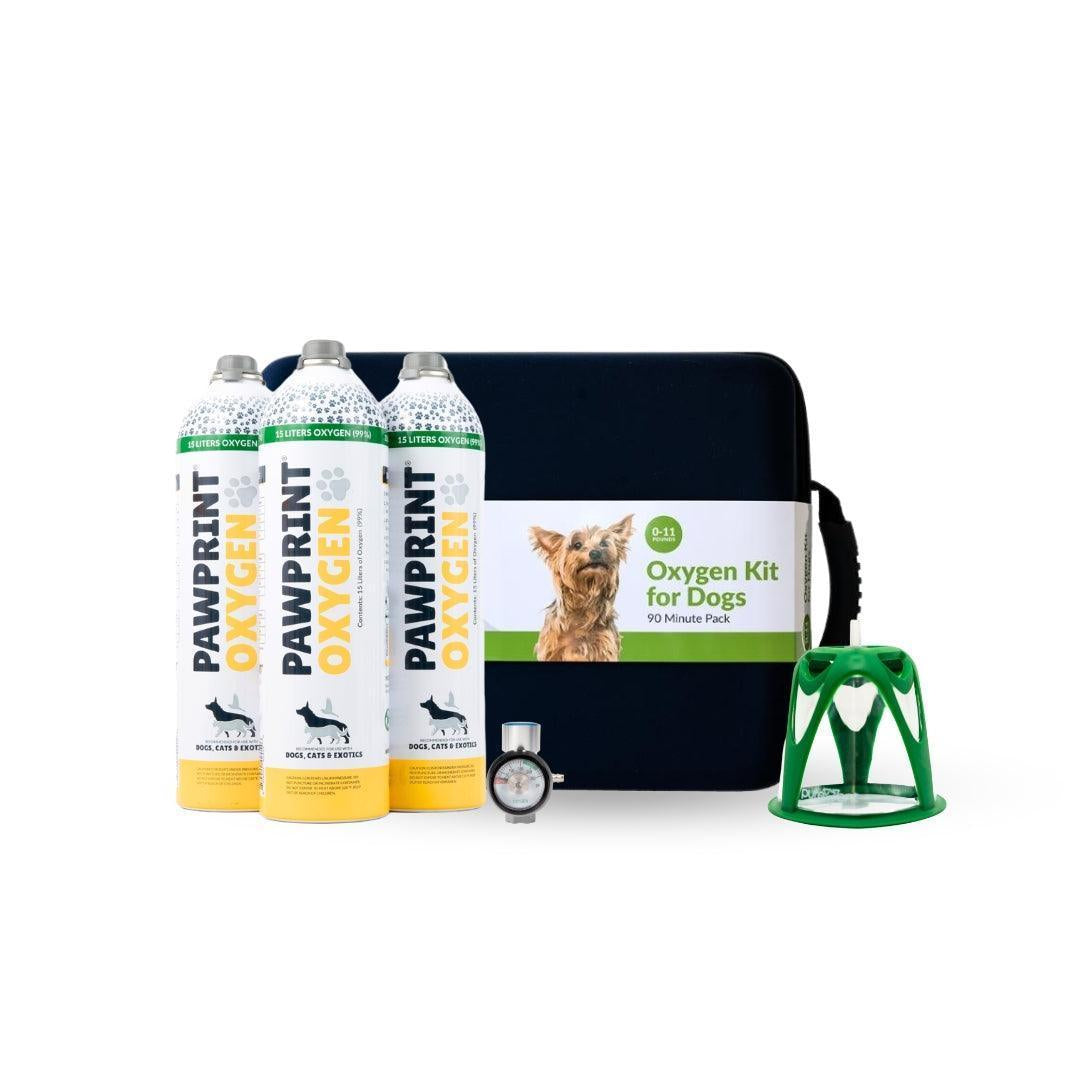
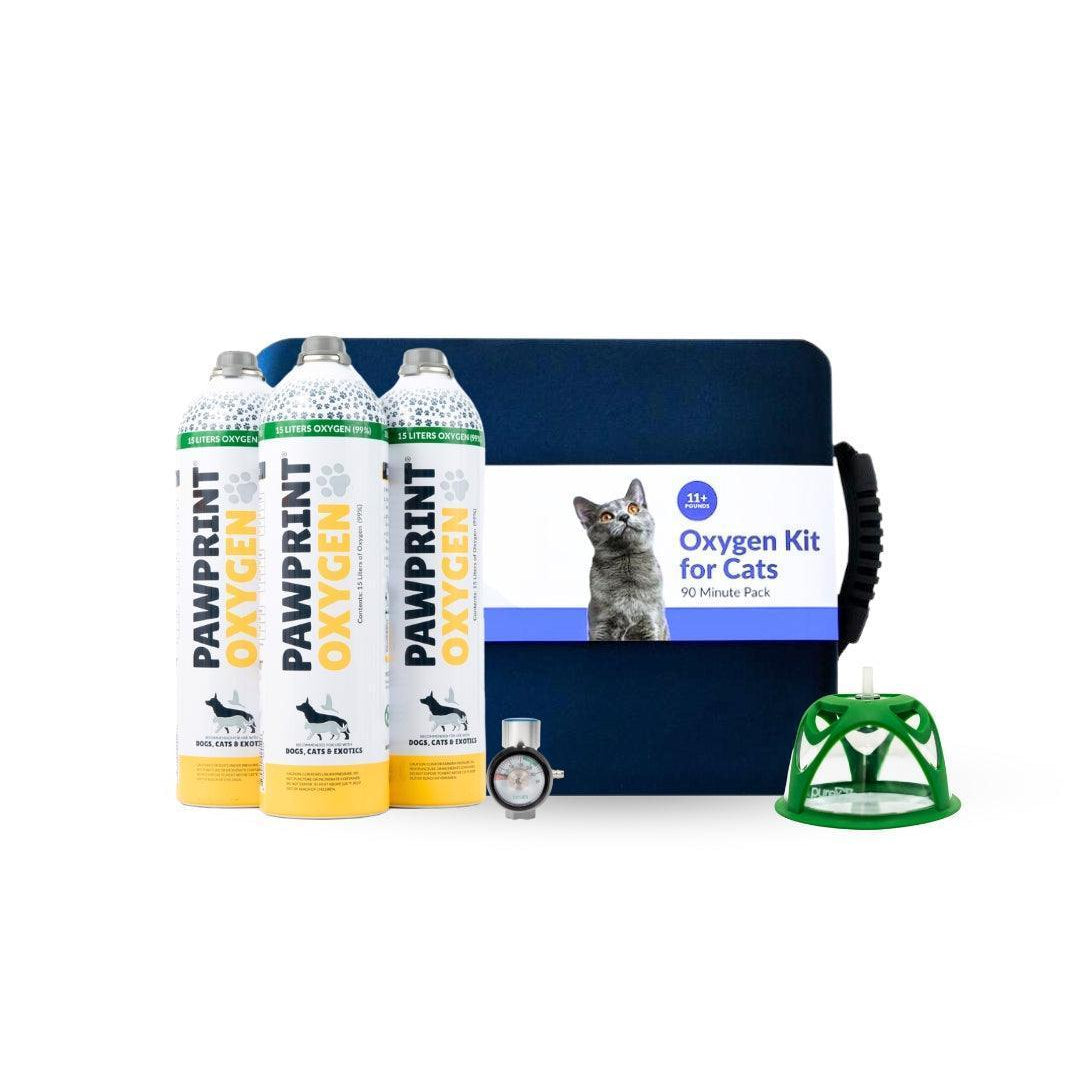
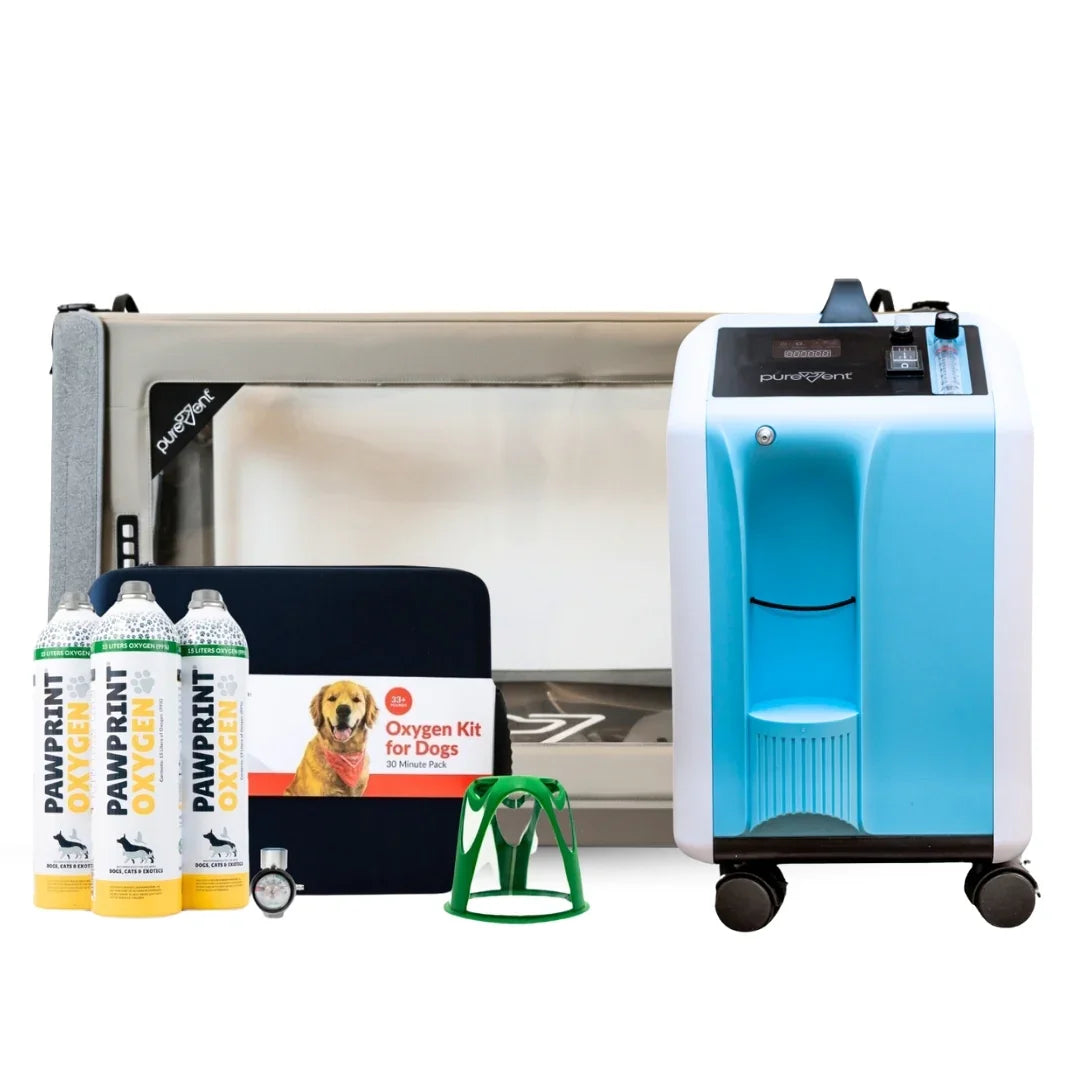
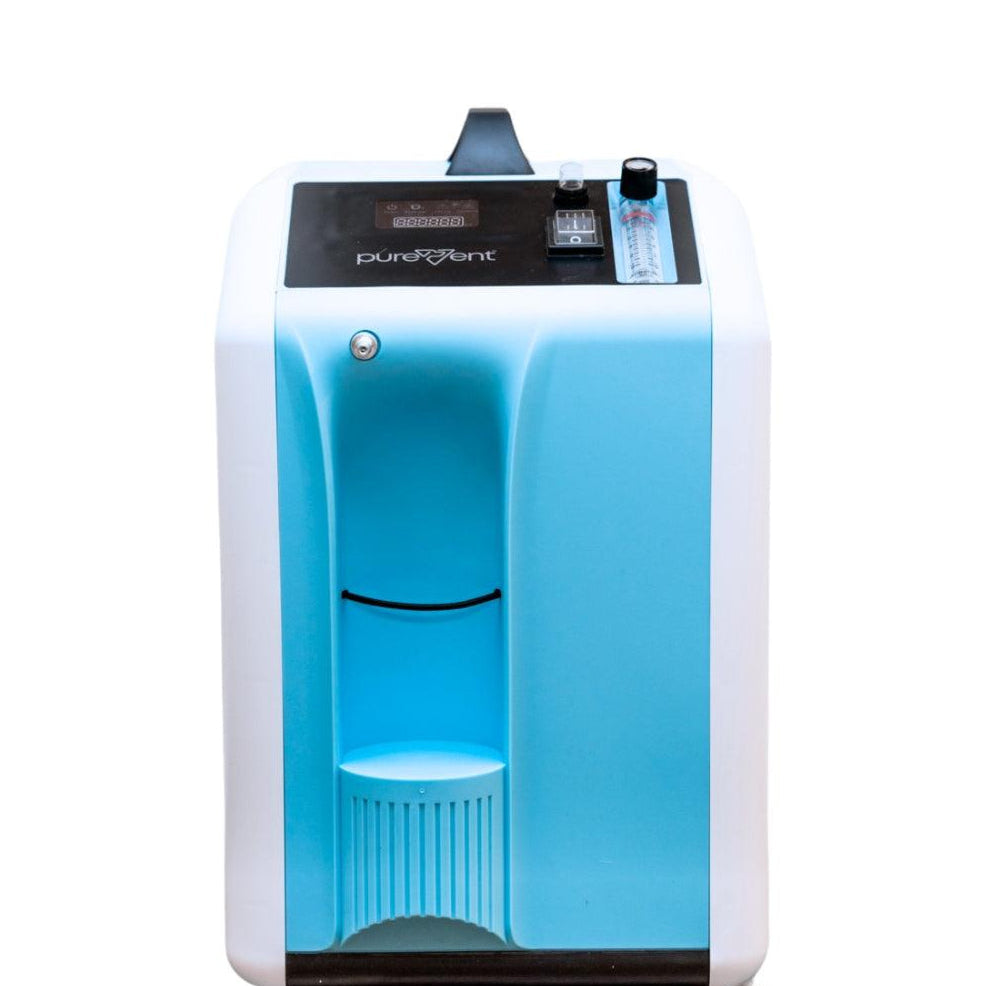
If your dog has a diagnosed breathing condition and your vet has advised keeping oxygen close, a portable Dog Rescue Oxygen Kit can support breathing during an episode while you stop, rest, and reach your vet. For dogs that also need oxygen at home, our oxygen therapy bundles pair a chamber and concentrator, with a rescue kit option for time away from the house.

How Fast Should Your Dog Lose Weight?
The same AAHA guidelines set a safe pace for dogs at 1% to 2% of body weight per week. For a 20 lb dog, that means about 0.2 to 0.4 lb a week. For a 60 lb dog, it means about 0.6 to 1.2 lb.
Losing 3 lb in a week is too fast for nearly every dog. For a 30 lb dog, that’s 10% of its body weight in seven days, five to ten times the safe rate.
Losing 10 lb usually takes months. At a steady pace, a 60 lb dog needs roughly two to four months.
Plan on several months for the whole program. The dogs in the weight-loss study described above took a median of about seven months to lose 23% of their weight. Losing faster costs muscle, which a senior dog or a heart patient can’t spare.
Weigh your dog every 2 to 4 weeks on the same scale, at the same time of day. Expect plateaus. When the number stalls, ask your vet to recalculate calories instead of cutting food on your own.
Once your dog reaches the target, your vet will set maintenance calories. Weight comes back easily without a maintenance plan, so keep measuring meals and counting treats after the goal is met.

Signs It’s Working, and Signs to Call the Vet
Progress often shows up before the scale moves much. You may notice a waist coming back, ribs that are easier to feel, longer walks before panting starts, less coughing, and quieter breathing during sleep.
Track symptoms alongside weight. A simple log with daily cough count, resting breath count, and how far your dog walked comfortably gives your vet far more to work with than a single number.
Call your vet if your dog loses weight without trying (especially a dog with heart disease), eats less than usual, has a resting breath rate that keeps climbing or stays above 30, develops a new or worse cough, shows a swollen belly, or faints.
Blue or grey gums, or struggling to breathe while resting, call for emergency care now. On the way, follow the steps for when your dog is having trouble breathing.
Your First Week on the Plan
Start with the vet visit and the three numbers: target weight, daily calories, and recheck date. Put a gram scale on the counter, set a treat budget everyone in the house knows, and switch to a harness if your dog still walks on a collar.
Take a resting breath count this week and write it next to your dog’s starting weight, then compare both at each weigh-in. For a dog with a cough, a murmur, or a narrow airway, a slowly falling scale number and an easier walk around the block are progress worth reporting at the recheck.
Keep Reading
- When Is a Dog Considered a Senior? (And Why It Matters for Their Heart)
- Zesty Paws Cardio Bites vs Pawprint Heart Health Chews: Ingredients, Dosing, and Cost Per Day
- Fera Pets Cardiac Support vs Pawprint Heart Health Soft Chews: Doses, Cost and Format
- Signs Your Dog Is Dying of Heart Failure
- Dog Tracheal Collapse
- What Not to Feed a Dog With a Heart Murmur or Heart Failure
- L-Carnitine for Dogs: What It Does and When Your Vet May Recommend It
- Congestive Heart Failure in Dogs: Symptoms, Causes and Treatment
- Diagnosis and Treatment of Congestive Heart Failure in Pets