Maybe your veterinarian mentioned L-carnitine after a heart workup. Or you spotted it on the ingredient panel of a weight-management food or a heart chew. Either way, you probably want to know two things: does your dog need it, and who decides how much?
L-carnitine is a nutrient your dog's body already makes and uses to turn fat into energy, mostly in the heart and skeletal muscle. Most healthy dogs eating a complete and balanced diet get enough on their own, so the useful question is whether your dog falls outside that group.
A smaller group of dogs, including some with heart muscle disease and some on supervised weight-loss plans, may benefit from extra. For those dogs, the dose and how long to try it are decisions your veterinarian makes, usually after a heart exam or a diet review.
⏱ 10-minute read | Updated October 2026 | Reviewed by Pawprint Oxygen Veterinary Team | Browse more articles →
What Activated Charcoal Does in Cats
Activated charcoal, the same material sometimes labeled activated carbon, works by adsorption. It binds toxins in the stomach and intestines so they pass out in stool instead of entering the bloodstream.
Adsorption differs from absorption. The toxin sticks to the charcoal's surface rather than soaking in, and the charcoal itself never enters your cat's circulation. Everything it does, it does inside the gut.
That makes it a decontamination step, not an antidote. It cannot neutralize a toxin chemically, and it does nothing for poison already absorbed or illness already underway. We cover the full mechanism in our guide to activated charcoal for dogs; the short version is that the substance and the clock decide everything.
Cats may receive it in a few forms: an aqueous slurry, a suspension combined with a cathartic called sorbitol, or non-cathartic carbon spheres formulated for home use. Those formats differ in more than packaging, and the differences drive both palatability and side effects.

What L-Carnitine Does in a Dog's Body
Your dog's liver and kidneys build L-carnitine (also called levocarnitine) from two amino acids, lysine and methionine. Food adds more. Red meat carries the most, beef especially, followed by organ meat and dairy, while plant foods supply almost none. The name comes from carnis, the Latin word for meat.
Its main job is moving fuel. Long-chain fatty acids can't reach the mitochondria, the structures inside each cell that burn fuel, without a carrier. L-carnitine helps transport fatty acids into the mitochondria, where they're broken down for energy. It also helps clear leftover byproducts of that process back out of the cell.
Heart and skeletal muscle hold the highest concentrations. A healthy heart gets most of its energy from fat metabolism, so L-carnitine supports healthy energy production in the heart muscle every time it contracts.
Veterinarians call L-carnitine conditionally essential: a healthy dog makes enough, and it becomes a supplement question only when a dog's own supply falls short.


Does Your Dog Need L-Carnitine?
For a healthy adult dog eating a complete and balanced commercial food, added L-carnitine usually brings no extra benefit. The Stern cardiology lab at UC Davis doesn't recommend giving dogs taurine or L-carnitine without evidence of DCM or a significant deficiency.
Your vet may bring it up in situations like these:
Diagnosed dilated cardiomyopathy (DCM)
A breed studied for L-carnitine's role in DCM, such as Boxers, Doberman Pinschers or American Cocker Spaniels
Doxorubicin chemotherapy or a rare inherited carnitine deficiency
A weight-loss plan for an overweight dog
A homemade or plant-based diet, since meat is the main dietary source
Before you buy anything, give your vet the full story. Mention any diagnosis, exactly what your dog eats and every supplement already in the routine. Combination heart formulas often include L-carnitine, so your dog may be getting some already.
L-Carnitine and Heart Health in Dogs
1) How Carnitine Deficiency in Dogs Affects the Heart
Carnitine deficiency in dogs shows up most clearly in the heart, because heart muscle cells run largely on fat. When too little carnitine reaches them, the cells can't produce enough energy and each heartbeat pumps with less force. Over time, the chambers can stretch and the walls thin out.
That pattern describes DCM in dogs:
The heart muscle pumps weakly.
The heart enlarges as the chambers stretch.
The disease can progress to congestive heart failure (CHF).
2) L-Carnitine in Boxers, Cocker Spaniels and Dobermans
Much of what vets know about L-carnitine and DCM traces back to research in three breeds.
1. Boxers: one family and one case report
A 1991 report on one family of related Boxers with DCM found low carnitine in their heart muscle. Two of the four dogs given L-carnitine survived long enough to show clear gains in heart function, though the affected dogs eventually died.
A 1994 case report showed the limits: one Boxer given L-carnitine ended up with above-normal carnitine in its heart muscle, and its DCM did not improve.
2. American Cocker Spaniels: two supplements at once
In a small 1997 trial, 14 dogs with DCM received either placebo or taurine and L-carnitine together. Heart function improved in the supplemented group but never returned to normal on echocardiograms. Taurine was the only nutrient low in these dogs, and both supplements were given together, so the trial can't show how much L-carnitine contributed.
3. Doberman Pinschers: mostly inherited
Researchers have linked two gene variants to DCM in the breed, PDK4 and titin, and neither explains every case. Low heart carnitine does turn up in the breed: a veterinary cardiology review reports it in 13 of 18 Dobermans with DCM.
4. Carnitine-responsive DCM is the exception
In most dogs with DCM, Boxers included, low carnitine doesn't look like the cause, and dramatic improvement on L-carnitine is uncommon. When your vet suggests a trial, they're checking whether your dog belongs to that smaller group.
5. A blood test only answers part of the question
A low result points toward a deficiency, but your dog's blood carnitine can come back in the normal range even when the heart muscle is short, and confirming that takes a biopsy of heart tissue. In practice, your vet watches how the heart responds to supplementation and uses that response as the answer.
6. Part of a wider DCM plan
When L-carnitine is part of a DCM plan, your vet gives it alongside standard heart medications such as diuretics, ACE inhibitors and pimobendan. A clinical response can take anywhere between two weeks and four months, and your vet will schedule follow-up echocardiograms to see whether the heart is changing.
3) L-Carnitine vs. Taurine
Taurine and L-carnitine are often prescribed together because both have been tied to DCM in specific dogs. Taurine is an amino acid with its own role in heart muscle function, while L-carnitine handles fuel delivery to the heart muscle cells.
Low taurine has links to both diet and breed. In a 2001 study, healthy dogs kept on low-protein diets ended up with low taurine. On the breed side, DCM tied to low taurine has been described in one family of Golden Retrievers and in American Cocker Spaniels.
Our guide to taurine for dogs covers which dogs run low and when supplementing makes sense.
One nutrient can be low while the other is normal, as the Cocker Spaniel trial showed. Questions about grain-free and legume-heavy food come up here too, and we cover them in our guide on grain-free food and heart problems in dogs.
4) When Heart Disease Progresses
Without treatment, or as the disease advances, DCM can lead to CHF. Fluid builds up in the lungs, a condition called pulmonary edema, and breathing gets harder. Watch for these signs:
A higher resting breathing rate than usual
Labored breathing
Coughing
Tiring quickly on walks or during play
Pale or bluish gums
Fainting
Counting your dog's breaths while they sleep is one of the most useful checks you can do at home. Our guide to measuring your pet's respiratory rate walks through the technique.
If your dog is breathing with visible effort, has pale or bluish gums, or faints, seek immediate veterinary care.
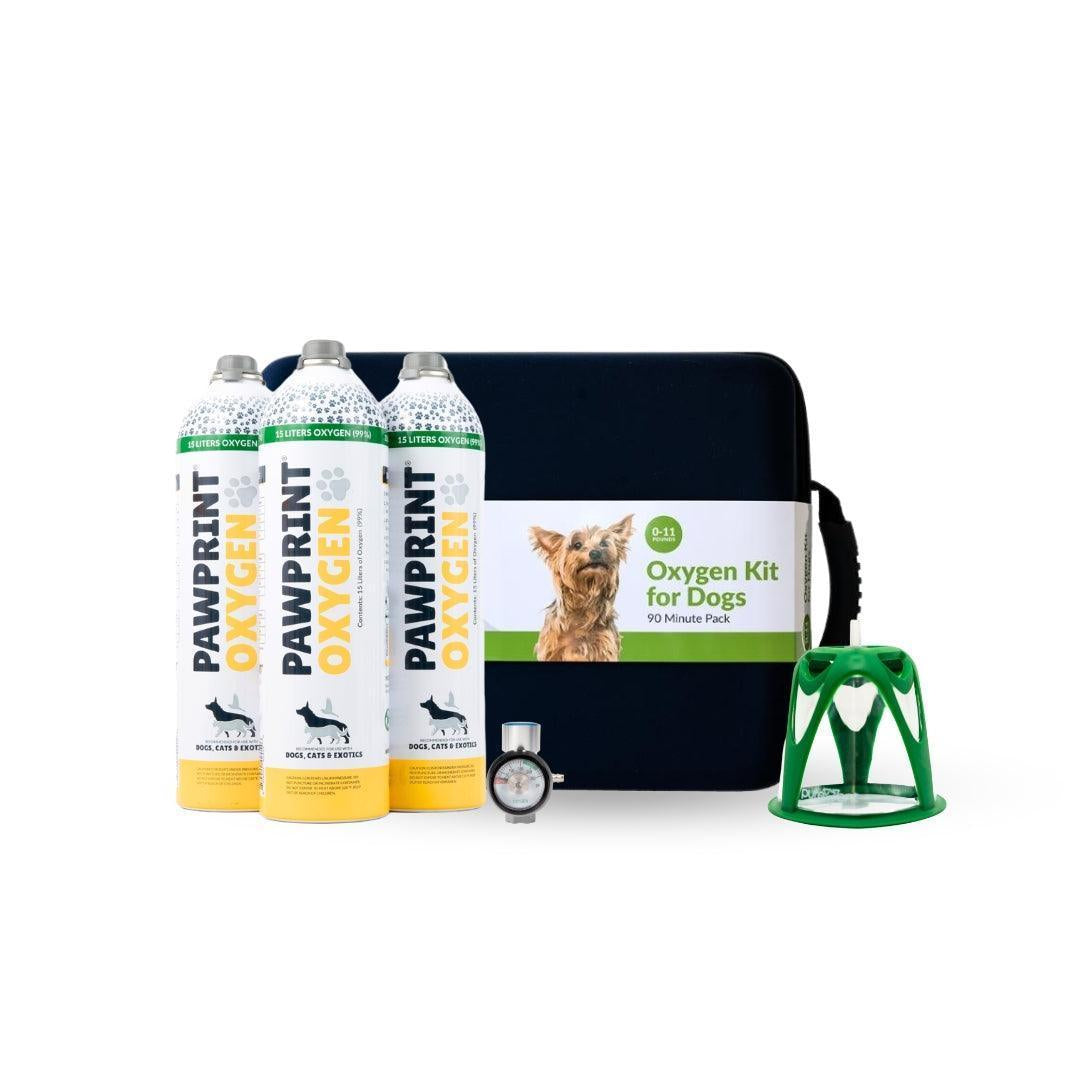
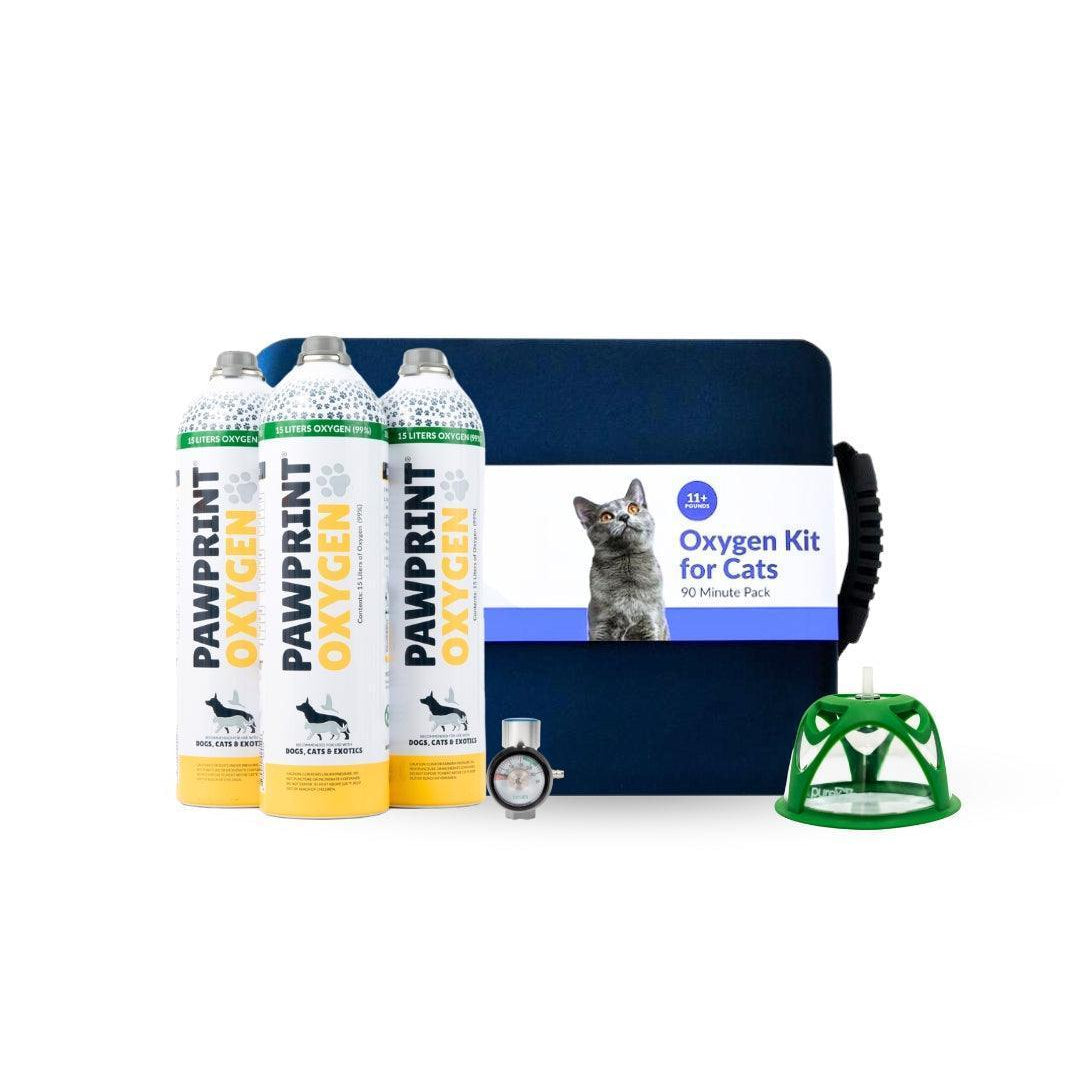
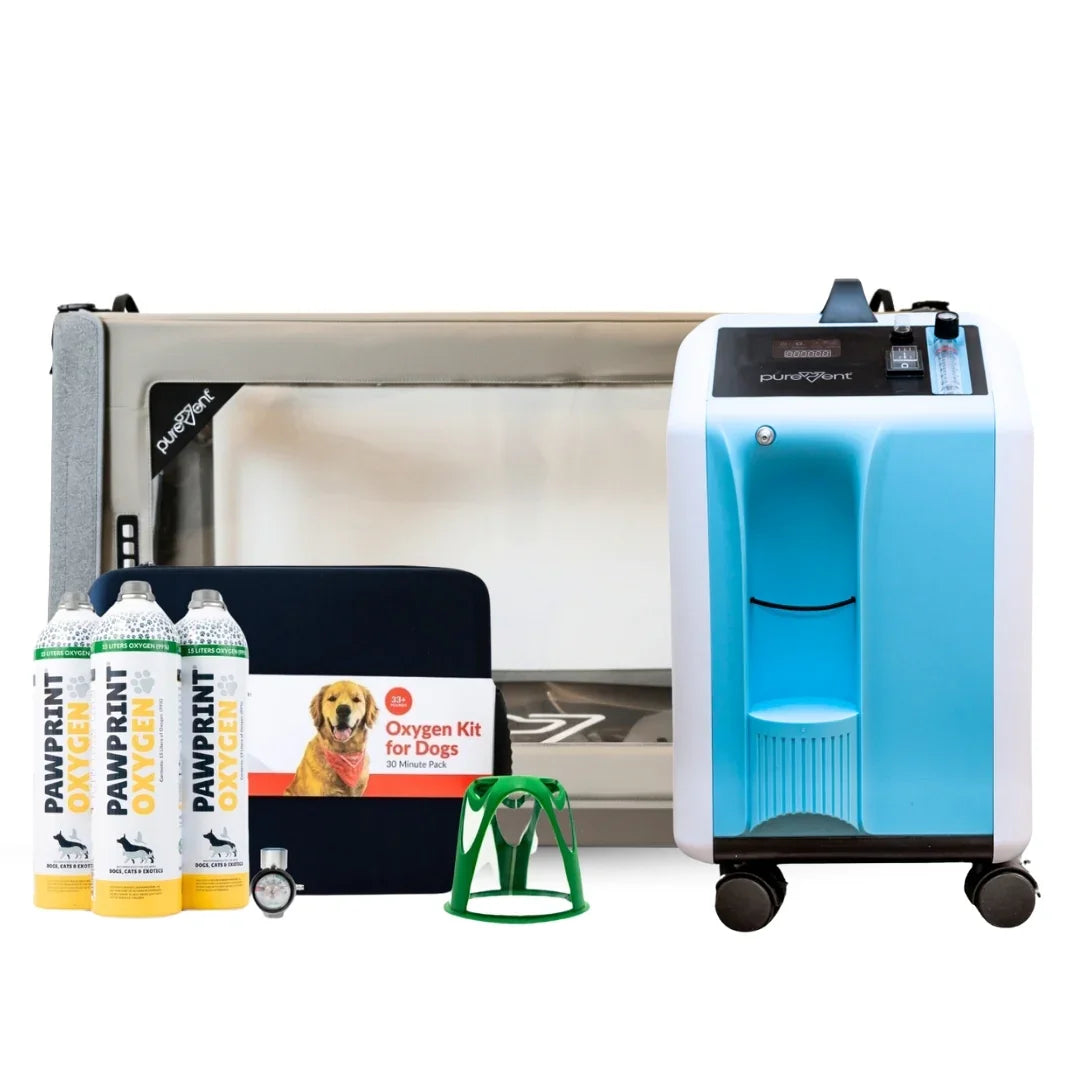
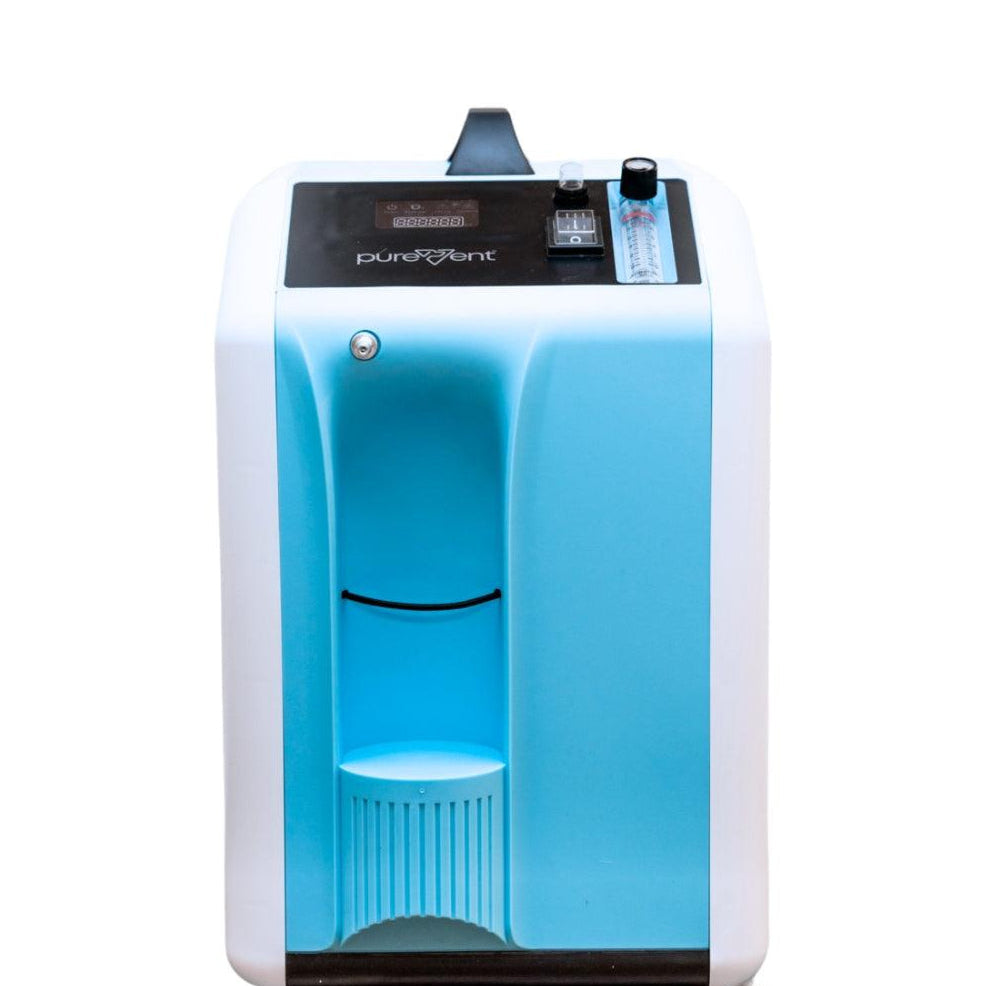
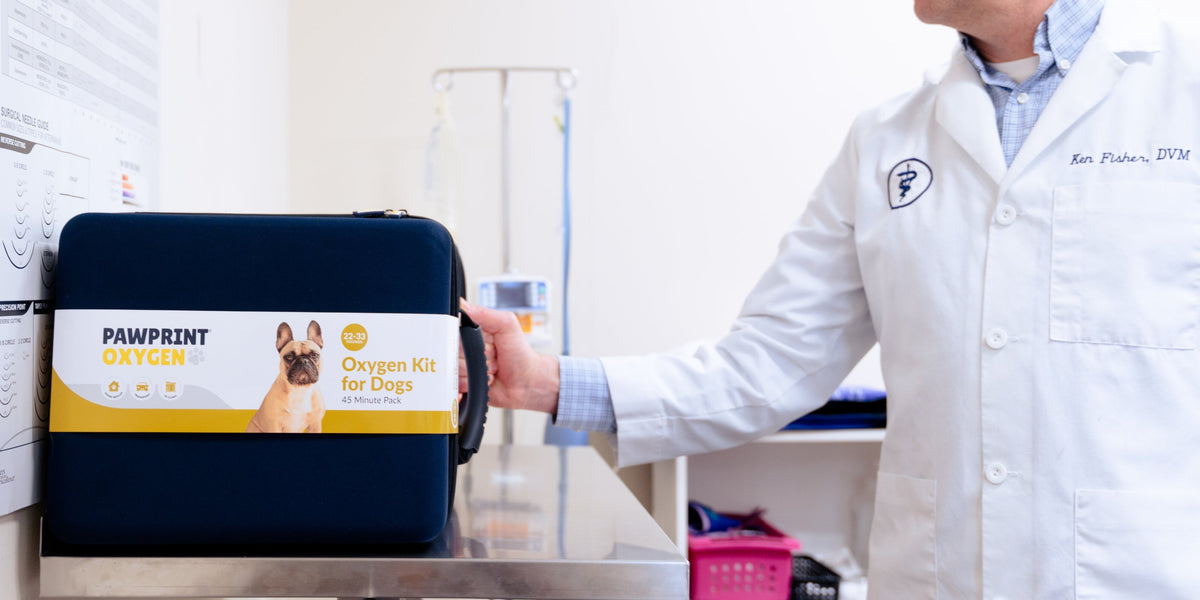
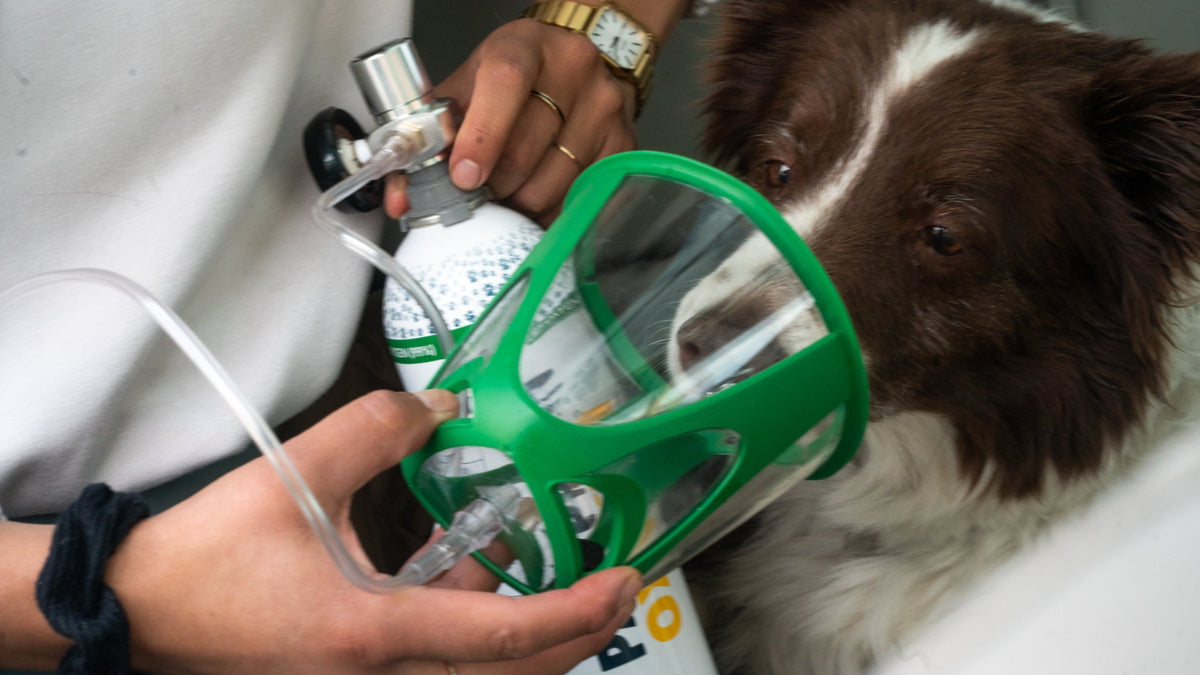
When a veterinarian identifies an oxygen need in a dog with heart failure, supplemental oxygen eases the work of breathing while the vet treats the heart. Our oxygen therapy bundles provide that vet-directed support at home and on the way to care, and our guide on helping a dog with CHF breathe better covers the wider care plan.

L-Carnitine for Weight Loss and Muscle
L-carnitine appears in some weight-management foods. In a 2015 study by Hill's Pet Nutrition researchers that enrolled 50 overweight dogs, a test food combining L-carnitine with coconut oil, lipoic acid, lysine, leucine and fiber helped dogs lose fat while keeping lean muscle mass. With that many ingredients in the mix, the result can't be credited to carnitine alone.
The most detailed dog data on muscle comes from Labrador Retrievers on running programs. In a 2017 study, dogs given a branded L-carnitine ingredient had lower blood markers of muscle damage after exercise and higher antioxidant capacity than unsupplemented dogs.
Lonza, the company that makes the ingredient, funded the group's 2020 follow-up study.
Weight loss still comes down to the plan your vet builds. Any help from L-carnitine depends on a calorie-controlled diet and regular exercise, and on its own it won't take weight off an overweight dog.
Owners of working, sporting and agility dogs often ask about endurance, and the evidence there is thin. Earlier studies in sled dogs and exercising Beagles found no change in heart rate or in blood measures such as lactate and creatine kinase. A later study in racing Greyhounds reported lower muscle-damage markers after races, in line with the Labrador results above.
Senior dogs come up in connection with acetyl-L-carnitine (ALCAR), a related form studied separately from heart use. In aged Beagles, cognitive gains came from a full antioxidant-enriched diet, while short-term ALCAR with lipoic acid, without the rest of the diet, made no measurable difference.
You may also see L-carnitine marketed for lipomas. It isn't a recognized treatment for fatty lumps, so have your vet look at any new lump you find.

Dosage, Forms and Choosing a Product
1) How Much L-Carnitine for Dogs
Dosage depends on why your dog is taking L-carnitine and how much they weigh. Heart doses in the veterinary literature are far higher than the amounts used in exercise research.
For dogs with DCM, published guidance from veterinary cardiologists commonly falls around 50 to 100 mg per kilogram of body weight, given every 8 hours. At 50 mg/kg, a 30 kg (66 lb) dog would take 1,500 mg per dose, or 4.5 grams a day.
That adds up to a lot of powder or capsules, which is why cost and pill count often come up early in the conversation.
Treat these figures as background for your vet visit. Your veterinarian sets the amount and the recheck plan. If your dog has stomach upset, ask whether giving each dose with food would help.
2) Forms and What to Check on the Label
L-carnitine comes in capsule, tablet, liquid and powder forms, plus soft chews. A powder can be mixed into a meal, and a capsule can be tucked inside a treat.
Look for L-carnitine by name. Your vet will want the L-form only, and products containing D-carnitine are best avoided.
Pet supplements don't go through FDA approval before they're sold, and what's in the bottle can differ from the label. A UC Davis cardiology lab has shared a short list of L-carnitine products that a 2009 study found within 5% of their labeled amount, so ask your vet which product they prefer today.
When you compare products, check for:
The National Animal Supplement Council (NASC) Quality Seal
A lot number on the package
Third-party testing
Milligrams4. Carnitine-responsive DCM is the exception of L-carnitine per serving, clearly listed
Human L-carnitine products are sometimes used under a vet's direction. Read the label for xylitol, which is toxic to dogs, along with flavorings and other active ingredients. Your vet may instead prescribe levocarnitine, a prescription form approved for people. It isn't FDA-approved for dogs, so your vet prescribes it extra-label.
Combination heart supplements for dogs pair L-carnitine with ingredients such as taurine, CoQ10 and hawthorn. Our Heart Health Soft Chews are one example of this format.
Each chew combines taurine, L-carnitine, hawthorn berry and CoQ10 with arginine, berberine, and vitamins and minerals. You'll find them in our pet supplements collection.
The L-carnitine in one chew is a formula amount. It doesn't stand in for the DCM amounts above, so if your dog has a heart diagnosis, ask your vet before starting the chews.
3) Side Effects and Safety
L-carnitine is generally well tolerated in dogs. Gastrointestinal upset, such as diarrhea is the most common problem. Call your vet if anything new shows up after starting.
Our chews and some other combination heart supplements contain hawthorn and berberine. A veterinary cardiology review notes that hawthorn may add to the effect of digoxin and that berberine shouldn't be paired with certain heart-rhythm medications. If your dog takes any heart medication, show your vet the label before the first dose and keep giving prescribed medications exactly as directed.

Deciding on L-Carnitine With Your Vet
Most healthy dogs on a complete and balanced diet already make and eat the L-carnitine they need. Extra is usually a question for dogs with diagnosed DCM or a rare inherited deficiency, DCM-prone breeds, dogs on doxorubicin, and dogs on a vet-supervised weight plan.
If your vet recommends it, ask what change they hope to see, how they'll measure it at recheck echocardiograms and what dose fits your dog's weight. Bring your dog's food label and every supplement you give, so the plan starts from what your dog already gets.