/* ── Scoped to this blog post only — safe inside Shopify ── */ .ppo-post *{box-sizing:border-box} .ppo-post{font-family:'Georgia',serif;color:#1a1a1a;line-height:1.85;font-size:17px;max-width:760px;margin:0 auto;padding:0 4px} .ppo-post p{margin:0 0 1.4em} .ppo-post h2{font-family:'Georgia',serif;font-size:1.65rem;color:#1d6b6b;margin:2.4em 0 .5em;line-height:1.2} .ppo-post h3{font-size:1rem;font-weight:700;letter-spacing:.07em;text-transform:uppercase;color:#c5792a;margin:2em 0 .4em} .ppo-post a{color:#1d6b6b;text-decoration:underline;text-underline-offset:3px} .ppo-post a:hover{color:#c5792a} .ppo-eyebrow{font-size:12px;letter-spacing:.18em;text-transform:uppercase;color:#1d6b6b;font-weight:700;margin-bottom:18px} .ppo-hero-sub{color:#6b6258;font-style:italic;font-size:16px;margin-bottom:10px} .ppo-meta{font-size:13px;color:#6b6258;margin-bottom:32px;border-top:1px solid #d4c9b4;border-bottom:1px solid #d4c9b4;padding:10px 0} .ppo-rule{border:none;border-top:1.5px solid #d4c9b4;margin:2.5em 0} .ppo-pullquote{border-left:4px solid #1d6b6b;background:#e8f4f4;padding:20px 24px;margin:2em 0;border-radius:0 8px 8px 0} .ppo-pullquote p{font-style:italic;color:#1d6b6b;font-size:1.1rem;margin:0} .ppo-card-grid{display:grid;grid-template-columns:repeat(auto-fill,minmax(210px,1fr));gap:14px;margin:1.8em 0} .ppo-card{background:#fff;border:1.5px solid #d4c9b4;border-radius:10px;padding:16px 18px} .ppo-card-icon{font-size:24px;margin-bottom:6px} .ppo-card strong{display:block;font-size:.8rem;text-transform:uppercase;letter-spacing:.07em;color:#1d6b6b;margin-bottom:3px} .ppo-card p{font-size:13px;color:#6b6258;margin:0;line-height:1.5} .ppo-cond-table{border:1.5px solid #d4c9b4;border-radius:10px;overflow:hidden;margin:1.8em 0} .ppo-cond-head{background:#1d6b6b;color:#fff;padding:12px 18px;font-size:12px;letter-spacing:.1em;text-transform:uppercase;font-weight:700} .ppo-cond-row{display:grid;grid-template-columns:1fr 2fr;border-top:1px solid #d4c9b4} .ppo-cond-name{padding:14px 18px;background:#f2ede3;font-weight:700;font-size:14px;border-right:1px solid #d4c9b4} .ppo-cond-desc{padding:14px 18px;font-size:14px;color:#6b6258;line-height:1.6} .ppo-checklist{list-style:none;padding:0;margin:1.4em 0;display:flex;flex-direction:column;gap:9px} .ppo-checklist li{background:#fff;border:1.5px solid #d4c9b4;border-radius:8px;padding:11px 15px;font-size:15px;display:flex;gap:11px;align-items:flex-start} .ppo-checklist li::before{content:'✓';color:#1d6b6b;font-weight:700;flex-shrink:0;margin-top:1px} .ppo-alert{background:#fff4ec;border:2px solid #c5792a;border-radius:10px;padding:18px 22px;margin:2em 0;display:flex;gap:14px;align-items:flex-start} .ppo-alert-icon{font-size:26px;flex-shrink:0} .ppo-alert p{font-size:15px;line-height:1.65;margin:0} .ppo-alert strong{color:#c5792a} .ppo-cta{background:#1d6b6b;border-radius:12px;padding:36px 30px;text-align:center;margin:2.5em 0 1em} .ppo-cta h2{color:#fff;font-size:1.5rem;margin:0 0 10px} .ppo-cta p{color:rgba(255,255,255,.82);font-size:15px;margin-bottom:20px} .ppo-btn{display:inline-block;background:#fff;color:#1d6b6b;padding:13px 30px;border-radius:50px;font-weight:700;font-size:14px;letter-spacing:.06em;text-transform:uppercase;text-decoration:none} .ppo-tags{display:flex;flex-wrap:wrap;gap:7px;margin-top:2em} .ppo-tag{background:#e8f4f4;color:#1d6b6b;font-size:11px;padding:5px 11px;border-radius:20px;font-weight:700;letter-spacing:.06em} .ppo-sources{font-size:13px;color:#6b6258;margin-top:2.5em;border-top:1px solid #d4c9b4;padding-top:1.2em} .ppo-sources p{margin:0 0 .4em} @media(max-width:560px){.ppo-cond-row{grid-template-columns:1fr}.ppo-cond-name{border-right:none;border-bottom:1px solid #d4c9b4}}
Pet Health & Safety Guide
A veterinarian-informed guide to recognizing respiratory distress in pets, the conditions that cause it, and how to be prepared before an emergency strikes.
It's one of the most frightening things a pet owner can experience: you notice your dog is breathing strangely — labored, rapid, or with visible effort. Your stomach drops. Is this an emergency? What do you do right now?
Breathing difficulties in dogs are always worth taking seriously. Unlike many other symptoms that can wait until morning, respiratory distress can deteriorate quickly. This guide will walk you through the warning signs to watch for, the most common conditions behind them, what to do in the moment, and how home oxygen therapy can be a life-saving bridge between your couch and the emergency vet.
How to Tell If Your Dog Is Really Struggling to Breathe
Dogs pant normally after exercise, in heat, or when anxious. That's called tachypnea — a fast respiratory rate — and it doesn't necessarily mean something is wrong. The alarm bells should go off when you notice dyspnea: actual difficulty breathing, where your dog is working hard just to get air in and out.
According to the Cornell University College of Veterinary Medicine, a healthy resting respiratory rate for dogs is 12–30 breaths per minute. Anything consistently outside that range, paired with any of the signs below, is a signal to act.
👃 Flared Nostrils
Nostrils widening with each breath indicate the body is working extra hard to pull in air.
🫁 Belly Breathing
The sides of the abdomen heave visibly in and out — the body recruiting extra muscles to breathe.
🐾 Elbows Spread Wide
Dogs in distress often stand with front legs apart and neck extended to open their airway.
😰 Blue or Pale Gums
Blue (cyanotic) or very pale gums indicate dangerously low oxygen. Act immediately.
😮 Open-Mouth Breathing at Rest
Dogs don't normally breathe open-mouthed when calm. This is always abnormal at rest.
😴 Reluctance to Lie Down
Pets in respiratory distress often refuse to lie flat because it makes breathing even harder.
⚠️
If you see blue gums, extreme distress, or collapse — this is a life-threatening emergency. Call your nearest emergency veterinary hospital immediately and head there now. Administer rescue oxygen during transport if you have it on hand.
The Most Common Conditions Behind Dog Breathing Problems
Understanding why your dog may have trouble breathing is crucial — especially if your pet has a diagnosed condition that puts them at recurring risk. Here are the conditions most frequently behind respiratory distress episodes. You can also visit our Health Conditions FAQ for condition-specific product guidance.
Common Diagnoses Linked to Respiratory Distress Collapsing Trachea Common in small breeds like Yorkies and Pomeranians. The cartilage rings of the windpipe weaken and collapse, causing a characteristic "honking" cough and acute breathing episodes — especially during excitement or exertion. A portable rescue kit is frequently recommended by vets for at-home management of acute episodes. Congestive Heart Failure (CHF) Fluid backs up into the lungs, making breathing increasingly difficult. CHF is one of the leading reasons veterinarians recommend home oxygen therapy bundles for dogs. Episodes can be triggered by exertion, stress, or disease progression. Laryngeal Paralysis The cartilage flaps of the larynx fail to open properly, restricting airflow. More common in older large-breed dogs. Hot weather dramatically worsens symptoms and can trigger life-threatening episodes — making rapid-access oxygen especially valuable. BOAS (Brachycephalic Syndrome) Bulldogs, French Bulldogs, Pugs, and Shih Tzus have structurally narrow airways. Stress, heat, or excitement can push them into respiratory distress quickly. These breeds are among the most likely to benefit from a home rescue oxygen kit kept permanently on hand. Pulmonary Hypertension High blood pressure in the lungs' blood vessels reduces oxygen delivery to the body. Supplemental oxygen is frequently part of the long-term management plan, often via an oxygen concentrator at home. Feline Asthma (Cats) Cats can experience sudden, severe asthma attacks. Unlike dogs, any open-mouth breathing in a resting cat is always an emergency. Having a rescue oxygen kit at home can stabilize your cat and prevent a costly overnight ER visit.
"So many times, patients just need temporary oxygen support — patients with collapsing tracheas going through an acute episode, brachycephalic dogs anxious during a nail trim, or hypoxic patients after a short seizure at home."
What to Do During a Breathing Emergency
The first minutes matter enormously. Here's the sequence that can give your dog the best chance while you get them to care.
- Stay calm. Your dog reads your energy. Panic elevates their stress and oxygen demand — exactly what you don't want.
- Keep them still and cool. Exertion worsens respiratory distress. Lower the room temperature and turn off anything creating heat or noise stress.
- Position them correctly. If your dog is weak, lay them on their stomach (sternal) with their chin slightly elevated and neck extended to open the airway.
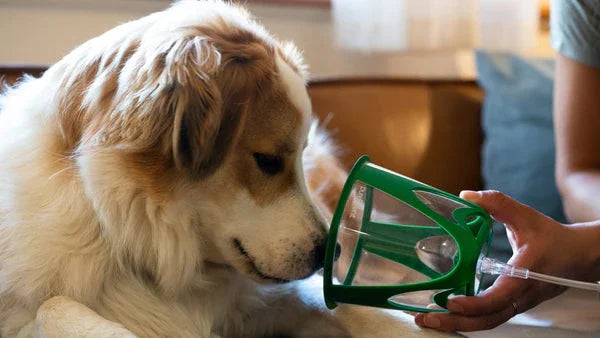
- Administer rescue oxygen if you have it. Our weight-specific rescue kits come with the right mask size and flow rate pre-set. Place it gently over the muzzle — most pets relax within seconds as the oxygen takes effect.
- Call ahead to the emergency vet. Give them a heads-up so the team is ready the moment you arrive.
- Drive, don't wait. Respiratory distress is not a "wait and see" situation. Continuing oxygen during transport can be the difference between a stable arrival and a resuscitation.
The Case for Having Oxygen at Home Before You Need It
Here's the truth most pet owners don't realize until they're in the middle of a crisis: emergencies happen at 2 a.m., on holidays, during snowstorms. The gap between "my dog is struggling to breathe" and "my dog is being treated at the ER" can be 30–60 minutes. That gap is exactly where home oxygen therapy matters most.
In-hospital extended oxygen therapy can run $1,000–$2,000 per day. For pets with chronic conditions, a home oxygen setup is not a luxury — it is a core part of responsible disease management. Our extended therapy bundles are designed for exactly this purpose, and many pet insurance plans cover them with a valid prescription. See our RX form page to get started.
Who Should Seriously Consider a Home Oxygen Kit?
- Dogs or cats diagnosed with congestive heart failure, collapsing trachea, or pulmonary hypertension
- Brachycephalic breeds (Bulldogs, Frenchies, Pugs, Shih Tzus, Boxers) — especially heading into summer
- Senior pets with any cardiac or respiratory diagnosis
- Pets with a history of severe asthma (especially cats)
- Pet owners who live more than 30 minutes from an emergency veterinary clinic
- Any household that wants to be prepared — the same way you keep a human first aid kit at home
"As a critical care specialist, I have cases that need oxygen during transport or while at home. Pawprint Oxygen is exactly what I was looking for the past few decades."
Understanding Your Pet Oxygen Options
Not all pet oxygen products are the same. The right choice depends on how often your pet needs oxygen and at what flow rate. Here's how to think about it — and visit our full FAQ for detailed product questions.
Rescue & Transport Oxygen (Short-Term)
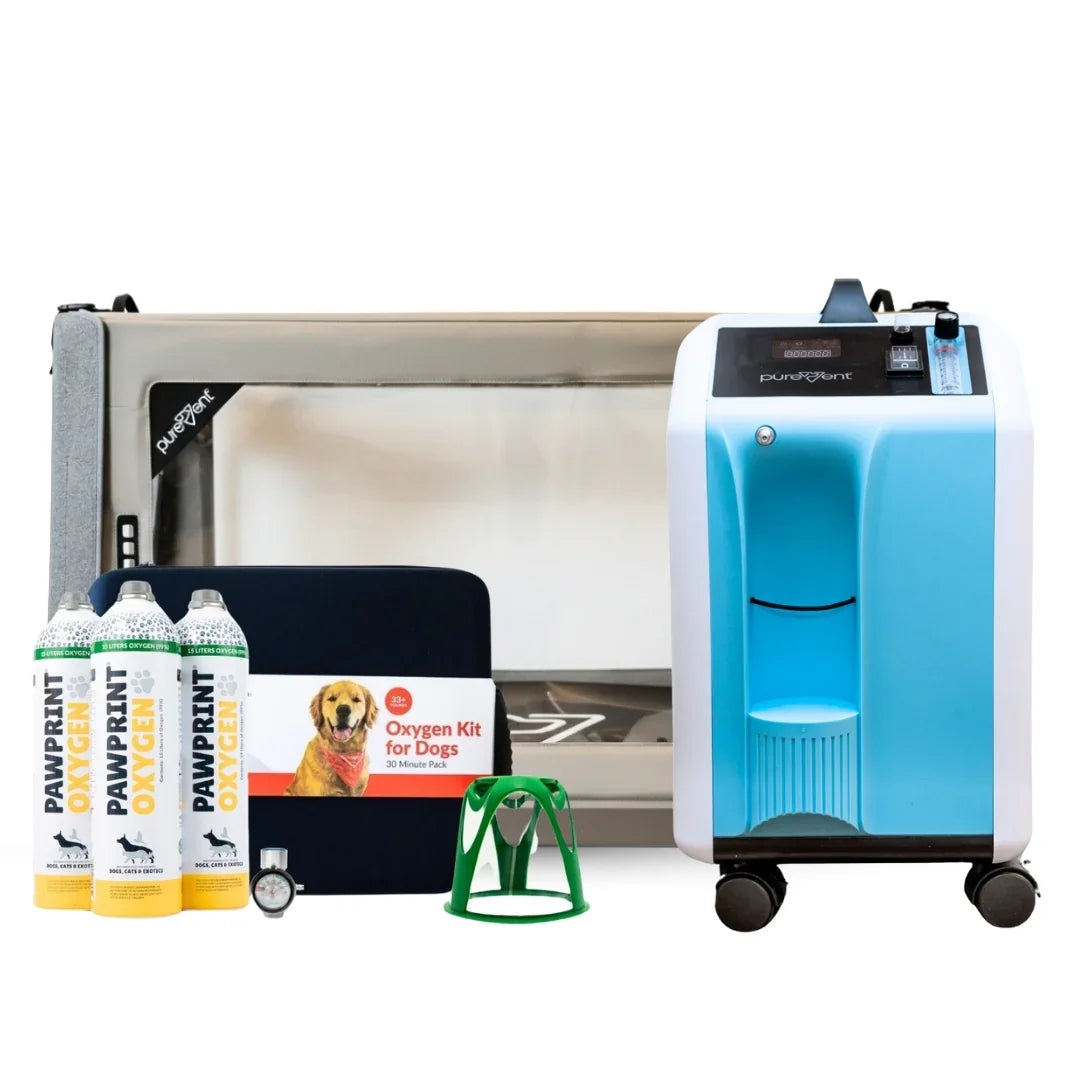
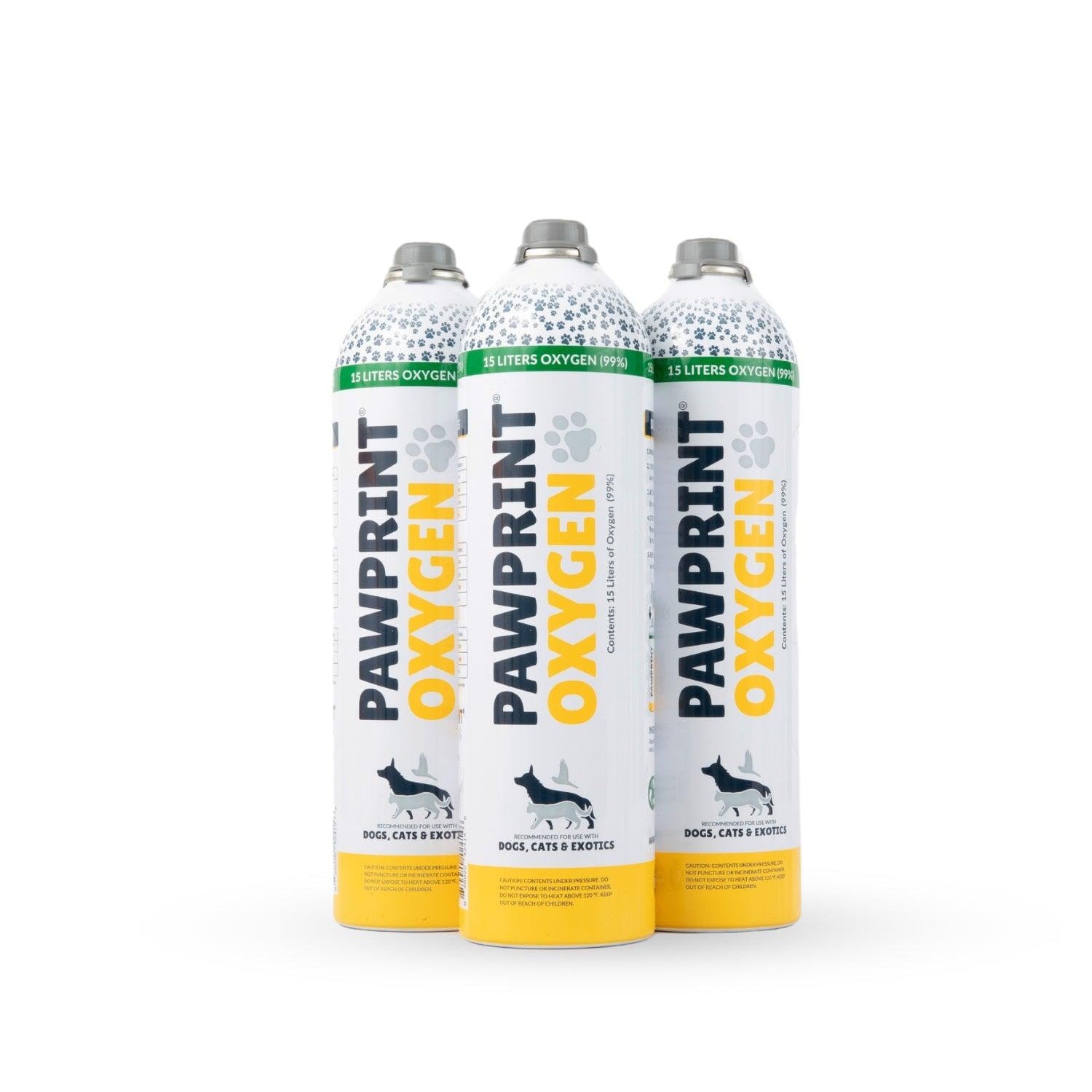
Rescue oxygen kits are lightweight, portable, and require no prescription. Each kit is weight-specific — the correct mask size, regulator, and flow rate are already configured for your pet. Canisters provide up to 30 minutes of oxygen and can be started and stopped multiple times. Keep one at home and one in your car. They're safe in heat up to 120°F and ship anywhere in the contiguous US. The 15L oxygen canisters are also available individually for easy replenishment.
Extended Oxygen Therapy (Long-Term)
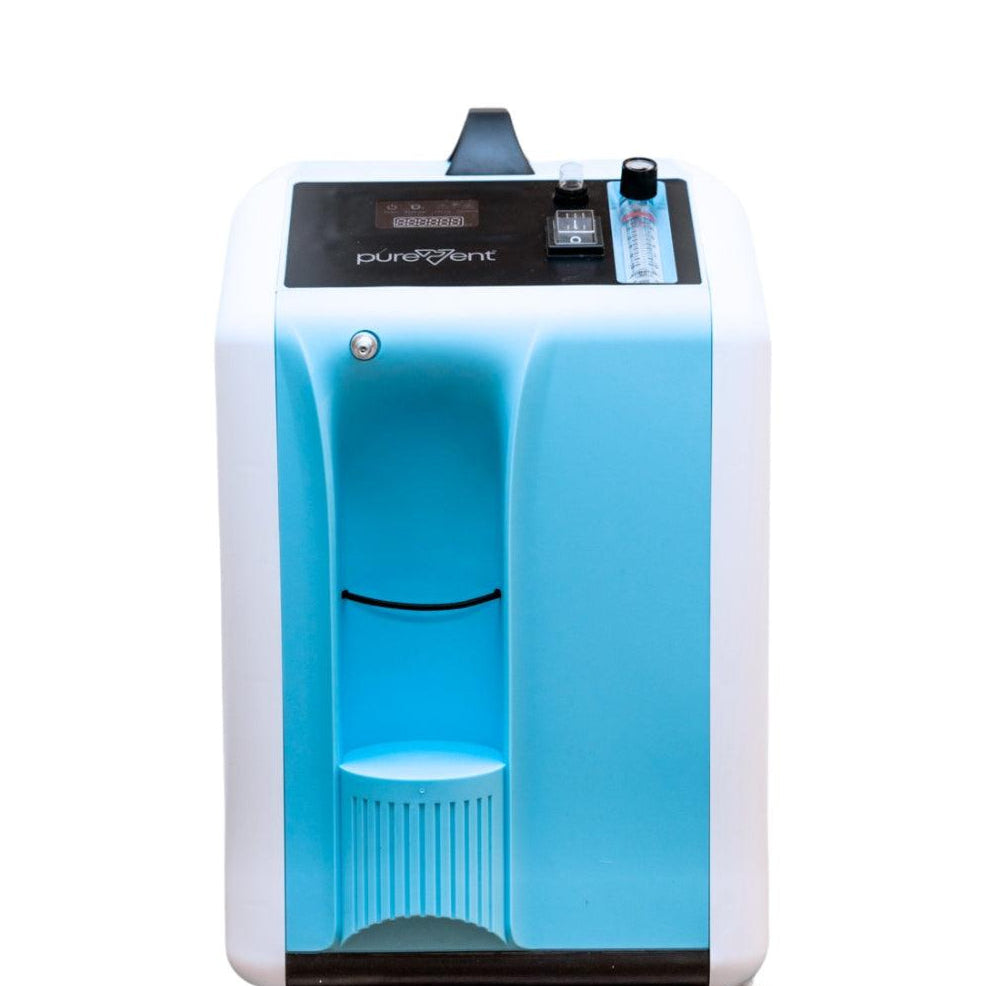
For pets requiring more than one hour of oxygen daily, or higher flow rates, our oxygen concentrators filter ambient air to deliver high-purity oxygen (over 90%) continuously. Pair one with a PureVent oxygen chamber to create a comfortable, controlled environment your pet can rest in at home. These products require a veterinary prescription — use our online RX form to get your vet's prescription submitted easily. Extended therapy is also covered by many pet insurance plans — check with your provider.
Not sure which option is right for your pet? Our team is available Monday–Friday, 9am–5pm EST at 855-699-4366, or browse our Resource Center for in-depth guides.
Frequently Asked Questions
Is home oxygen safe to use without veterinary training?
Yes — rescue kits are designed to be safe and straightforward for pet owners. The kit is pre-configured for your pet's weight with no guesswork needed. That said, home oxygen should always be used as a bridge to veterinary care, not a substitute for it. Extended therapy products require a vet prescription.
Can I use human oxygen for my pet?
The oxygen molecule is identical, but the delivery systems — masks, flow rates, and canister sizes — are purpose-built for dog and cat anatomy. Using the right equipment matters for safety and effectiveness. See our PureVent pet oxygen mask for the veterinarian-designed option.
What if my pet won't tolerate the mask?
Many pets initially resist an unfamiliar object near their face. The best strategy is to introduce the mask briefly during a calm, non-emergency moment so it doesn't feel foreign during a crisis. Most pets relax quickly once they feel the oxygen taking effect. For more tips, see our full FAQ page.
Does pet insurance cover home oxygen?
Many plans do cover home oxygen therapy when prescribed by a veterinarian. Several Pawprint customers have confirmed their kits were covered. Check with your provider and use our RX form to get the prescription documentation you need.
Do you offer products for veterinary clinics and EMS teams?
Yes — Pawprint Oxygen works with veterinary hospitals, emergency clinics, and animal rescue organizations nationwide. Visit our For Vets page, our EMS & Animal Rescue page, or our wholesale program to get started.
Related Resources from Pawprint Oxygen
- Healthy Paws Blog — Browse all pet health articles
- Resource Center — In-depth guides on oxygen therapy and pet conditions
- Health Conditions FAQ — Condition-specific oxygen therapy guidance
- Customer Reviews — Real stories from pet owners who've used Pawprint in emergencies
- PawprintCare Extended Warranty — Protection for concentrator owners
Be Ready Before an Emergency Happens
Pawprint Oxygen's veterinarian-designed kits ship directly to your door. Pick the right kit for your pet's weight and have it on hand — because in a breathing emergency, every second counts.
Sources & Further Reading
Cornell University College of Veterinary Medicine — Recognizing and Responding to Canine Respiratory Distress
American Veterinary Medical Association (AVMA)
Cornell — Canine Respiratory Disease Outbreaks: What Pet Owners Should Know
Dog Breathing Problems Pet Respiratory Distress Home Oxygen Therapy Collapsing Trachea Congestive Heart Failure Brachycephalic Breeds Pet Emergency Preparedness Cat Asthma Dog Health