Checking Your Dog's Oxygen Level at Home · Updated 2026
This guide explains how to check your dog’s oxygen level at home, understand possible warning signs, and know when oxygen therapy or emergency vet care may be needed.
⏱ 10-minute read | Updated May 2026 | Reviewed by Pawprint Oxygen Veterinary Team | Browse more articles →
Table of Contents
Oxygen helps support your dog’s heart, brain, organs, and muscles. For dogs with respiratory illness, heart disease, or ongoing breathing difficulty, checking oxygen levels at home may help pet parents monitor changes between vet visits. However, at-home monitoring should never replace veterinary care.
This guide explains how oxygen levels are checked, what readings may mean, and when to seek help. If your dog is struggling to breathe, has blue or pale gums, collapses, or seems distressed, seek emergency veterinary care right away.

Quick Answer
You can check your dog’s oxygen level at home with a pet-friendly pulse oximeter, which estimates oxygen saturation, or SpO₂. Healthy dogs are typically in the mid-to-high 90s, but low readings, labored breathing, pale or blue gums, weakness, or collapse should be taken seriously. If your dog seems distressed or is struggling to breathe, seek emergency veterinary care right away.
What Is a Dog's Oxygen Level?
A dog’s oxygen level usually refers to oxygen saturation, often shown as SpO₂. This number estimates how much oxygen is being carried through your dog’s blood to support the body’s organs, muscles, and tissues. In simple terms, SpO₂ gives a snapshot of how well oxygen is moving through your dog’s body.
A pulse oximeter reading may be affected by:
- Movement or restlessness
- Poor sensor placement
- Fur or dark pigmentation
- Cold limbs or poor circulation
- A weak or inconsistent signal
Remember
Oxygen readings should always be considered alongside your dog’s breathing effort, gum color, energy level, and veterinary guidance.
Can You Check Your Dog’s Oxygen Level at Home?
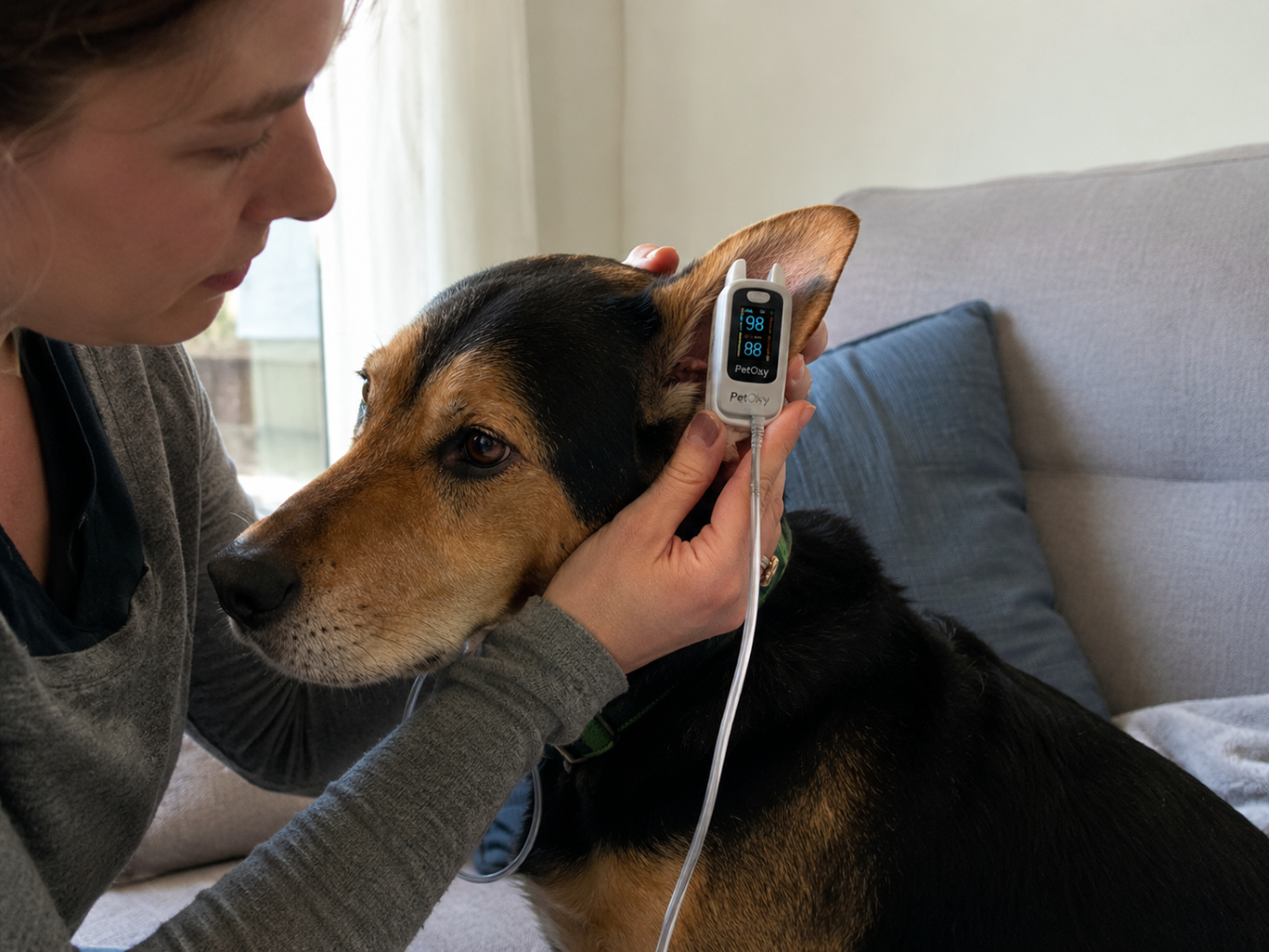
Yes, some pet owners can check their dog’s oxygen level at home with a pet-friendly pulse oximeter, especially if their dog has a respiratory or heart condition. Human fingertip pulse oximeters usually do not work well on dogs, so it is important to use a device designed for pets.
For the best reading, keep your dog calm and still, and make sure the sensor is placed correctly. Always interpret the number alongside your dog’s breathing effort, gum color, energy level, diagnosis, and veterinary guidance.
Common Oximeter Placement areas
How to Check Your Dog’s Oxygen Level at Home
Step 1: Keep your dog calm
Choose a quiet area and avoid forcing the device onto a stressed or panicked dog.
Step 2: Place the sensor correctly
Use the placement recommended by your veterinarian or the pulse oximeter manufacturer.
Step 3: Wait for a steady reading
Do not rely on a number that appears for only one second. Wait for the reading to stabilize.
Step 4: Check your dog, not just the number
Look for signs like fast breathing, open-mouth breathing, pale or blue gums, weakness, collapse, or restlessness.
Step 5: Record the reading
Write down the SpO₂ number, heart rate if shown, time of day, activity level, and any symptoms.

What Oxygen Level is Normal for Dogs?
Healthy dogs typically have an oxygen saturation, or SpO₂, in the mid-to-high 90s.
If your dog’s oxygen level is lower than expected, it may suggest hypoxemia, or low oxygen in the blood. However, false readings can happen if your dog is moving, anxious, cold, or if the sensor is not placed correctly.
Veterinarians consider the full picture, including:
- SpO₂ reading
- Breathing effort
- Gum color
- Energy level
- Diagnosis
- Physical exam findings
If your dog’s reading is low or they appear to be struggling to breathe, contact your veterinarian or an emergency clinic right away.
Signs Your Dog May Not Be Getting Enough Oxygen
Why Oxygen Therapy Can Help Dogs
Oxygen therapy works by increasing the amount of oxygen available for your dog to breathe. This can help improve oxygen delivery throughout the body, reduce the work of breathing, and support your dog while the underlying illness or condition is being treated.
Oxygen therapy may help dogs who are experiencing:
- Labored or difficult breathing
- Low oxygen levels
- Respiratory illness
- Heart-related breathing problems
- Recovery after a respiratory emergency
- Stress or exhaustion caused by trouble breathing
It is important to understand that oxygen therapy does not cure the disease itself. Instead, it helps stabilize and support your dog so their body can get the oxygen it needs. For ongoing home use, oxygen should always be used under veterinary guidance.
Pet owners should not wait for a pulse oximeter reading if their dog is clearly in distress.
What are some dog conditions that may benefit from oxygen support?
There are several respiratory, cardiac, and emergency conditions your veterinarian may recommend oxygen for. The right oxygen plan will depend on your dog’s diagnosis, symptom severity, and your veterinarian’s treatment recommendations.
- Congestive heart failure
- Pneumonia
- Collapsing trachea
- Brachycephalic airway syndrome
- Chronic bronchitis
- Pulmonary hypertension
- Smoke inhalation
- Trauma or shock
- Post-surgical recovery
- Severe allergic reactions or respiratory emergencies
When should you call your veterinarian or go to the ER?
Call your veterinarian if your dog’s oxygen reading is lower than expected, their symptoms are getting worse, or you are unsure whether their breathing is normal. Seek emergency veterinary care right away if your dog shows signs of serious distress, including:
- Blue, gray, or pale gums
- Collapse or fainting
- Severe breathing distress
- Open-mouth breathing
- Sudden weakness
- Unresponsiveness
- Extreme restlessness or inability to settle
- Breathing that looks strained, loud, or unusually fast
Should you talk to your vet before purchasing a pulse oximeter for your dog?
Yes, speaking with your dog's veterinarian is a great way to ensure you are getting the best oximeter for your dog. The vet can also educate you on how to use it and how not to use it to check your dog's oxygen level.
At-Home Oxygen Support with Pawprint Oxygen
For pet parents managing a dog with a respiratory or cardiac condition, having the right oxygen setup at home can provide peace of mind and help support vet-directed care. Pawprint Oxygen is a pet-focused oxygen support company offering products designed specifically with pets in mind.
Depending on your dog’s needs, your veterinarian may recommend:
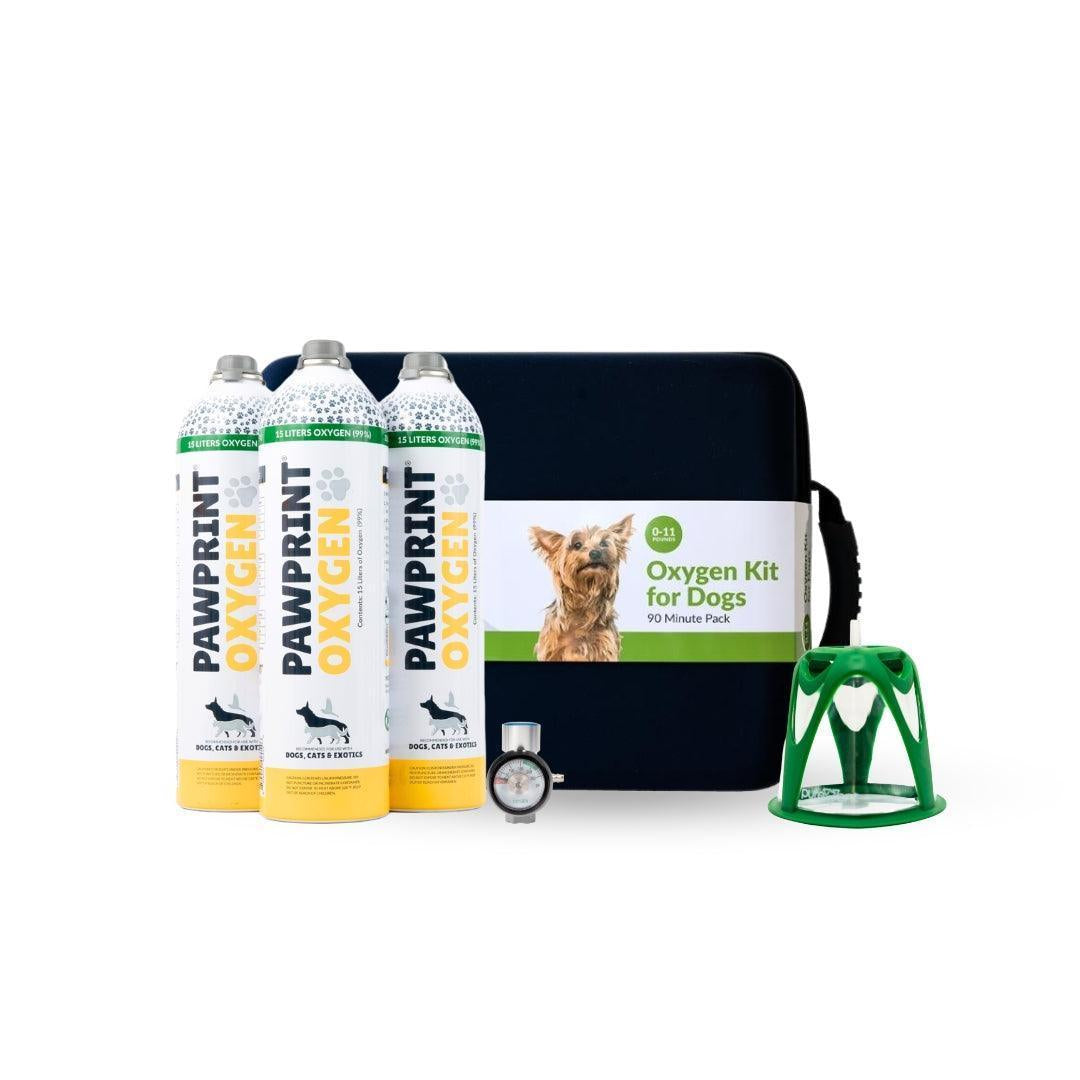
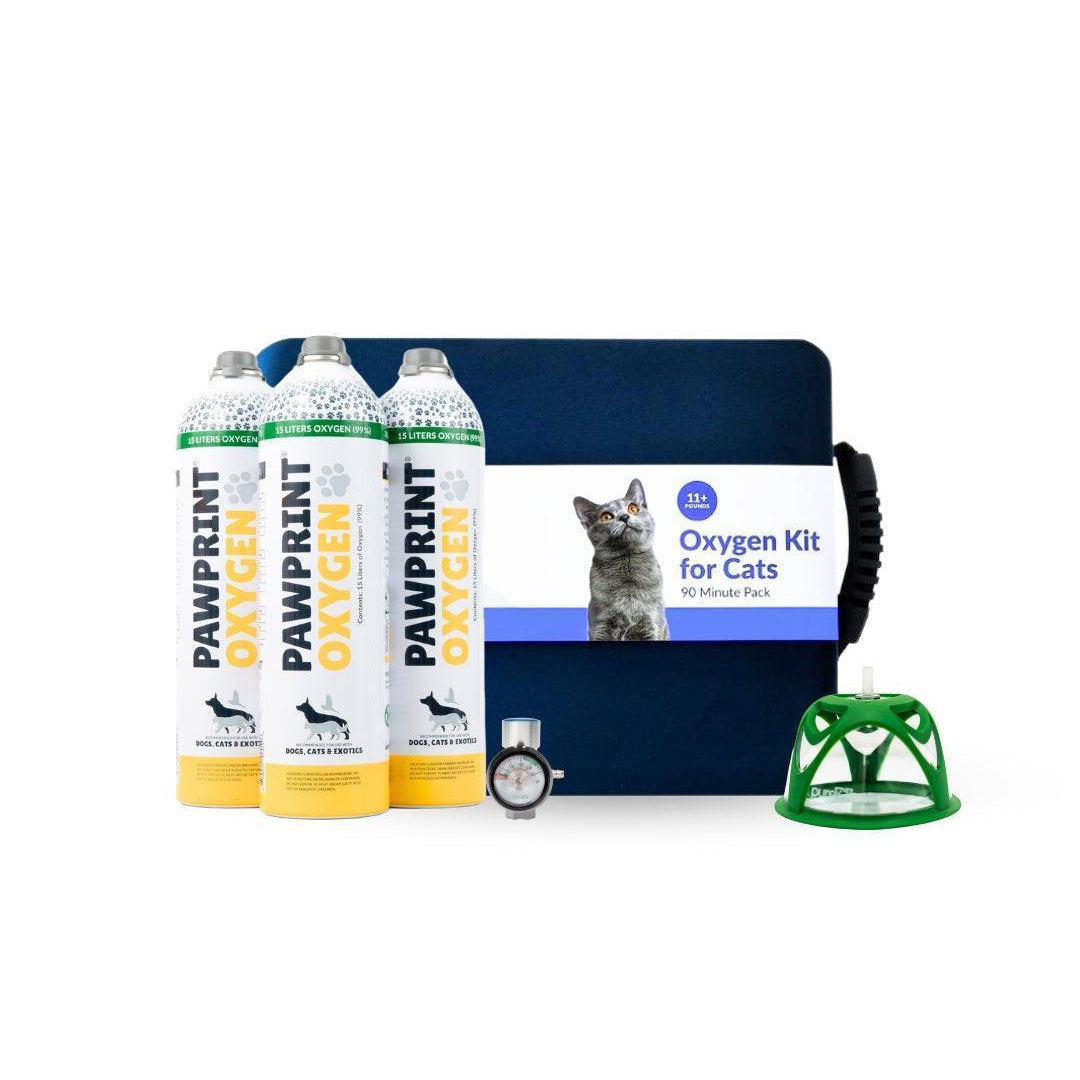
- Portable Oxygen Kits: for short-term oxygen support, emergency preparedness, or transport to a veterinary hospital. Check out the kits!
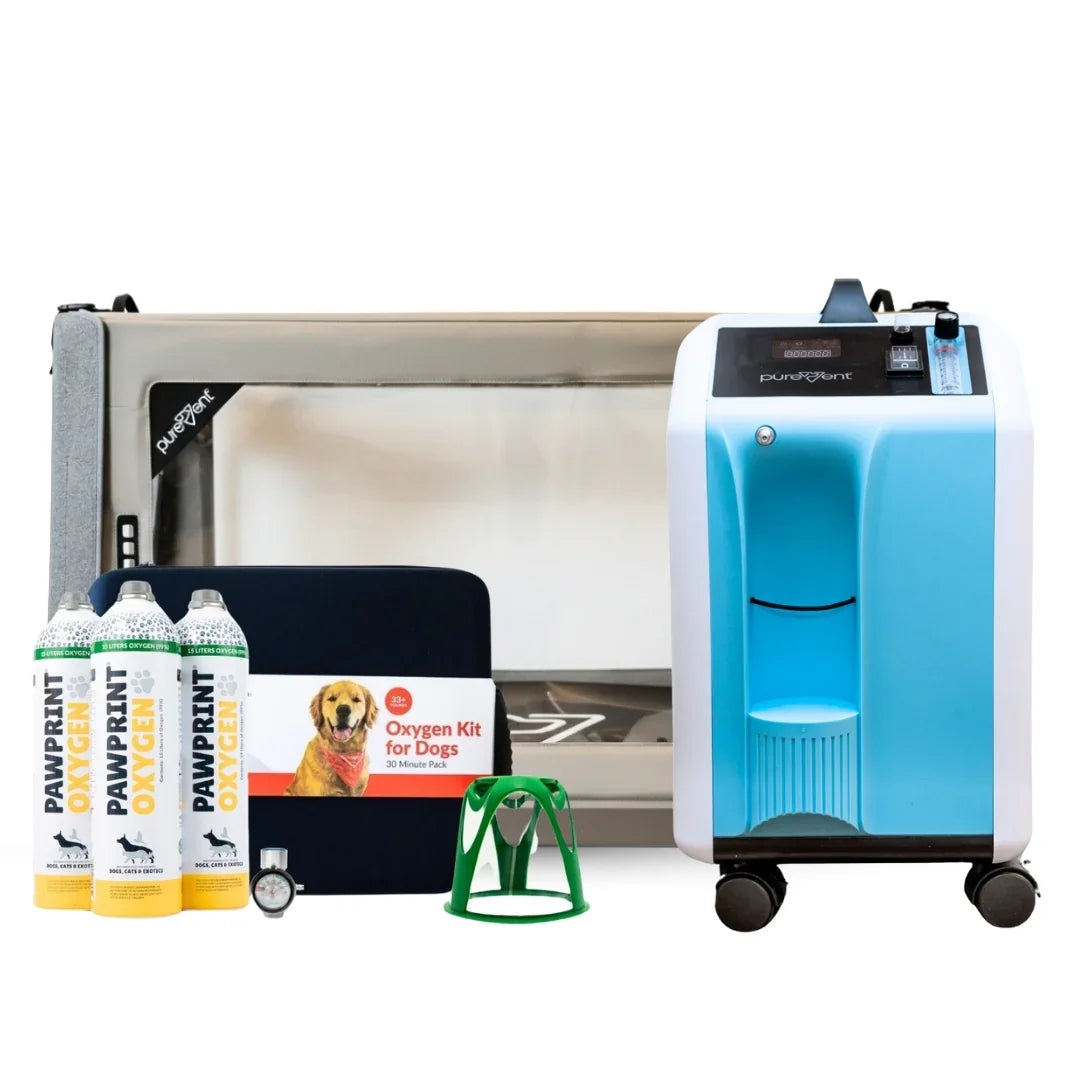
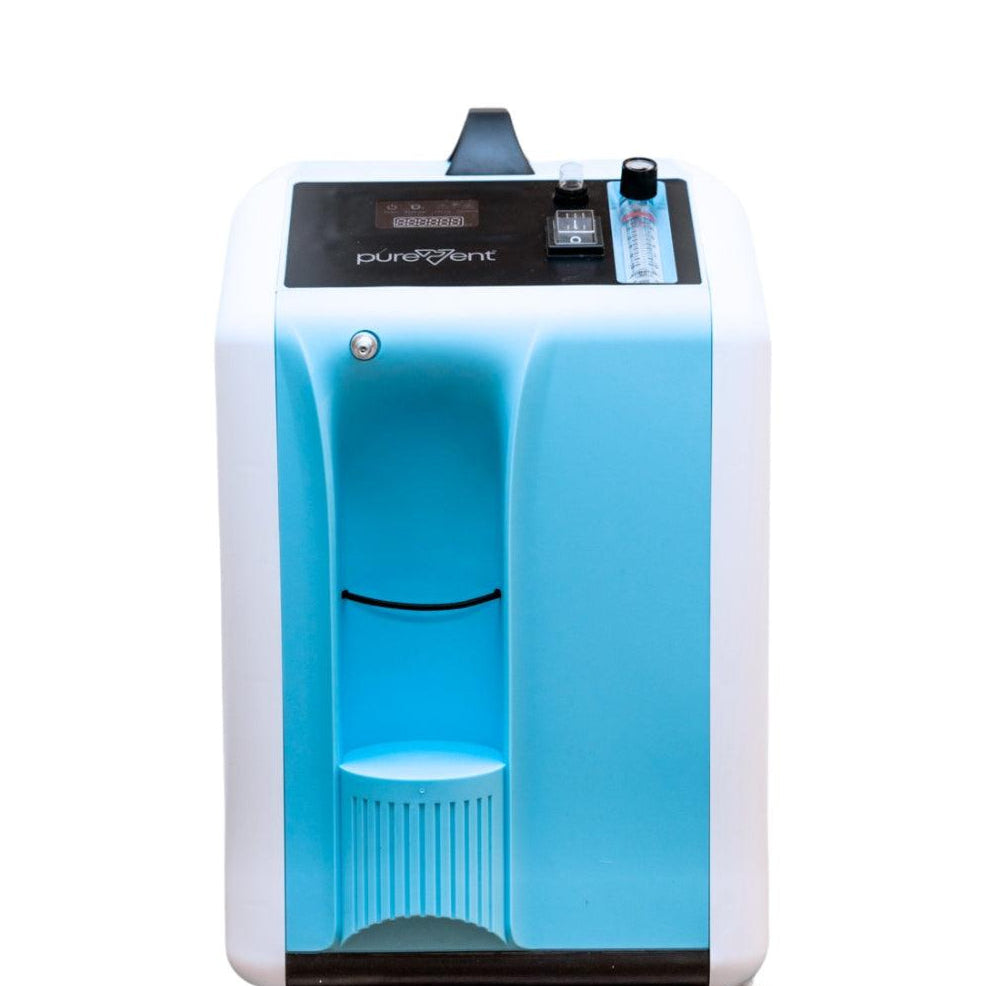
- Oxygen concentrator + chamber: for longer, vet-directed oxygen therapy sessions at home. Read more about the oxygen concentrator and chamber!
While oxygen can be a helpful support tool, it should always be used according to your veterinarian’s guidance.

At-home oxygen monitoring can be helpful, but your dog’s comfort, breathing effort, gum color, and overall behavior are just as important as the number on the screen. When in doubt, it is always safest to contact your veterinarian or an emergency clinic for guidance.
Key Takeaways: Remember These Three Important Facts
Normal SPO2
To be able to compare your dog's oxygen levels, knowing what normal is can be helpful. Healthy dogs have an oxygen saturation in the mid-to-high 90s.
When to call your vet or go to the er
Knowing the signs your dog isn't getting enough oxygen can help pet parents decide when they need more than at-home care.
Having At-home oxygen
Having the right oxygen setup at home can provide peace of mind and help support vet-directed care.