Brachycephalic Breeds and Breathing Emergencies: Why Flat-Faced Dogs Need an Oxygen Kit at Home
This guide walks through why these breeds are wired for breathing crises, how to spot a true emergency in the first 60 seconds, and why a home pet oxygen kit can be the difference between a scary moment and a tragedy.
⏱ 11-minute read | Updated July 2026 | Reviewed by Pawprint Oxygen Veterinary Team | Browse more articles →
Table of Contents
If you share your home with a pug, French bulldog, English bulldog, Boston terrier, boxer, shih tzu, Pekingese, or cavalier king Charles spaniel, you already know the soundtrack: the snorts, the snores, the reverse sneezes, the heavy breathing after a short walk. Most of the time, it's just background noise. But for brachycephalic, or "flat-faced", dogs, the line between "normal noisy breathing" and "respiratory emergency" is razor thin.
This guide walks through why these breeds are wired for breathing crises, how to spot a true emergency in the first 60 seconds, and why a home pet oxygen kit like the Rescue Oxygen Kit can be the difference between a scary moment and a tragedy.

What Does "Brachycephalic" Actually Mean?
"Brachycephalic" literally translates to "short-headed." Breeds in this category have been selectively bred over generations for that signature smushed face characterized by wide-set eyes, a short muzzle, and a rounded skull. The cosmetic result of brachycephalic breeds is undeniably charming. The anatomical result is a respiratory system trying to do a full-sized job inside a compressed space.
The key issues that stack on top of one another are known collectively as Brachycephalic Obstructive Airway Syndrome (BOAS).
Here is a list of upper airway abnormalities that affect brachycephalic dogs and cats:
- Stenotic nares: narrowed nostrils that restrict airflow before it even reaches the throat.
- Elongated soft palate: a soft palate that's too long for the mouth, partially blocking the airway.
- Everted laryngeal saccules: small tissue pouches near the voice box that get sucked inward over time, narrowing the airway further.
- Hypoplastic trachea: a narrower-than-normal windpipe, common in English bulldogs, especially.
Add in a wide, short tongue that doesn't fit neatly in a tiny mouth, and you have a pet who is, even on a good day, working harder than other breeds just to move air in and out.

The Breeds Most at Risk
Not every short-nosed dog is in equal danger, but veterinarians flag these breeds as the highest-risk for BOAS-related emergencies:
- French bulldog
- English bulldog
- Pug
- Boston terrier
- Boxer
- Bullmastiff
- Shih tzu
- Pekingese
- Cavalier king Charles spaniel
- Lhasa apso
- Brussels griffon
- Persian and Himalayan cats (yes, brachycephalic cats exist too, and face many of the same risks)
If your dog or cat is on this list, you should consider yourself "on call" for respiratory emergencies in a way that owners of long-nosed breeds simply aren't.
Why Brachycephalic Pets Crash Faster and Harder
Here's the part most pet owners don't fully appreciate until they're in the middle of an emergency: a brachycephalic dog has very little physiological reserve. A Labrador in mild respiratory distress has time. Their airway is wide, their tongue fits, and their nostrils are open. They can struggle through a bumpy car ride to the ER while you call ahead.
A bulldog cannot.
When a flat-faced dog tips into respiratory distress, three things tend to happen at once:
- The airway swells. Stress, heat, and oxygen deprivation all cause the throat tissues to swell, narrowing an already narrow airway.
- Panic feeds the fire. A struggling dog panics, which speeds breathing, which heats the body, which causes more swelling.
- Oxygen saturation drops fast. Without intervention, a brachycephalic crisis can move from "labored breathing" to "blue gums and collapse" in minutes.
This is the part where time stops being measured in hours or even tens of minutes. It's measured in single-digit minutes. And it's exactly why having oxygen at home, before you load the car, matters so much for these breeds.

The Five Triggers Every Flat-Faced Pet Owner Should Watch For
Most brachycephalic emergencies aren't random. They're triggered. If you can recognize the trigger, you can sometimes prevent the crisis, and if you can't, you'll at least know what you're looking at.
1. Heat and Humidity
Brachycephalic dogs cool themselves almost entirely through panting, and their compressed airway makes panting wildly inefficient. A 75°F day with high humidity can be enough to push a Frenchie into heatstroke, which is itself a respiratory emergency. (We covered this in detail in our heatstroke first-aid guide.
2. Exercise and Excitement
A long walk, a vigorous play session, or even just the doorbell ringing can spike a brachycephalic dog's respiratory effort. For high-drive boxers and Boston terriers especially, the dog's enthusiasm often outpaces their airway's capacity.
3. Stress
Vet visits, thunderstorms, fireworks, travel, new people, and anything else that raises heart rate also raises respiratory rate. A panting, panicking flat-faced dog is one breath away from a true crisis.
4. Anesthesia and Sedation
Brachycephalic breeds are notoriously high-risk for anesthesia. The first hour after waking up, when the airway is still relaxed, and the dog can't fully control their tongue, is a known danger window. Ask your vet about extended monitoring post-procedure.
5. Sleep
Yes, sleep. Many brachycephalic dogs have a form of sleep apnea, gasping awake several times a night. Most of the time, it's benign. But owners of severely affected dogs sometimes find their pet in respiratory distress after a particularly deep nap.

How to Spot a Brachycephalic Breathing Emergency
Because these breeds always sound a little dramatic, owners get desensitized. Here's how to tell the difference between Tuesday-night Frenchie noises and a real crisis:
✅Normal-for-the-breed:
- Snoring during sleep
- Snorting after excitement
- Occasional reverse sneezing (the honking goose sound)
- Mouth-open panting after exercise that resolves within 5–10 minutes of rest
❗Warning signs to start cooling, giving oxygen, and transporting to the vet:
- Panting that doesn't resolve with rest and a cool environment
- Exaggerated chest and belly movement with each breath
- Standing with elbows out, neck stretched forward (an "air hunger" posture)
- Excessive drooling or thick, ropy saliva
- Anxious, restless behavior like pacing and inability to settle
🚑True emergency. Get to the ER now:
- Gums or tongue that look gray, blue, or purple (cyanosis)
- Collapse or stumbling
- Loud, high-pitched, raspy breathing (stridor)
- Loss of consciousness
- Vomiting combined with labored breathing
If you see anything in the "true emergency" list, you do not have time to wait for the vet to call you back. This is when home oxygen becomes a bridge to professional care.
Why a Home Oxygen Kit Belongs in Every Brachycephalic Household
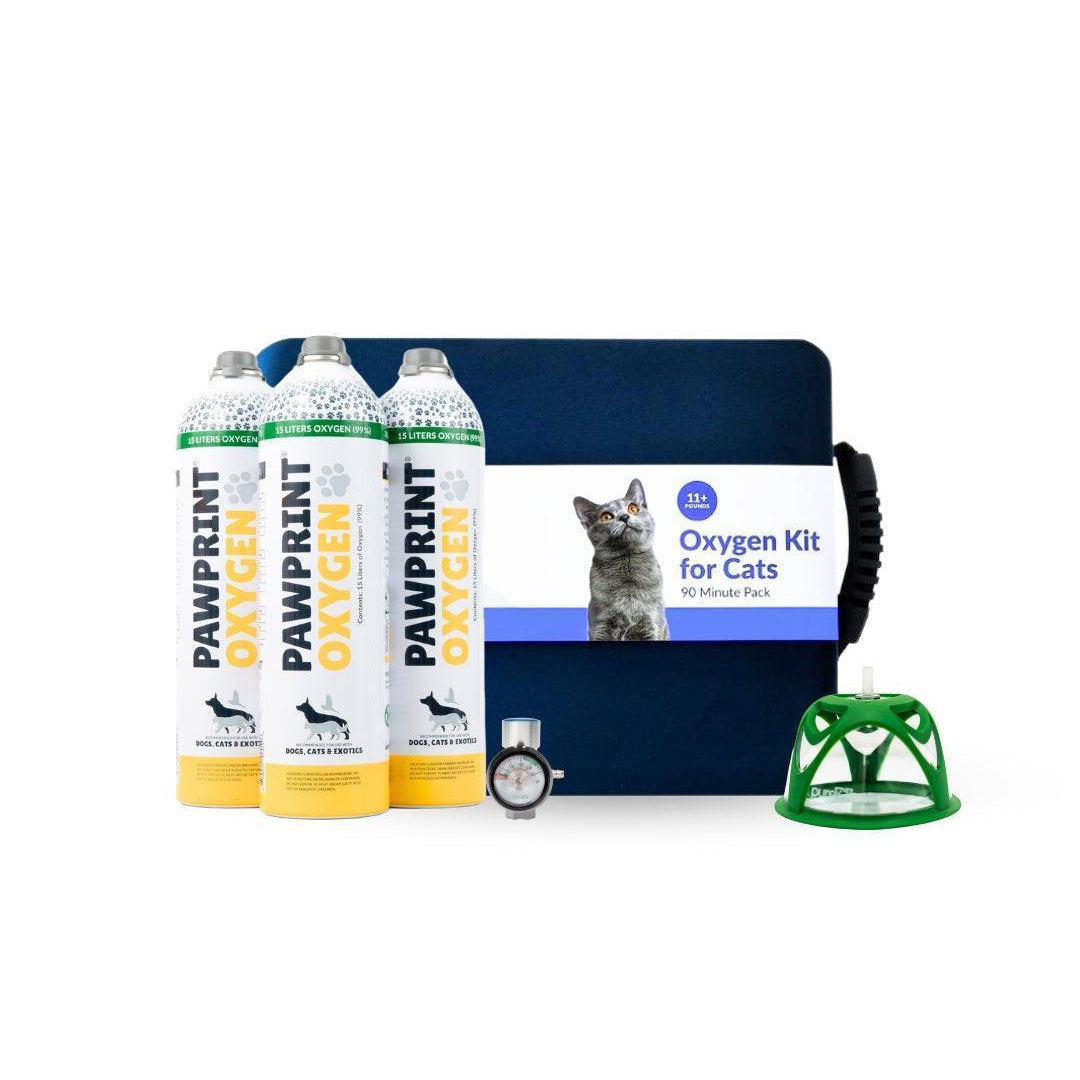
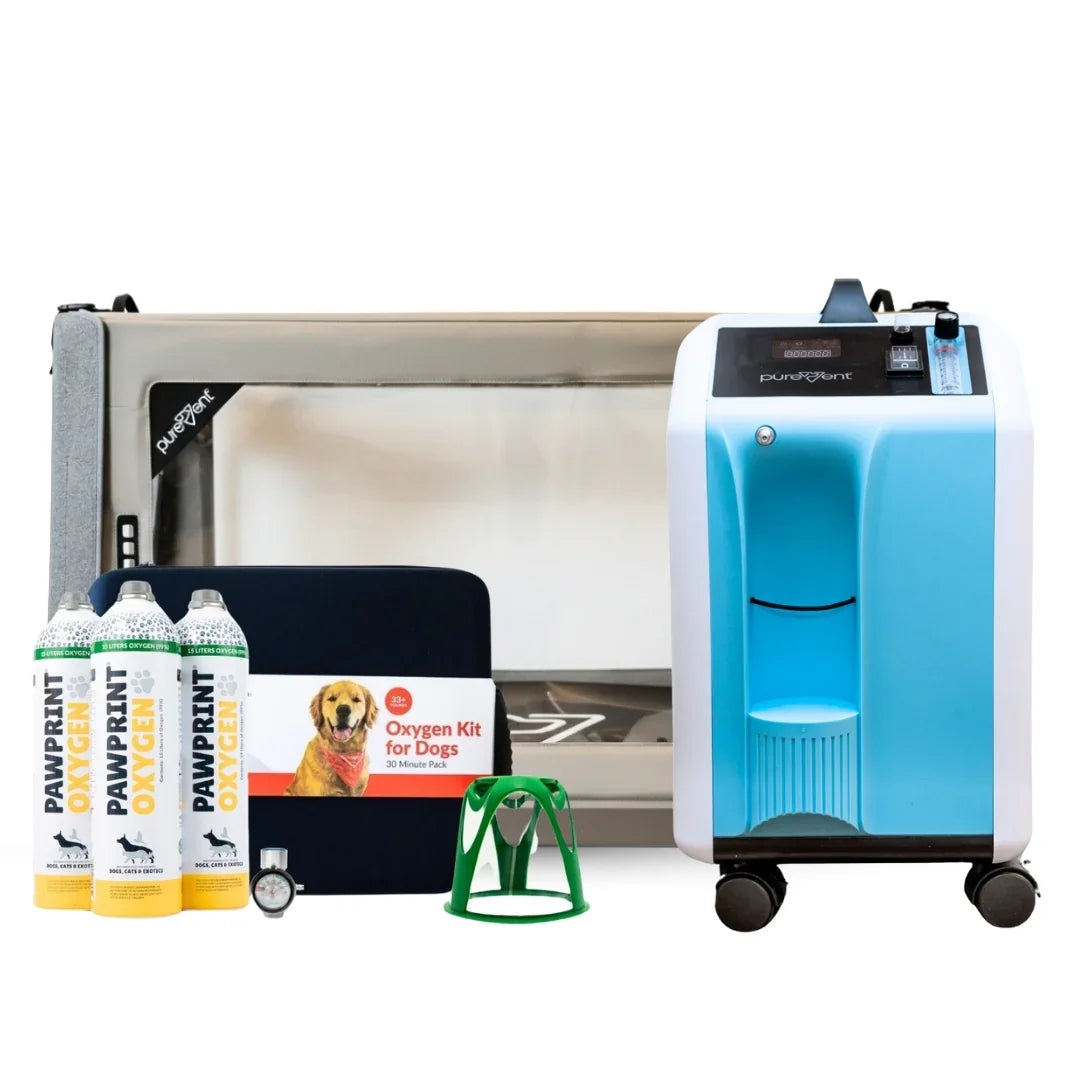
The single most consistent piece of feedback we hear from emergency vets is that the pets who arrive already on supplemental oxygen do better than the pets who arrive blue-gummed and air-starved. That's true for any breed, but it's especially true for brachycephalic dogs whose airways are already compromised. The Rescue Oxygen Kit was built for exactly this scenario.
Each kit includes:
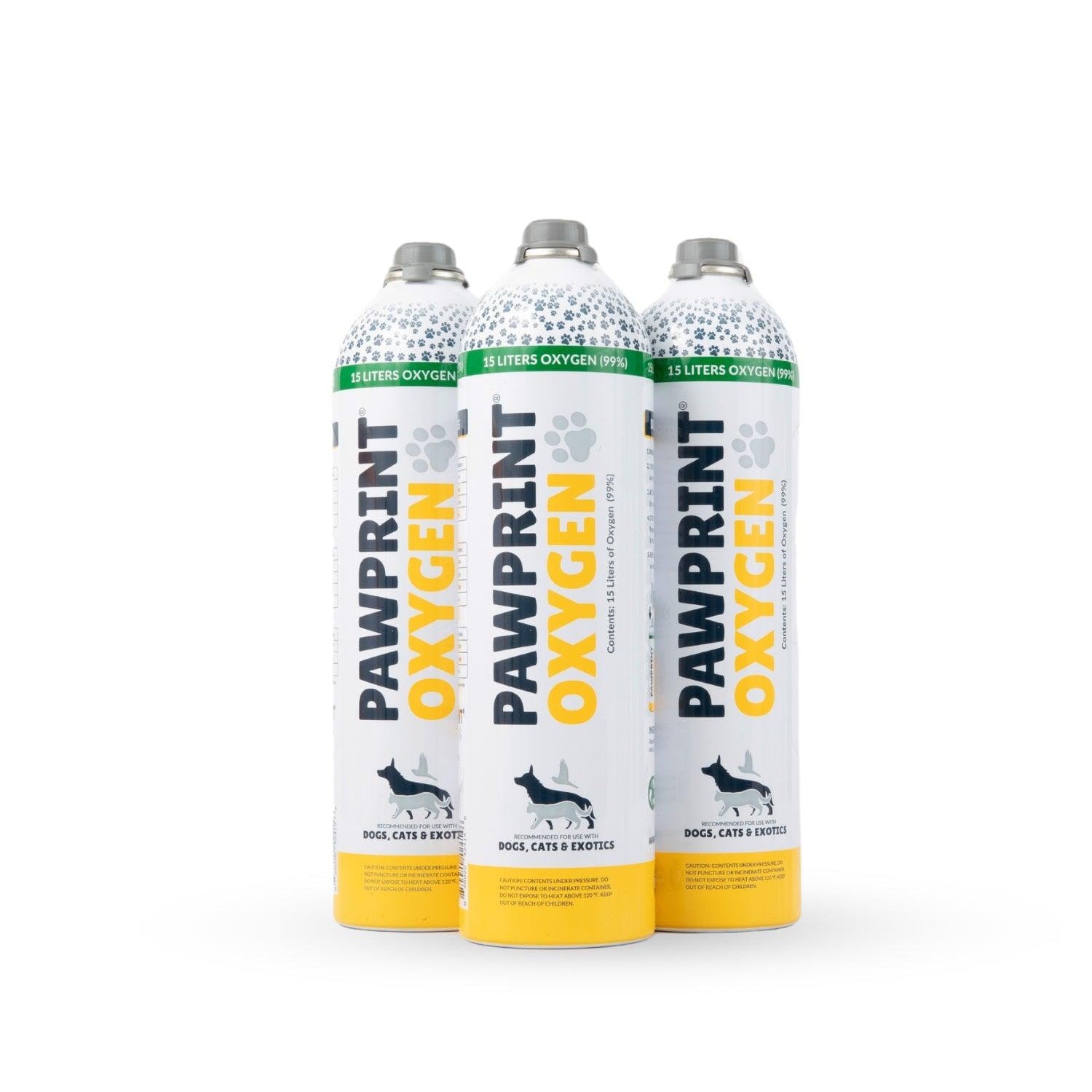
- Portable, pre-filled oxygen canisters (no prescription required, no medical training necessary)
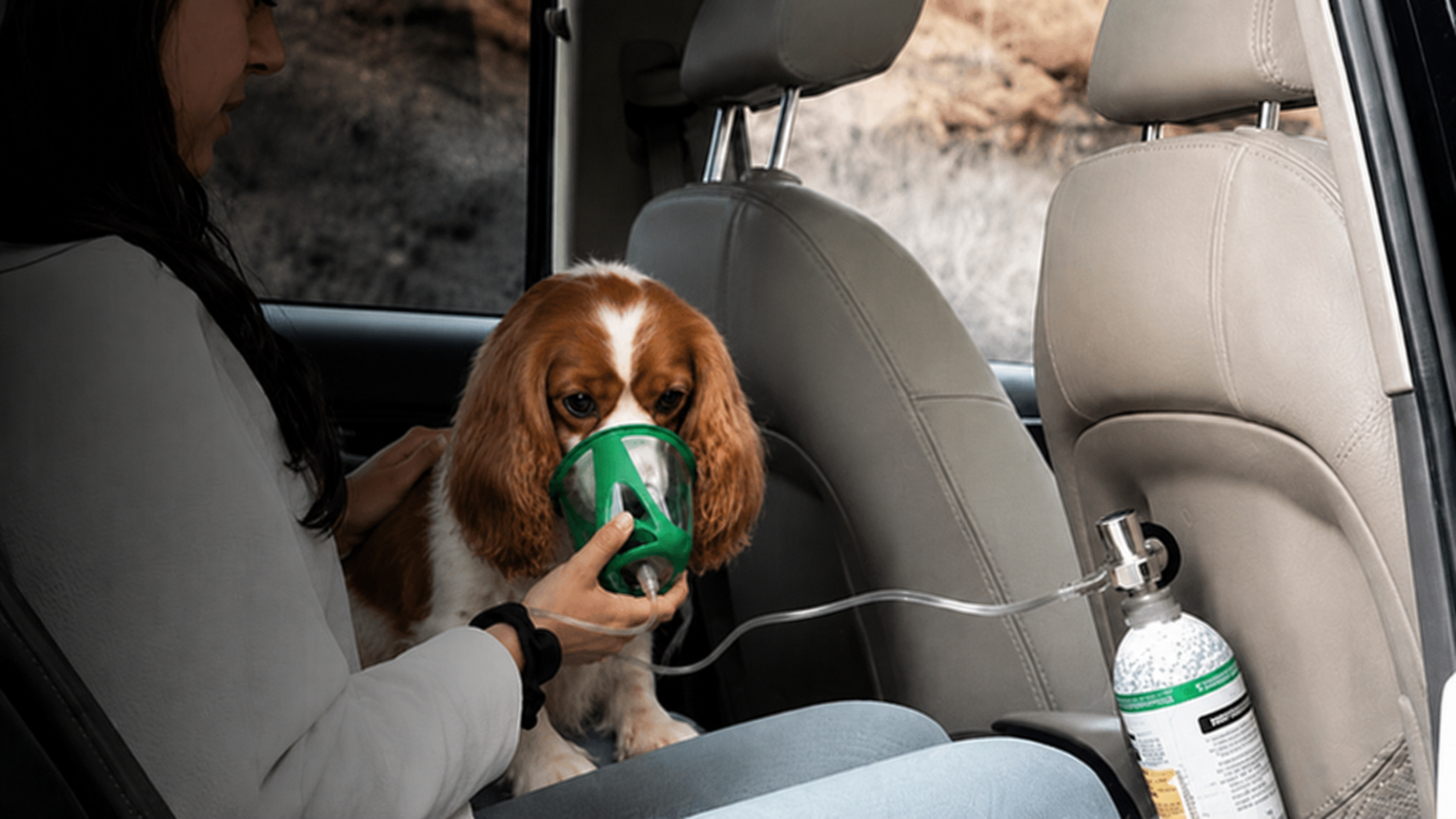
- The PureVent™ pet oxygen mask, designed with tri-vent technology that removes up to 80% more rebreathed carbon dioxide than standard masks, which is critical for a brachycephalic patient whose carbon dioxide clearance is already poor
- A pre-set flow regulator set to your pet's weight so you can ensure they are getting the right amount of oxygen every time
- Soft, flexible oxygen tubing
- A quick-start guide written for owners under stress
The trade-off in a brachycephalic emergency isn't "oxygen vs. the ER." It's "oxygen while you head to the ER." Having portable canisters at home means you're not watching your dog's gums turn blue during a 15-minute car ride, hoping the AC and the cracked window are enough.
To understand exactly what's in the kit and how it works, see our foundational guide: Introducing the Rescue Oxygen Kit: The At-Home Pet Oxygen Kit.
What to Do in the First 5 Minutes of a Brachycephalic Crisis
Print this. Tape it inside the cabinet where you keep your Rescue Oxygen Kit.
Minute 1: Stop the trigger.
If it's hot, move to AC. If it's exercise, stop. If it's stress, get to a quiet room. Lift your dog into a comfortable upright-ish position with their head and neck slightly extended. Never lay a struggling brachycephalic dog flat on their side.
Minute 2: Cool, gently.
For heat-driven crises, wet the paws, ears, and belly with cool (not ice-cold) water. Aim a fan. Do not submerge.
Minute 3: Start oxygen.
Open your Rescue Oxygen Kit. Place the PureVent mask near (not jammed against) your dog's face. Most flat-faced dogs tolerate it better with a loose seal rather than a tight one. Let them breathe oxygen-enriched air while you make the next call.
Minute 4: Call your ER vet.
Tell them: breed, what triggered the episode, current gum color, that you are administering oxygen, and your ETA.
Minute 5: Transport.
Continue oxygen in the car if possible. Drive calmly, as your dog reads your stress.
This sequence has been used by Pawprint Oxygen customers and by the 3,000+ U.S. fire departments that trust our equipment to keep brachycephalic patients alive long enough to reach definitive care.
Long-Term Care for the Brachycephalic Pet
A home oxygen kit is a safety net, not a substitute for prevention. These are the most important long-term moves you can make for your flat-faced dog or cat:
- Keep weight down. Even 1–2 extra pounds dramatically worsens BOAS symptoms.
- Use a harness, never a collar. Pressure on the throat is the last thing their airway needs.
- Talk to your vet about BOAS surgery. Stenotic nares and elongated soft palates can be surgically corrected, often with life-changing results. Younger pets generally recover better, but speak with your vet about your pet's specific medical history before deciding.
- Avoid midday summer activity. Walks before 8am or after 8pm during heat waves. Period.
- Have an emergency plan. Vet's number on the fridge, ER vet's address in your phone, a Rescue Oxygen Kit in a known location, and at least one other person in the household trained to use it.
Frequently Asked Questions
Are brachycephalic cats at the same risk as brachycephalic dogs?
Persian, Himalayan, and Exotic Shorthair cats share many of the same airway compromises and benefit from the same home-oxygen preparedness. Though cats can hide respiratory distress far better than dogs, so the warning signs are easier to miss. Open-mouth breathing in a cat is always an emergency.
Can I use a Rescue Oxygen Kit on a pug without my vet's approval?
Yes. The Rescue Oxygen Kit is a non-prescription emergency-use kit designed for owner administration. You're not treating an underlying condition, you're providing supplemental oxygen to a pet in distress while you arrange professional care.
How long do the oxygen canisters last?
Canister duration varies by flow rate, but a single Rescue Oxygen Kit canister is sized to bridge a typical emergency window: long enough to stabilize and transport. For households with multiple at-risk pets or longer transport times to a vet, many owners keep a few extra canisters on hand.
My Frenchie snorts and snores constantly. How do I know what's normal?
The honest answer: know your dog's baseline. Record a 30-second video of your dog breathing on a calm, cool evening. That's your reference. When something sounds different, whether that is more effort, more noise, longer duration, posture changes, trust your gut and act.
Is a home oxygen kit overkill for a healthy young Bulldog?
It's the same question as "is a fire extinguisher overkill for a house that's never caught fire?" The cost of being wrong without one is your pet's life. The cost of being wrong with one is a kit that sits in a closet. The math is straightforward.
Where can I learn more or buy a Rescue Oxygen Kit?
Visit pawprintoxygen.com for full product details, vet-designed specifications, and to add a kit to your household emergency setup.
The Bottom Line
If you love a flat-faced pet, you've signed up for a lifetime of charm, snorts, and slightly elevated medical anxiety. The good news is that the single biggest variable in a brachycephalic breathing emergency, how quickly your pet gets oxygen, is something you can completely control from home.
The Rescue Oxygen Kit is vet-designed, fire-department-trusted, and built specifically for the moment when minutes matter and your nearest ER is 20 minutes away. For pug, Frenchie, bulldog, Boston, boxer, shih tzu, and Pekingese parents, it's not an "if you have time" purchase. It's a "before the next heat wave" purchase.
Related Reading
Keep building your pet emergency plan with these guides: