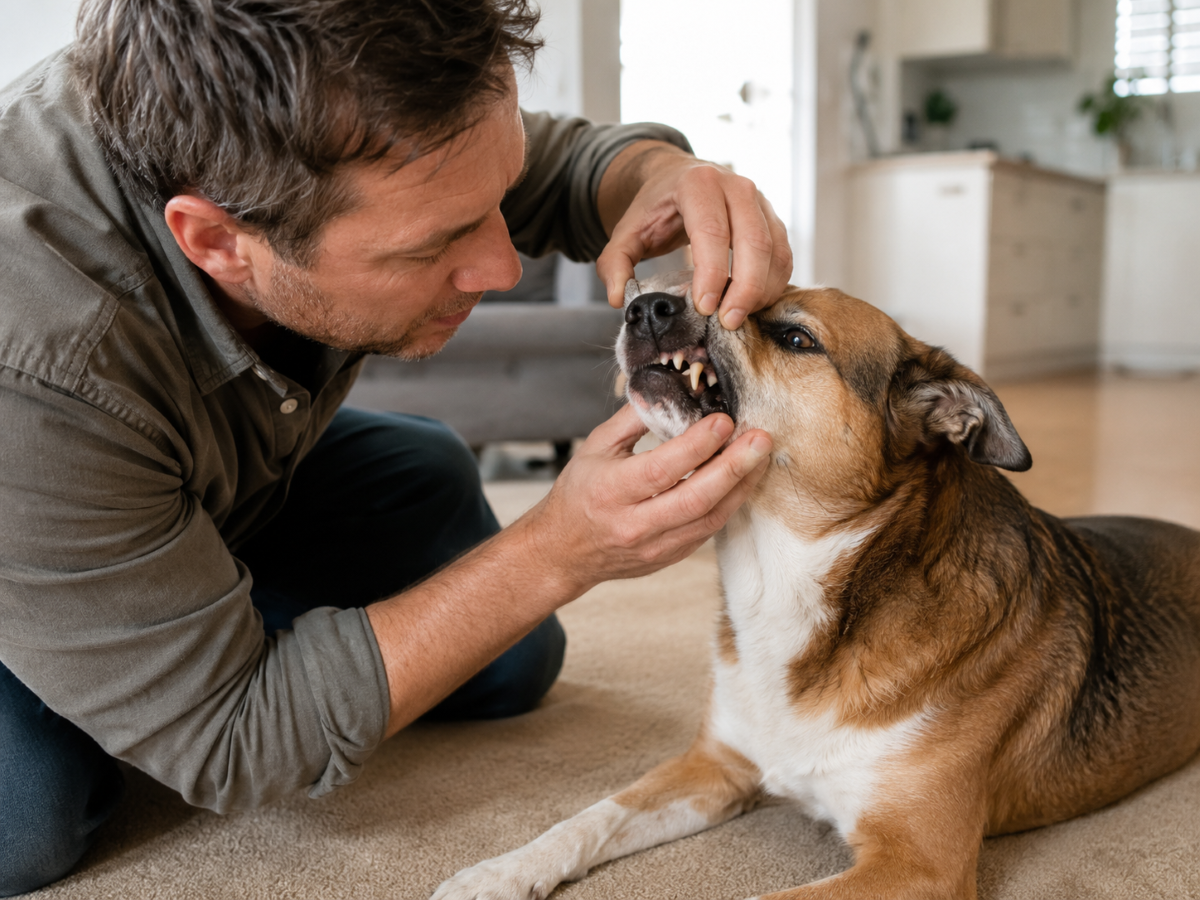
Dog Choking Emergency: Airway Obstruction Signs, First Aid, and Why Oxygen Support Matters After
This guide walks you through how to tell real choking apart from a coughing fit, the step-by-step first aid response including the canine Heimlich maneuver, and why dogs need supplemental oxygen support even after the obstruction is cleared.
⏱ 6-minute read | Updated August 2026 | Reviewed by Pawprint Oxygen Veterinary Team | Browse more articles →
Table of Contents
A dog choking on a ball, a bone fragment, or a stolen piece of food is one of the most frightening things a pet owner can witness and one of the fastest-moving emergencies in veterinary medicine. Unlike many health crises that build over hours or days, true choking can turn fatal in minutes if the airway isn't cleared. Knowing exactly what to do and what happens in the critical minutes after the object comes out can be the difference between a scary story and a tragedy.
This guide walks through how to tell real choking apart from a coughing fit, the step-by-step first aid response including the canine Heimlich maneuver, and why many dogs need supplemental oxygen support even after the obstruction is cleared. None of this replaces professional veterinary care, but preparation and quick action in the first few minutes are entirely in your hands.

Choking Is Rare, But When It Happens, Seconds Count
True choking, where a foreign object fully or partially blocks a dog's trachea (windpipe), is actually uncommon compared to how often owners suspect it. Far more often, what looks like choking is really coughing, gagging, or reverse sneezing. But when a genuine obstruction does occur, it puts an otherwise healthy dog at imminent risk of death within minutes, because no air can reach the lungs at all. There's no gray area with true choking. It demands an immediate, physical response, not a wait-and-watch approach.
Common culprits of choking in dogs and cats include:
- Balls (especially ones slightly too small for the pet's mouth)
- Rawhide chews
- Bones and bone fragments
- Sticks
- Squeaky toy parts
- Food swallowed too quickly, like large treat chunks or corn cobs
Choking vs. Coughing: How to Tell the Difference
This distinction matters because the response is completely different, and mistaking one for the other wastes precious time.
With true choking, the dog struggles to inhale. Little or no air is moving. The dog may paw frantically at the mouth or face, have wide, panicked eyes, and produce little to no sound, as a choking dog often can't bark, whine, or cough effectively because air isn't moving past the obstruction.
With coughing, the dog can still move air in and out almost normally between coughs. A cough is loud, repetitive, and the dog usually remains otherwise alert and able to breathe between episodes.
The clearest red flag that distinguishes the two: if your dog stops making any sound, appears to be gasping without effect, or if the gums or tongue start turning blue, gray, or purple, treat it as true choking and act immediately.

Signs Your Dog May Be Choking
Watch for this cluster of signs:
- Frantic pawing at the mouth or face
- Retching or gagging without producing anything
- Wide, panicked eyes with visible whites
- Difficulty or inability to inhale
- Little to no sound, or a weak, ineffective cough
- Drooling excessively
- Blue, gray, or purple-tinged gums or tongue (cyanosis), which is a sign the blood is critically low on oxygen
- Collapse or loss of consciousness in severe, prolonged cases
If your dog is still coughing forcefully, barking, or breathing with effort but moving air, resist the urge to intervene physically. A hard cough is often the body's own best tool for dislodging an object, and interfering can push it deeper. Physical intervention is for the dog who cannot move air at all.
What to Do If Your Dog Is Choking: Step-by-Step
Gently open your dog's mouth and look for a visible object. If you can see it and it's within reach, try to remove it with your fingers or blunt tweezers, but be careful. A panicked, oxygen-starved dog may bite reflexively, and pushing blindly at an object you can't clearly see can lodge it deeper. Never perform a blind finger sweep on a dog whose mouth you can't see into clearly.
For a small dog or cat, you can often lift the animal with its back against your chest, one hand supporting the chest, and use the heel of your hand to give a firm, quick upward thrust just below the ribcage five times in a row, checking the mouth between each set.
For a medium or large dog, stand or kneel behind the dog. Wrap both arms around the belly just behind the rib cage, make a fist with one hand and cup it with the other, and give five sharp, quick inward-and-upward thrusts, as if trying to life the dog's back end slightly off the ground. Check the mouth after each set of five.
If the dog collapses, lay them on their side, apply firm quick pressure to both sides of the ribcage in a pumping motion, and check the mouth frequently for the object to appear.
This step is the one owners most often skip, and it's a mistake. Even a brief choking episode can cause swelling, bruising, or small tears in the throat that aren't visible from the outside, and any period without oxygen puts stress on the heart and brain that needs to be checked. A veterinarian should examine your dog after any true choking event, no matter how quickly it resolved.

Why Oxygen Support Matters After a Choking Episode
This is the part of choking emergencies that gets the least attention, and it's arguably where owners can make the biggest difference: what happens in the minutes right after the airway clears.
While an object blocks the trachea, no oxygen is reaching the lungs at all, a state far more severe than the reduced airflow seen in conditions like collapsing trachea or laryngeal paralysis. Even after the obstruction is removed, a dog's blood oxygen level doesn't necessarily snap back to normal instantly. The airway itself may be swollen or bruised from the object or from the Heimlich thrusts, breathing may remain rapid and shallow from panic and exertion, and in some cases fluid can accumulate in the lungs afterward (a condition vets call post-obstructive pulmonary edema), which can develop over the following hours.
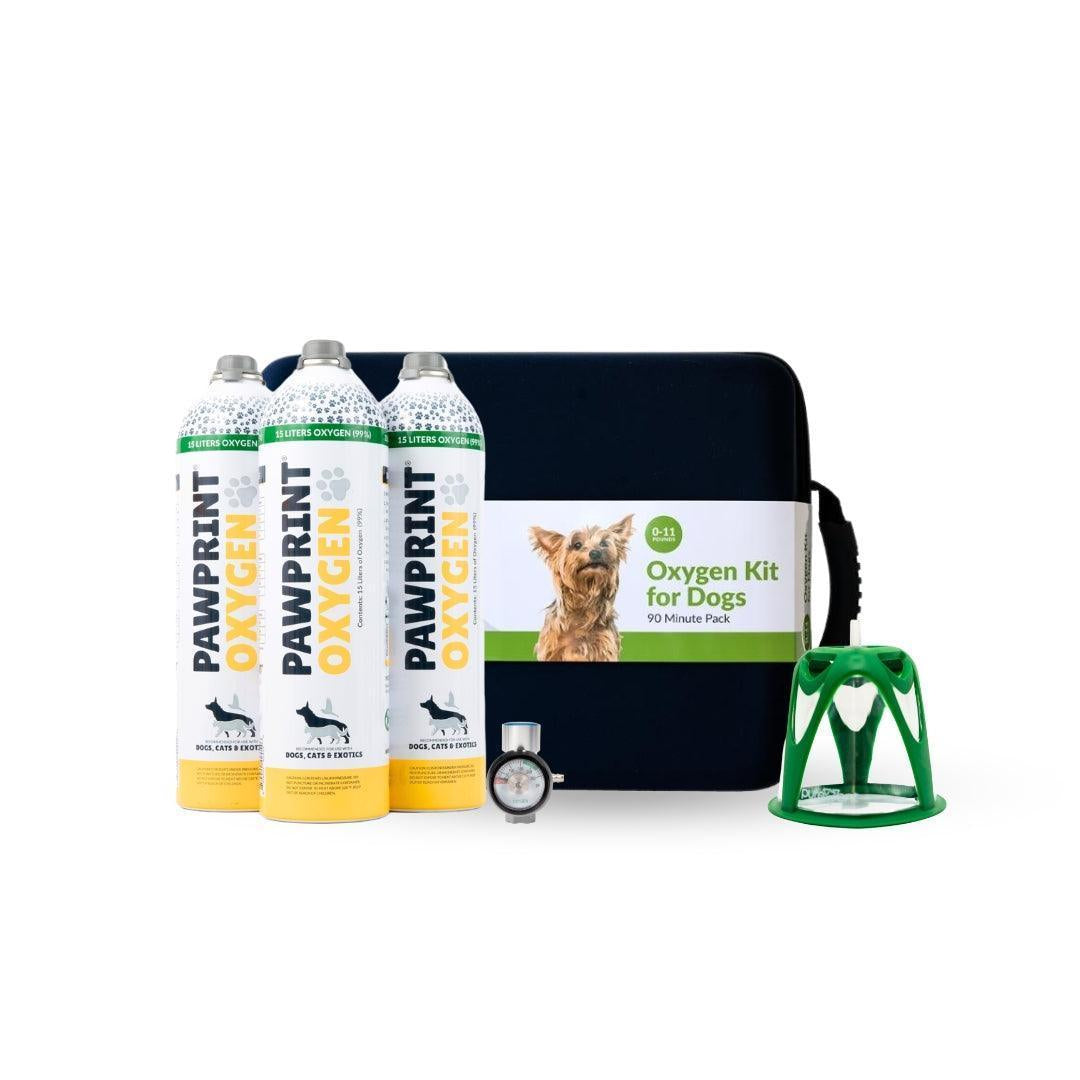
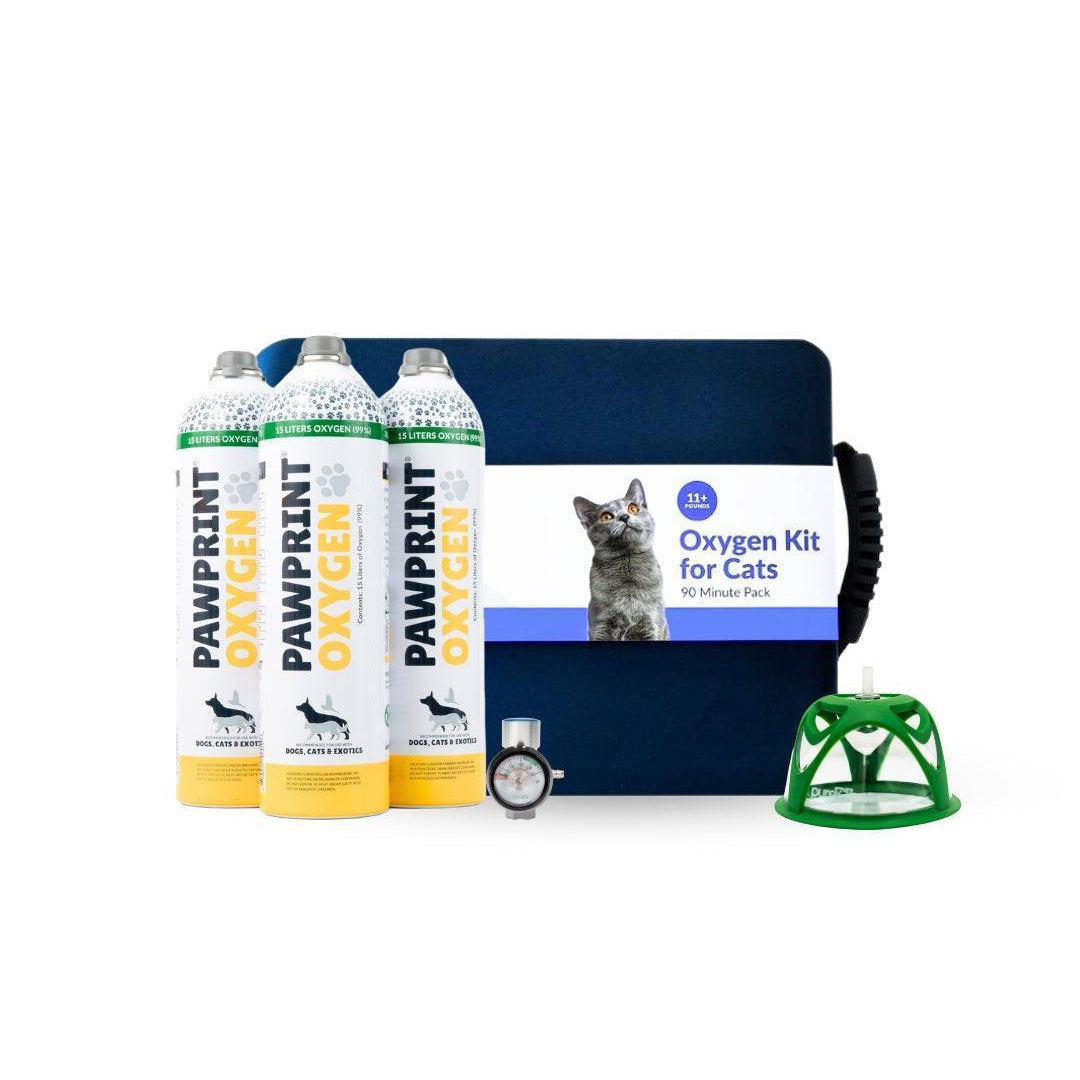
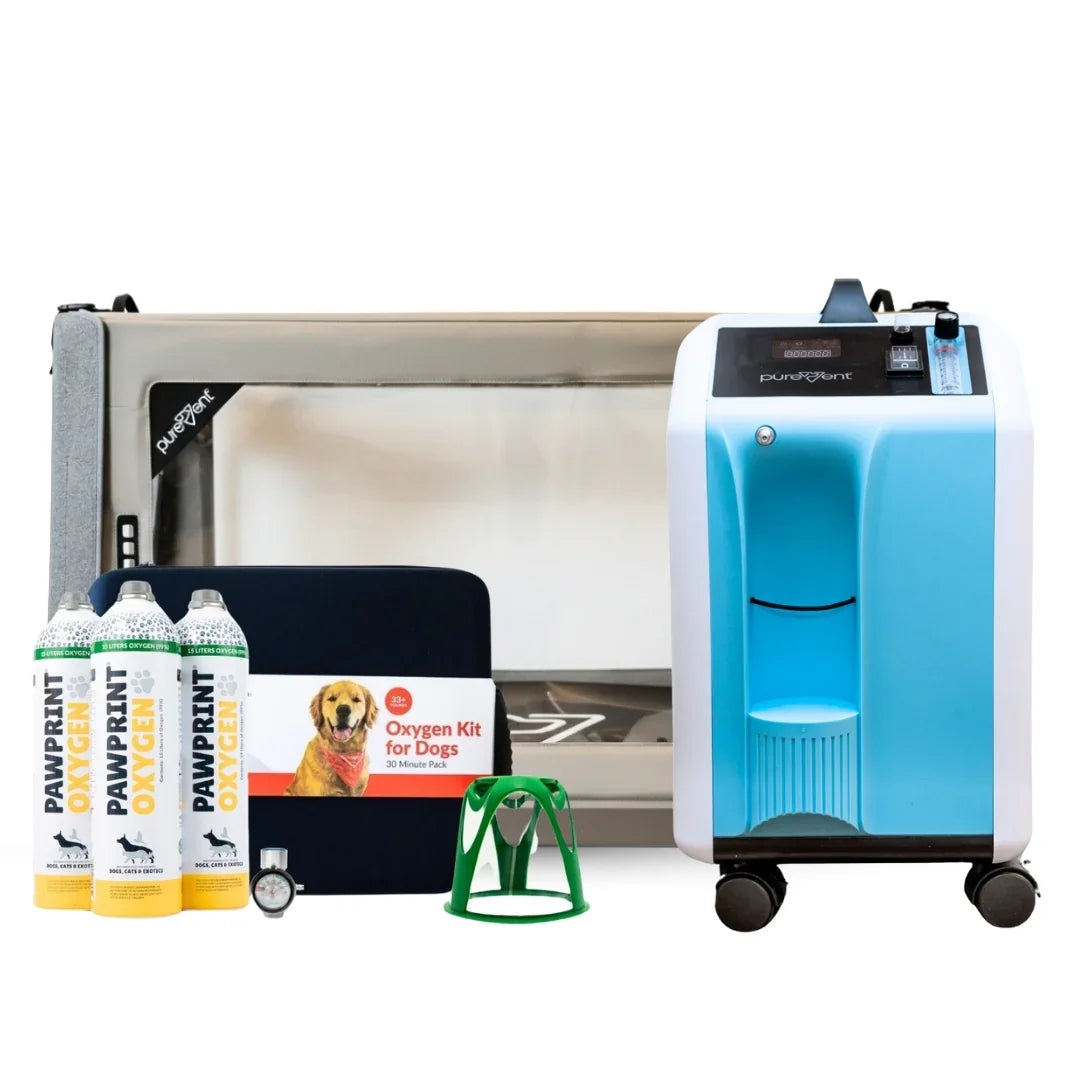
This is exactly the window where having supplemental oxygen on hand can help stabilize your dog on the drive to the vet. A Rescue Oxygen Kit delivers pet-safe medical-grade oxygen through a properly fitted mask, supporting a dog whose breathing is still labored or whose gums haven't fully pinked back up after the crisis has technically passed. Pawprint Oxygen makes Rescue Oxygen Kits sized for Dogs, Cats, and K9/working dogs, so the right mask fit is ready before you need it, not something you're improvising mid-emergency.
Oxygen is a bridge, not a substitute for veterinary care. It buys time and eases the work of breathing while you get your dog to professional evaluation. It doesn't address any injury to the airway itself or replace the exam your dog needs after a choking episode.
Building a Choking-Ready Emergency Kit
Because choking emergencies happen with zero warning, preparation has to happen before the moment arrives:
- Know the canine Heimlich maneuver for your dog's specific size before you ever need it. Practicing the hand position (without force) on a calm dog helps you move faster under pressure.
- Keep your emergency vet's number and the nearest 24-hour animal ER saved in your phone, not just Googled in the moment.
- Keep a Rescue Oxygen Kit accessible at home and in the car, so oxygen support is immediate rather than something you have to order after the fact.
- Learn your dog's normal gum color (healthy gums are pink but can vary depending on dog breed) so you can recognize cyanosis quickly under stress.
- Walk your yard and home for choking hazards the way you would childproof for a toddler. Small balls, rawhide fragments, and food waste are the most common culprits.

Common Choking Hazards to Remove or Manage
- Balls sized for a smaller dog: always size toys to your specific dog's mouth and throat, not just "dog-safe" in general
- Rawhide and hard chews that soften and break into swallowable chunks
- Cooked bones, which splinter, and large raw bones your dog tries to gulp rather than gnaw
- Sticks, which can lodge across the roof of the mouth or throat
- Squeaky toys with removable squeakers
- Corn cobs, avocado pits, and fruit pits
- Large chunks of food gulped during fast, competitive eating, slow-feeder bowls help multi-dog households
Frequently Asked Questions
How do I know if my dog is really choking or just coughing?
True choking means little to no air is moving. The dog struggles to inhale, may paw at the face, and often can't make sound. Coughing is loud, repetitive, and the dog can still breathe fairly normally between coughs. Blue or gray gums, silence, and visible panic point to true choking and require immediate action.
What's the correct way to do the Heimlich maneuver on a dog?
For small dogs, support the dog against your chest and give firm upward thrusts just below the ribcage. For larger dogs, wrap your arms around the belly from behind, make a fist, and give sharp inward-and-upward thrusts. Always check the mouth between sets of five thrusts, and stop immediately once the object is visible or dislodged.
Should I still go to the vet if the object came out on its own?
Yes. Even a brief choking episode can cause airway swelling, bruising, or fluid buildup in the lungs that isn't visible right away. A veterinary exam after any true choking event is strongly recommended, even if your dog seems fine within minutes.
Can supplemental oxygen help a dog after a choking episode?
It can. A dog's blood oxygen level and breathing effort don't always normalize instantly once an airway obstruction clears, especially if the throat is swollen or panic has caused rapid, shallow breathing. A Rescue Oxygen Kit can help support your dog's oxygen levels during the drive to veterinary care.
What if I can't get the object out myself?
Get to the nearest veterinarian or emergency animal hospital immediately. Call ahead so the team can prepare. Continue Heimlich thrusts on the way if you're not driving alone, and keep the dog as calm as possible, since panic increases oxygen demand.

Be Ready Before the Emergency Happens
Choking incidents give you no warning and very little time. The owners who handle them best are the ones who already know the Heimlich technique, already know where the nearest emergency vet is, and already have oxygen support within reach, not scrambling to figure it out mid-crisis.
Explore the Rescue Oxygen Kits - portable, at-home oxygen sized for your dog, cat, or working K9, ready before an emergency, not after.
This article is for educational purposes and does not replace veterinary care. If your dog is choking or showing signs of respiratory distress, contact your veterinarian or the nearest emergency clinic immediately.