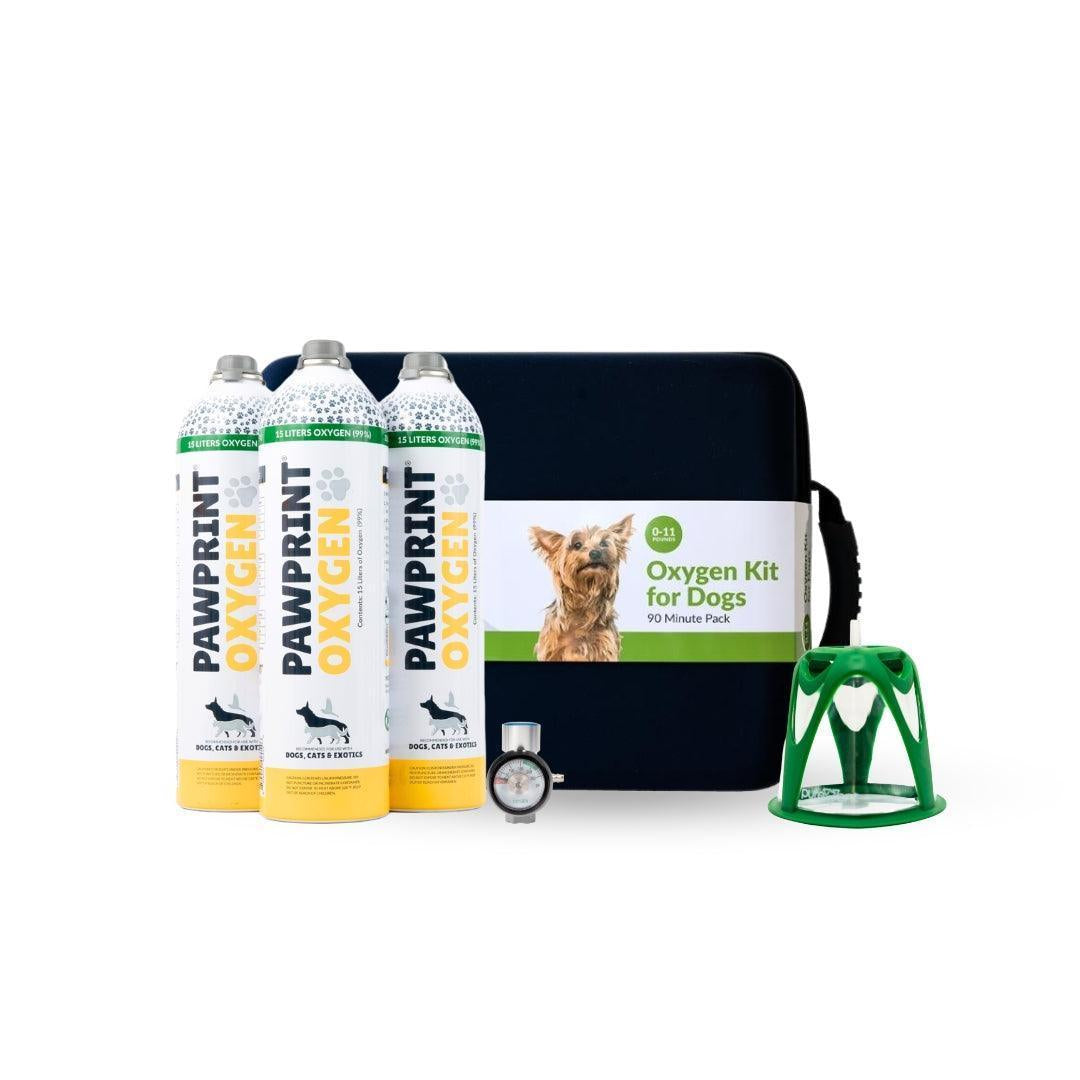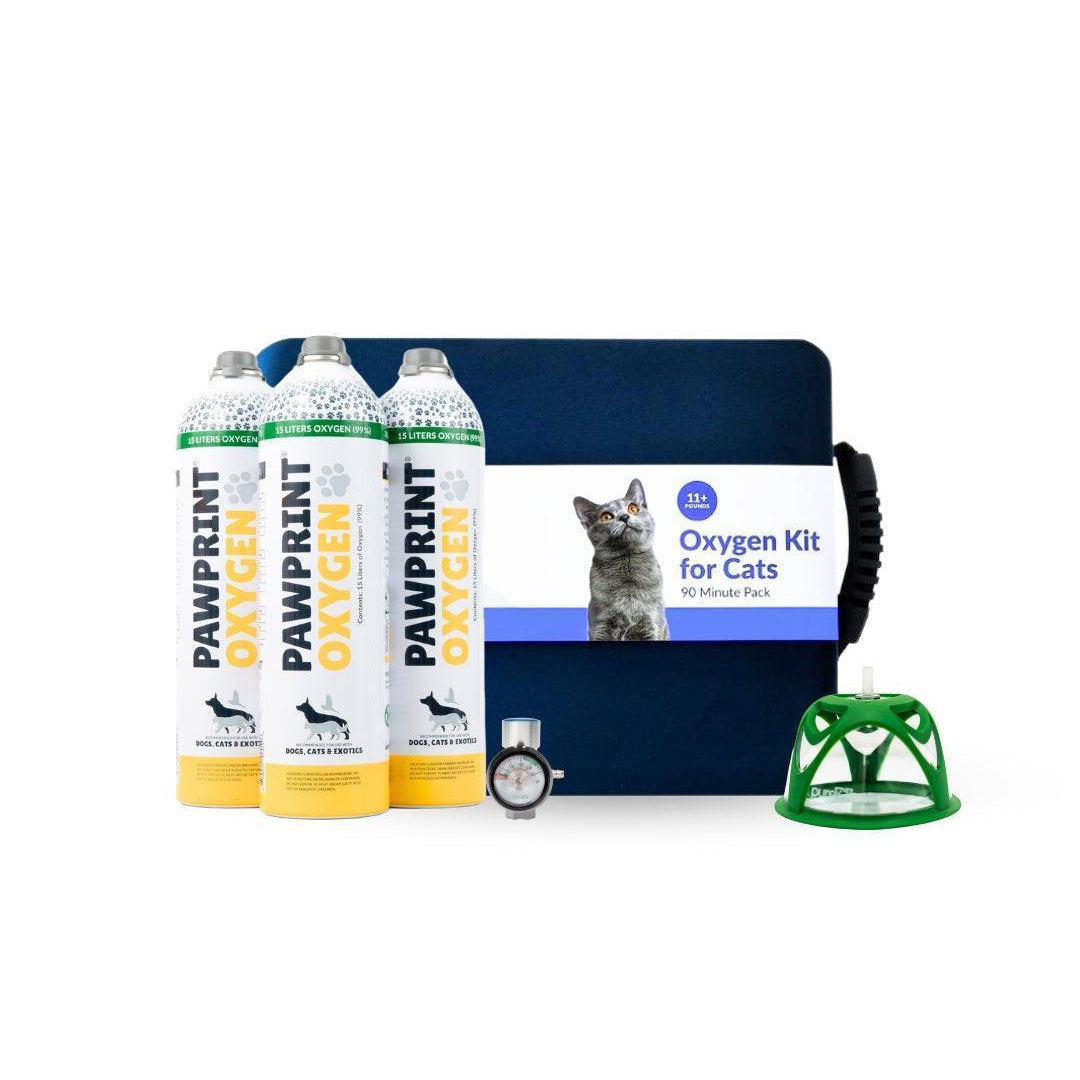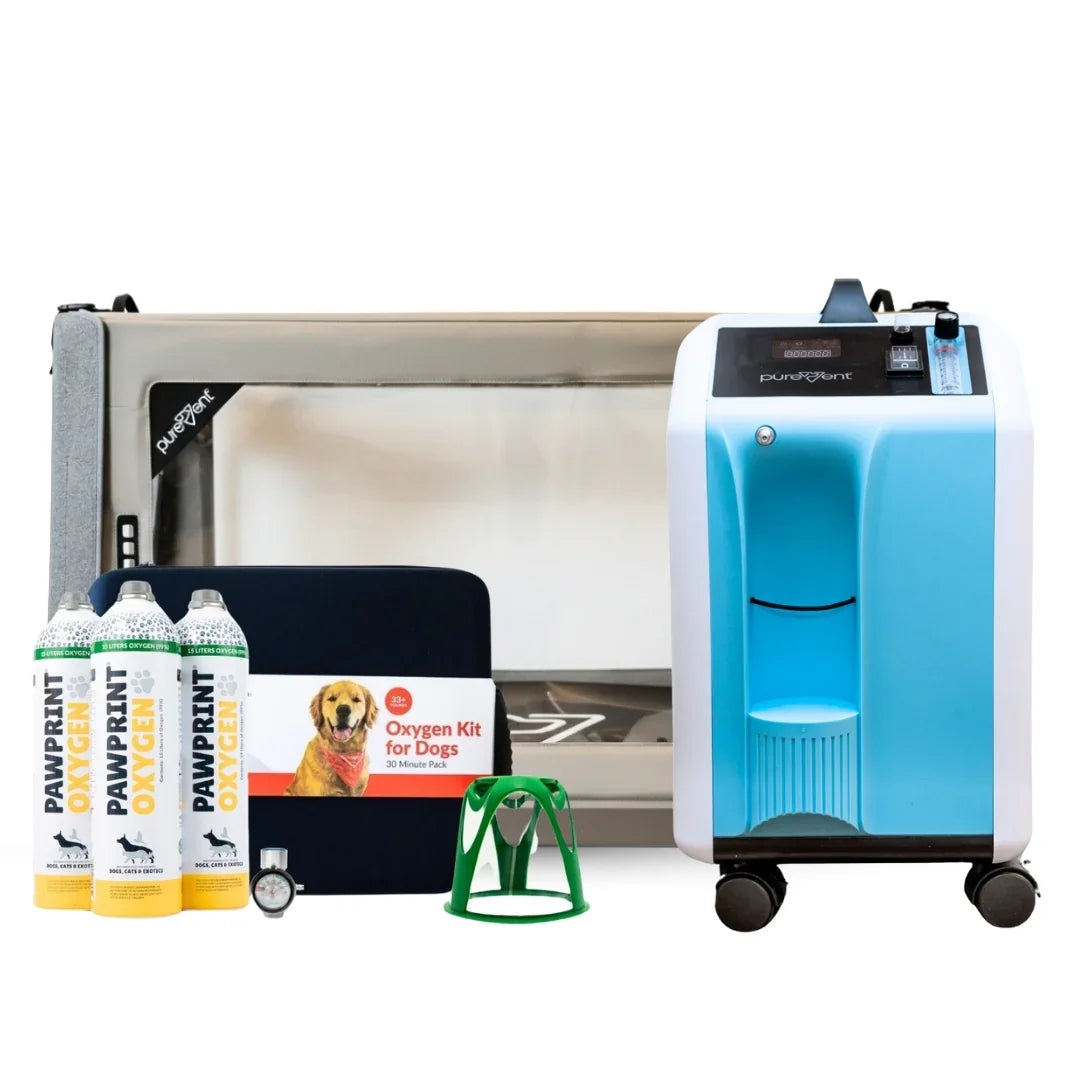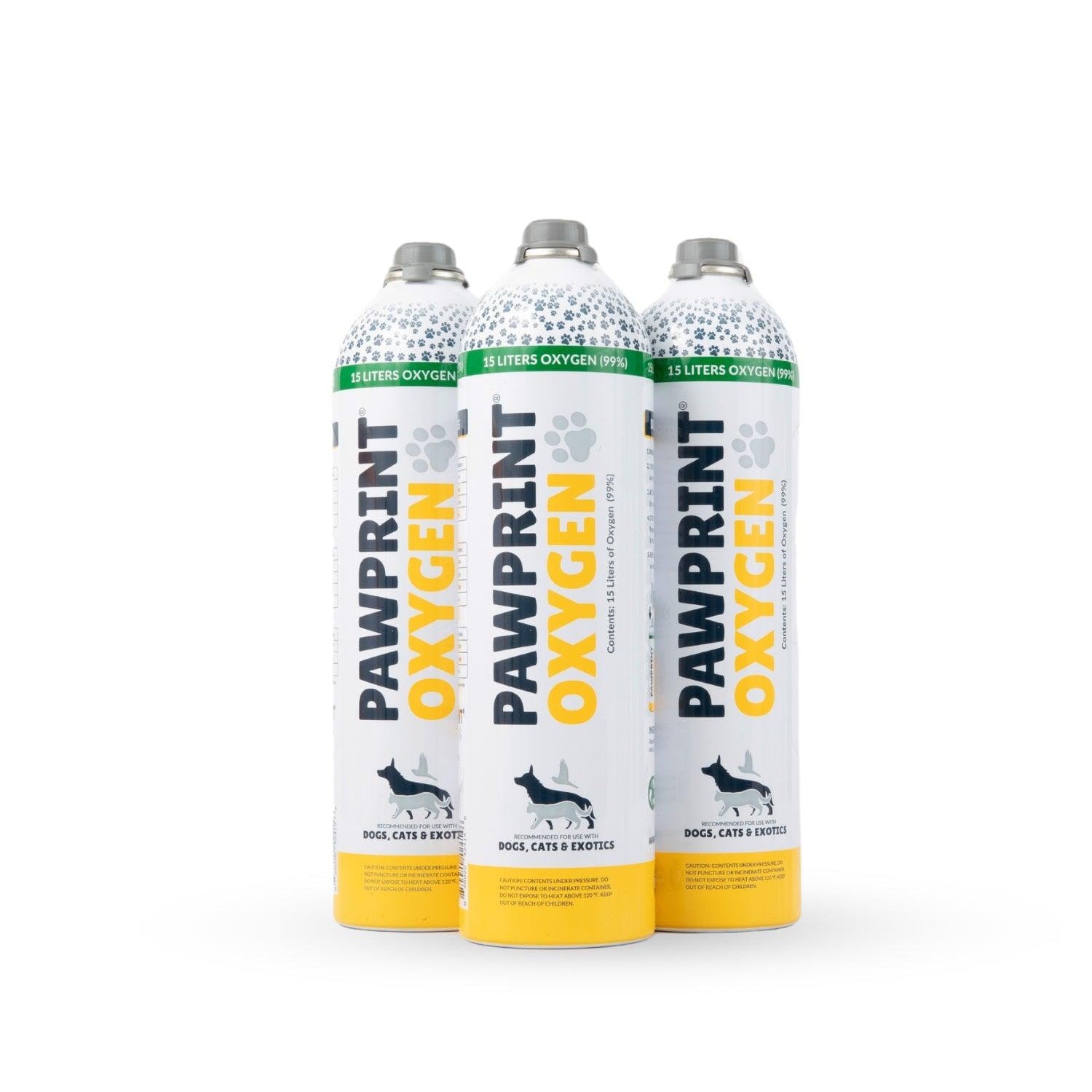
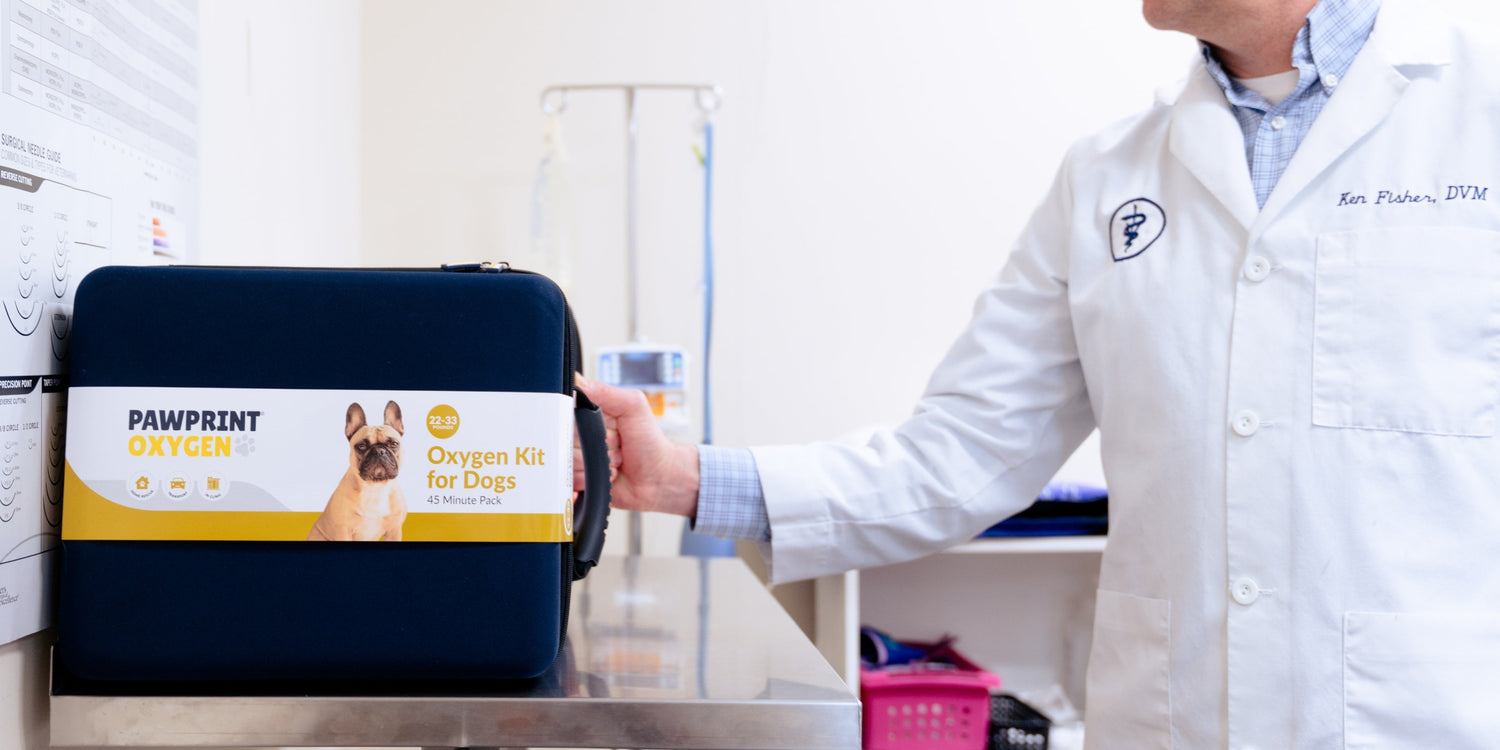
Pawprint Oxygen presents a portable rescue oxygen system for pets consisting of portable and safe Pawprint Oxygen canisters, a fixed-flow regulator, and a pet oxygen mask. This system is affordable and convenient, enabling pet parents to administer oxygen in a variety of situations to support their respiratory distressed pet.

Rescue Oxygen for Pets
Rescue oxygen is carried on ambulances and by other first responders to address hypoxemia in an emergency. Hypoxemia is a low level of oxygen in the blood and can lead to death; therefore, oxygen is considered an essential emergency drug. Oxygen has a high therapeutic index—good upside with little downside. Similar to people, pets are diagnosed with diseases that can progress or decompensate to hypoxemia while at home. These diseases include congestive heart failure, tracheal collapse syndrome, laryngeal paralysis, asthma, and other diseases affecting the lung. Pawprint Oxygen’s Rescue Oxygen System equips pet parents with a convenient and portable way to administer oxygen and support their pet. Like other drugs, oxygen is prescribed by an attending veterinarian who knows the pet, their medical conditions, and history.
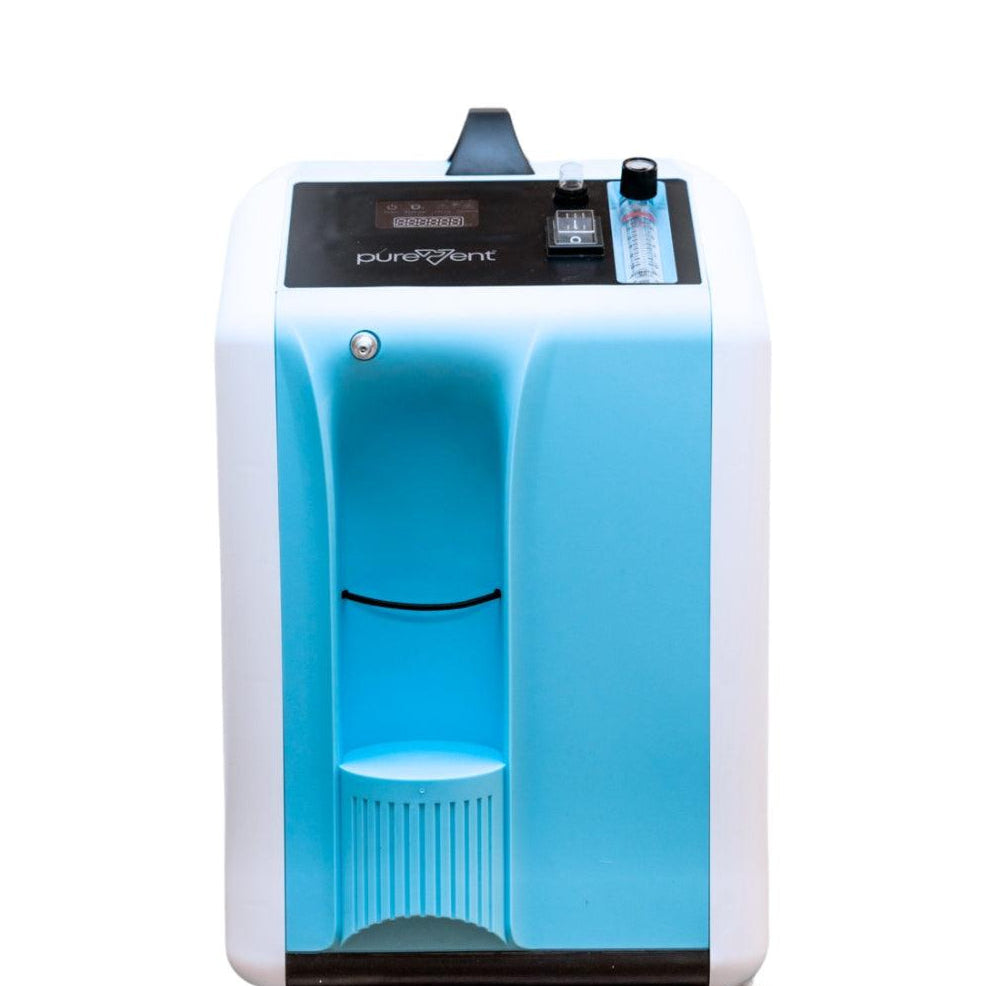
As a result, the veterinarian is able to write the order for oxygen and advise when to use it, at what dose, and how to best administer it. Veterinarians have been prescribing drugs to stop seizures and feline asthma at home, but until recently, the only options for administering oxygen at home and en-route to a veterinary hospital were high pressure compressed gas cylinders or portable oxygen generators. High pressure cylinders have special handling concerns and transport regulations and portable oxygen generators are relatively expensive and lack the appropriate flow rate requirements.
Pet ambulances are an option for emergency transport in certain areas, but they are few and far between, and response times can be unpredictable. With a safe and affordable option now available to provide oxygen at home and en route to a veterinary hospital, veterinarians can prescribe a portable Rescue Oxygen System to address pets experiencing respiratory emergencies at home.
Pawprint Oxygen does not provide veterinary advice. The information, including but not limited to, text, graphics, images and other material contained on this website are for informational purposes only. No material on this site is intended to be a substitute for veterinary advice, diagnosis, or treatment. Always seek the advice of a veterinarian with questions regarding your pet’s health.
About Sean Smarick, VMD, DACVECC
Dr. Sean Smarick received his Doctor of Veterinary Medicine from the University of Pennsylvania in 1991. He then completed a residency in Veterinary Small Animal Emergency and Critical Care at the University of California, Davis in 2003 and, in the same year, became a Diplomat of the American College of Veterinary Emergency and Critical Care. In his 30 years of practice, Dr Smarick has enjoyed being in the ICU and emergency rooms of private and university practices, participating in CPR and clinical research, contributing to journals and textbooks, training residents and interns, and serving on the board of several veterinary businesses and organizations. Dr. Smarick currently serves as the Post-Cardiac Arrest Care Domian Chair of RECOVER , as a Trustee on the Board of the PVMA , and as a commissioned Veterinary Corps Officer in the US Army Reserves. In addition to providing local and national instruction to handlers, paramedics and veterinarians, he is involved in pre-hospital veterinary care as a member of the VetCOT ATLS and education committees, the K9 TECC working group , and on the board of NAVEMS.