Pet Health & First-Aid Guide · Updated 2026
Activated charcoal is the most-used decontamination tool in veterinary medicine. Here's how it works, what it binds (and doesn't), and why keeping a veterinary-grade dose at home can change the outcome for your pet.
When a pet swallows something they shouldn't have, the single most important variable is time. Every minute a toxin spends in the gut is a minute closer to the bloodstream — and once it's absorbed, the vet can't pull it back. Activated charcoal is the tool that vets have relied on for decades to stop absorption before it happens.
This guide explains exactly how activated charcoal works, which common household toxins it does and doesn't bind, how to administer it at home, and why modern veterinary-grade products like ReadyRESCUE™ have made it realistic to keep a dose in your kitchen drawer.
Quick Answer
Activated charcoal is the single most widely used decontamination tool in veterinary emergency medicine. It works by binding toxins in the GI tract before they absorb into the bloodstream. Modern veterinary-grade products like ReadyRESCUE™ Activated Carbon are safe, sorbitol-free, and designed for at-home use — giving pet owners a critical head start before the drive to the vet.
What Is Activated Charcoal?
Activated charcoal is a highly porous form of carbon, usually made from coconut shells, wood, or bamboo that has been heated and "activated" to create a vast network of tiny pores. A single gram has roughly the surface area of a football field.
When your dog swallows activated charcoal, those pores act like molecular sponges. Organic toxins bind to the carbon and get carried through the digestive tract instead of absorbing into the bloodstream. The result: less toxin reaching the liver, kidneys, heart, and brain. The Merck Veterinary Manual lists it as a first-line decontamination agent.
What Activated Charcoal Binds To (and What It Doesn't)
Activated charcoal works well on a broad range of common household poisons — but it is not a universal antidote. Knowing the difference can save your pet's life.
| Binds Well (Effective) | Does Not Bind Well (Go to Vet) |
|---|---|
| Chocolate (theobromine, caffeine) | Heavy metals (iron, lead, zinc) |
| Grapes and raisins | Ethylene glycol (antifreeze) |
| Onions, garlic, chives | Alcohols (ethanol, methanol) |
| Ibuprofen, acetaminophen, NSAIDs | Salts and strong acids/bases |
| THC and recreational drugs | Petroleum products (gasoline, kerosene) |
| Many rodenticides and pesticides | Corrosives (bleach, drain cleaner) |
| Moldy food (tremorgenic mycotoxins) | Xylitol (limited — vet fluids are primary) |
For the "does not bind" column, get to a vet immediately. Activated charcoal is a broad-spectrum first responder, not a catch-all.
How Fast Does It Work?
Timing is everything. Activated charcoal is most effective when given within 60 minutes of ingestion — before the toxin has moved out of the stomach and small intestine. At 2 hours it's still useful. After 4 hours, its benefit drops sharply for most toxins (with exceptions for drugs that recirculate through the bile).
Veterinary-Grade vs. Traditional Charcoal
Not all activated charcoal is equal. There are three broad categories:
Capsules or slurries for humans. Often contains sorbitol (laxative), which causes dehydration and electrolyte imbalance in pets. Hard to dose quickly.
Hospital gold standard. Thick black liquid, often via stomach tube. Effective but messy, stains everything, and almost always contains sorbitol.
Products like ReadyRESCUE™ use 99.9% pure activated carbon spheres — ~5× absorptive power by volume, no sorbitol, mixes into food.
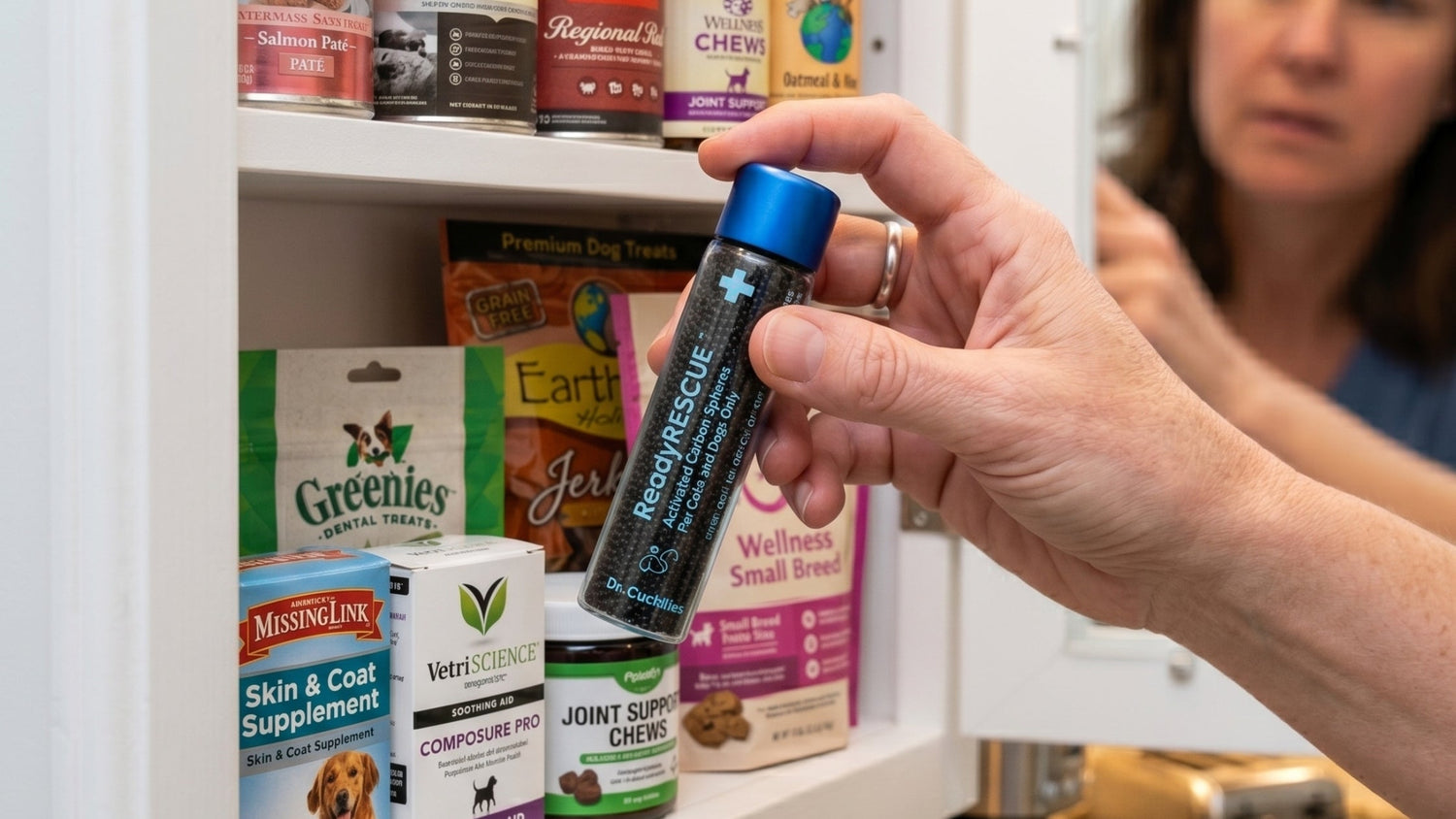
ReadyRESCUE™ is purpose-built for pet owners. It contains no sorbitol, is safe if no toxin is present, mixes easily into food, and doesn't require a vet visit to obtain.
How to Give Activated Charcoal to a Dog
Most at-home activated carbon products, including ReadyRESCUE™, use a simple weight-based dose:
| Pet Weight | ReadyRESCUE™ Dose |
|---|---|
| 15 lbs or less | ½ vial |
| 16–30 lbs | 1 vial |
| Larger dogs | Scale per product instructions |
Step-by-step
- Open the vial and measure the correct dose
- Mix into a small amount of a food your dog loves — wet food, peanut butter (xylitol-free), plain yogurt, or a favorite treat
- Stir until the carbon is well blended
- Offer it all at once — the goal is fast, complete consumption
- Watch your dog eat the entire dose
- Call poison control or your vet and tell them you've given activated carbon
Do not split the dose across multiple meals. Do not delay. Timing beats perfection.
Black stool for 24–48 hours is normal. It's the carbon passing through — not GI bleeding. If the black stool persists past 48 hours or is accompanied by vomiting, call your vet.
Is Activated Charcoal Safe?
Modern veterinary-grade activated carbon is remarkably safe. Key safety points:
- Safe if no toxin is present — the carbon passes through harmlessly
- Overdose is nearly impossible at recommended levels
- Stool will be black for 24–48 hours — this is normal, not GI bleeding
- Aspiration risk is low with oral products like ReadyRESCUE™, which are designed to be eaten, not forced down
Avoid giving activated charcoal if your dog is unconscious, seizing, or unable to swallow — get to the vet instead.
When NOT to Use Activated Charcoal
Do not give activated charcoal if the ingested substance is a corrosive (bleach, drain cleaner, battery acid), a petroleum product (gasoline, kerosene), or if your dog is unconscious, seizing, or has a GI obstruction. In all these cases, call poison control and head to the vet immediately.
Why Every Pet First-Aid Kit Needs Activated Carbon
Poisoning is one of the most common pet emergencies. The ASPCA Animal Poison Control Center fields over 400,000 cases a year. The majority involve things already in the house: chocolate, xylitol gum, human medications, houseplants, moldy trash.
Having ReadyRESCUE™ at home doesn't replace your vet. It gives you — and your dog — the minutes that matter. For the complete at-home setup, see our guide to building a pet poison first-aid kit.
"Activated charcoal is the closest thing pet owners have to a universal first-responder for poisoning. It's what vets have relied on for decades — and what every pet first-aid kit should contain."
Frequently Asked Questions
Can I use activated charcoal capsules from the drugstore?
Not ideal. They're dosed for humans, often contain sorbitol, and are hard to administer quickly. Veterinary-grade products are safer and more effective.
How long will my dog's stool be black?
Typically 24–48 hours. It's the carbon passing through and it's completely normal.
Can cats take activated carbon?
Yes — ReadyRESCUE™ is formulated for both dogs and cats.
Does activated charcoal expire?
Yes, but slowly. Check the expiration date on the vial and replace annually as part of your emergency kit refresh.
Can I give it preventively?
No. Activated charcoal is for known or suspected toxin ingestion, not routine use.
The Bottom Line
Activated charcoal is the closest thing pet owners have to a universal first-responder for poisoning. Modern, veterinary-grade products like ReadyRESCUE™ Activated Carbon make it practical to keep the tool vets have relied on for decades right in your kitchen drawer — ready for the moment you hope never comes.
The Tool Vets Trust, Now Made for Home
ReadyRESCUE™ is 99.9% pure veterinary-grade activated carbon — no sorbitol, no mess, no prescription required. Keep a dose where you can reach it in 30 seconds.
Shop ReadyRESCUE™ → Build Your First-Aid KitRelated Resources from Pawprint Oxygen
- My Dog Ate Chocolate — What to Do Right Now
- My Dog Ate Grapes or Raisins
- Xylitol Poisoning in Dogs
- The Complete Pet Poison First-Aid Kit
- Pawprint Oxygen FAQ
Sources & Further Reading
Merck Veterinary Manual — Treatment of Toxicoses in Animals
ASPCA — Top Pet Toxins of 2023
Pet Poison Helpline
American Veterinary Medical Association (AVMA)
Important: This article is educational and does not replace veterinary advice. Always contact your veterinarian or a pet poison control center when your pet ingests a toxic substance, even after giving ReadyRESCUE™.